Suppressor vs. Silencer: The Remarkably Simple Answer for Buyers
Last updated: July 12, 2026 · Originally published: March 7, 2026
In This Article
- Suppressor vs. Silencer: What’s the Difference and Which Term Is Correct?
- Suppressor vs. silencer — The Legal Definition: Why “Silencer” Appears in Federal Law
- Suppressor vs. silencer: Why “Suppressor” Is More Accurate
- Suppressor vs. silencer: How Companies Use Both Terms
- Suppressor vs. silencer: State Law Terminology Varies
- Suppressor vs. silencer: What to Say When You’re Shopping
- Suppressor vs. silencer: Common Misconceptions the Suppressor/Silencer Debate Reveals
- Suppressor vs. silencer: Frequently Asked Questions About Suppressors vs. Silencers
Suppressor vs. Silencer: What’s the Difference and Which Term Is Correct?
Suppressor vs silencer is a topic every suppressor owner should understand before making any purchase or modification decision. Suppressor and silencer refer to the same device — there is no technical or legal difference between the two terms. Both describe a muzzle-mounted attachment that reduces the sound of a gunshot by capturing, slowing, and cooling the expanding gas that follows a bullet out of the barrel. The debate over which word is “correct” is one of the most common questions in the suppressor community, and the honest answer is that both terms are used legally, commercially, and conversationally — though each carries different associations and connotations that are worth understanding if you plan to talk about these devices with any accuracy.
PopularSuppressors.com is committed to accurate, plain-language information about sound-reduction devices for firearms. You will find detailed guides on how suppressors work, which suppressor is right for your host firearm, the NFA purchase process, and how Silencer Central can handle the entire transfer — including a free NFA Gun Trust — and deliver your suppressor directly to your door. With the NFA tax stamp fee eliminated as of January 1, 2026, and eForm 4 approvals now processing in days rather than months, ownership has never been more accessible. Understanding the terminology is the first step toward informed purchasing.
Key Takeaways
- ATF official term: ‘silencer’ — industry preferred term: ‘suppressor’
- Both terms refer to the exact same NFA-regulated device
- Maximum sound reduction: 30–35 dB (not silent — a myth)
- The word ‘silencer’ was coined by inventor Hiram Percy Maxim in 1909
- ‘Suppressor’ is preferred because it accurately reflects the device’s function
- No legal distinction exists between owning a ‘suppressor’ vs. a ‘silencer’
- ATF Form 4 uses the term ‘silencer’ in all official paperwork
Suppressor vs. silencer — The Legal Definition: Why “Silencer” Appears in Federal Law
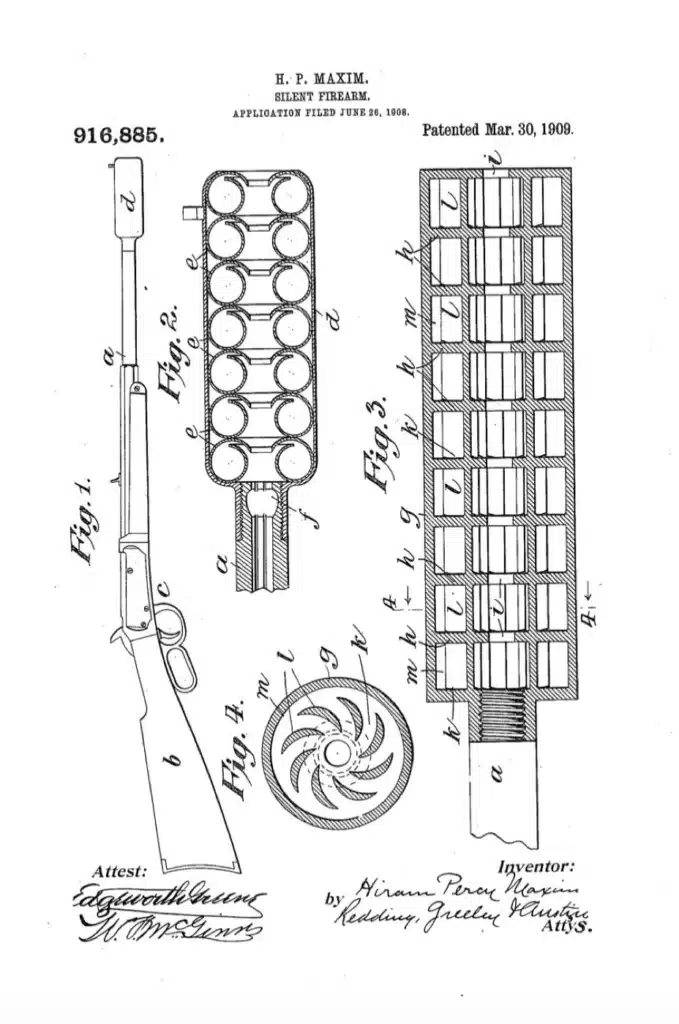
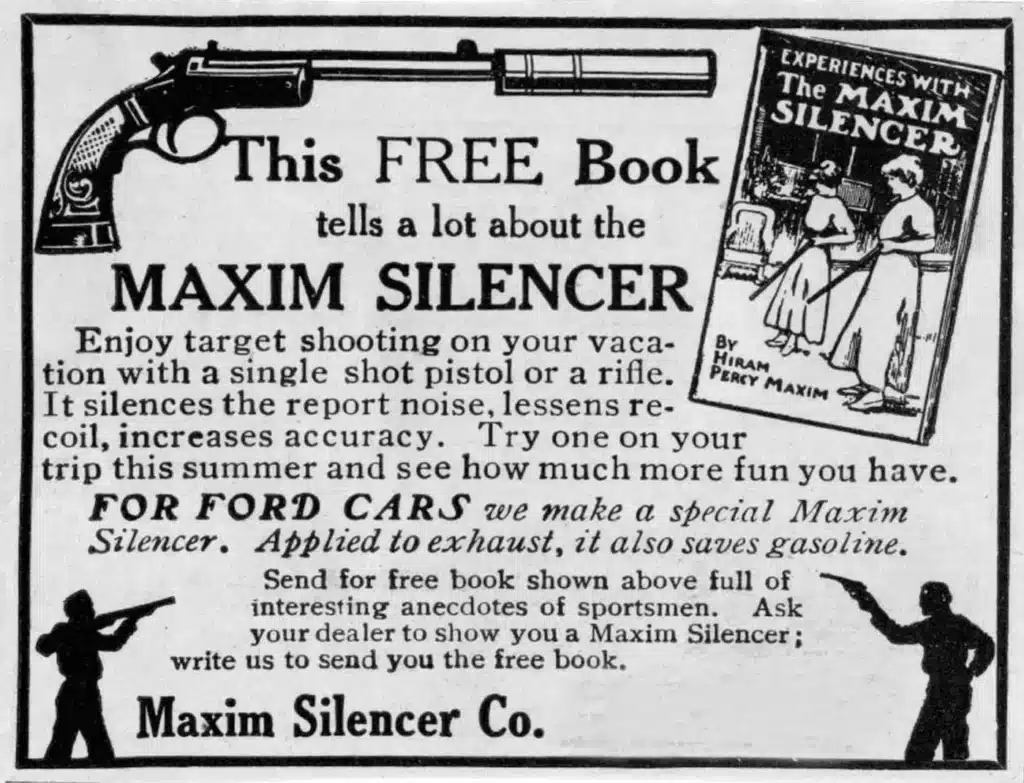
The National Firearms Act of 1934 — the federal law that regulates suppressors — uses the term “silencer” throughout its text. The ATF’s official regulatory language, the Form 4 application, and all federal statutes governing these devices refer to them as silencers. This is not an accident of modern usage; it reflects the terminology of the 1930s, when Hiram Percy Maxim’s “Maxim Silencer” was the dominant commercial product in the nascent sound-reduction market.
Maxim invented and patented the device in 1908, branding it the “Silencer” as a marketing term. When Congress drafted the NFA in the early 1930s to regulate machine guns, short-barreled rifles, and other weapons deemed dangerous, Maxim’s branded term was the common vernacular — so “silencer” became the statutory word. The legal definition under 26 U.S.C. § 5845(a)(7) defines “any firearm” subject to the NFA to include “any silencer (as defined in section 921 of title 18),” and 18 U.S.C. § 921(a)(24) defines a silencer as “any device for silencing, muffling, or diminishing the report of a portable firearm.”
That statutory definition is intentionally broad. Under federal law, even a partially assembled suppressor kit, individual suppressor baffles sold separately, or solvent trap kits marketed as cleaning tools (when assembled to suppress) can qualify as “silencers” under federal law, triggering NFA registration requirements. The legal term matters because it defines the scope of what is regulated — not because it accurately describes how the device performs.
Suppressor vs. silencer: Why “Suppressor” Is More Accurate
The word “silencer” implies that the device makes a firearm completely silent — a misconception reinforced by Hollywood films in which suppressed shots produce nothing louder than a whispered “pfft.” In reality, a suppressor reduces the sound of a gunshot — typically by 20 to 35 decibels — but does not eliminate it. A suppressed 9mm pistol with subsonic ammunition still produces approximately 130 dB. A suppressed .30 caliber rifle produces roughly 134-138 dB. For reference, a rock concert produces about 115 dB, and a jet engine at close range produces approximately 140 dB.
The term “suppressor” was adopted by the firearms industry, gun writers, and suppressor owners precisely because it is more accurate. A suppressor suppresses sound — it reduces it significantly — but it does not silence it. This distinction matters for public perception and policy. Anti-suppressor legislative efforts frequently draw on the “silencer” terminology to suggest that suppressors make illegal use of firearms easier to conceal. Industry advocates argue that “suppressor” is the more honest term and that understanding the actual sound reduction (meaningful but not cinematic) changes the policy conversation.
Most suppressor manufacturers, trade publications, and informed gun owners use “suppressor” in everyday conversation. The American Suppressor Association — the industry trade group — uses “suppressor” exclusively. Silencer Central, one of the largest suppressor dealers in the country, uses “silencer” in its brand name while using “suppressor” in its product descriptions — a reflection of the dual-terminology reality of the market.
Suppressor vs. silencer: How Companies Use Both Terms
The suppressor industry has largely settled on “suppressor” as the preferred technical term while retaining “silencer” for brand recognition, SEO, and customer acquisition. This dual usage is strategic rather than inconsistent. Internet search data shows that “silencer” is searched more frequently than “suppressor” — partly because of the Hollywood effect, partly because “silencer” is the term laypeople encounter first. Manufacturers and dealers who want to be found by first-time buyers often use “silencer” in titles, ads, and metadata even when they prefer “suppressor” in editorial content.
SilencerCo is one of the most prominent examples: the company is named with “Silencer” but refers to its products as suppressors in product descriptions, owner’s manuals, and technical literature. Silencer Central similarly uses “Silencer” in its corporate name and “suppressor” in product copy. Dead Air Armament, Rugged Suppressors, and Banish Suppressors use “suppressor” throughout their branding. The pattern is consistent: the term “silencer” gets you found; the term “suppressor” reflects accurate product description.
For buyers, this dual terminology means you will encounter both words in your shopping and research process. Using either term when talking to dealers, manufacturers, or fellow shooters will be understood without confusion. Neither term will get you a different product — they are synonyms for the same device in commercial and conversational use.
Suppressor vs. silencer: State Law Terminology Varies
Individual state laws that regulate suppressors use both “silencer” and “suppressor” depending on when and how the state’s statute was written. States that modeled their suppressor statutes on the federal NFA tend to use “silencer.” States that drafted original suppressor legislation more recently often use “suppressor.” A few states use both terms interchangeably within the same statute.
For practical purposes, state law terminology does not affect your purchase or ownership experience — dealers and law enforcement understand that both terms describe the same device. What matters is whether your state permits suppressor ownership at all, and whether any state-specific restrictions apply to how or where you can use one. Forty-two states permit civilian suppressor ownership as of 2026; the eight that do not — California, Delaware, Hawaii, Illinois, Massachusetts, New York, New Jersey, and Rhode Island — use a variety of terminology in their prohibitions, but the practical effect is the same regardless of whether the prohibition says “silencer” or “suppressor.”
When researching your state’s laws, search for both terms to ensure you find all relevant statutes and regulations. Some state codes index under “silencer” with no cross-reference to “suppressor,” and vice versa.
Suppressor vs. silencer: What to Say When You’re Shopping
Either term will be understood at any gun store, NFA dealer, or shooting range that has experience with these devices. You will not confuse a salesperson or dealer by using “silencer” instead of “suppressor” — they use both words daily. If you are buying from Silencer Central, their consultants are equally comfortable with either term and will not correct your terminology during a sale.
The context in which you might want to be more careful with terminology is in public discourse or political conversation. “Silencer” carries the cinematic connotation of a totally silent firearm and can invite inaccurate assumptions from people unfamiliar with the technology. In those contexts, “suppressor” is the clearer and more defensible term — it accurately describes the device’s function and avoids the Hollywood mythology that creates unrealistic expectations and, sometimes, unreasonable policy positions.
Among experienced shooters and suppressor owners, “suppressor” is the standard. If you want to signal familiarity with the subject to knowledgeable peers, “suppressor” is the word to use. Newcomers and casual shooters tend to use “silencer” — there is no judgment attached, but the terminology does signal experience level in informed circles.
Suppressor vs. silencer: Common Misconceptions the Suppressor/Silencer Debate Reveals
The terminology debate is really a gateway to several common misconceptions about how suppressors work and what they do. Understanding these misconceptions helps set accurate expectations before purchase.
Misconception 1: Suppressors make firearms completely silent. As established above, they do not. The sound reduction is significant — typically 20-35 dB — but a suppressed firearm still produces a report that is audible at typical range distances. Subsonic ammunition through a quality suppressor on a pistol achieves “hearing-safe” levels (below 140 dB). Rifle suppressors reduce noise substantially but do not approach anything Hollywood depicts.
Misconception 2: Suppressors are illegal without special permits. Suppressors are legal in 42 states under the NFA transfer process, which requires a Form 4 and background check — not a special permit per se, but a registration and approval process. The NFA tax stamp, once $200, has been eliminated as of January 1, 2026. The process is legal, accessible, and increasingly fast via eForm 4.
Misconception 3: Suppressors are primarily used by criminals. FBI crime data consistently shows that suppressors are rarely used in criminal activity. NFA-registered items — suppressors, machine guns, short-barreled rifles — have a documented track record of extremely low misuse rates. Legitimate uses — hearing protection, hunting, home defense, competition — overwhelmingly dominate suppressor ownership patterns.
Misconception 4: Any homemade device can be a suppressor. Technically, the ATF’s definition is broad enough that improvised devices can qualify as unregistered suppressors. But building, possessing, or using an unregistered suppressor is a federal felony punishable by up to 10 years in prison and a $250,000 fine. The only legal path to suppressor ownership is through the NFA Form 4 process. The DIY route is not a shortcut — it is a serious federal crime.

Suppressor vs. silencer: Frequently Asked Questions About Suppressors vs. Silencers
If I search for “silencer” online, will I find the same products as searching for “suppressor”?
Yes, substantially the same products appear under both search terms. Most suppressor manufacturers and dealers optimize for both keywords, so Banish, SilencerCo, Rugged, Dead Air, and other major brands appear in results for either search. “Silencer” generates slightly higher search volume due to its cultural familiarity, so some products may rank differently across the two terms. For comparison shopping, searching both terms can surface additional dealer options and product reviews that index under one term but not the other.
Does the ATF care which term I use on Form 4?
No. The ATF Form 4 has designated fields for the suppressor’s make, model, caliber, and serial number as stated on the device itself. The description field uses the statutory term “silencer,” but the form is processed identically regardless of how you colloquially refer to the device in conversation. What matters on the Form 4 is accuracy regarding the specific device — serial number, model, and manufacturer — not the casual terminology you use to describe it.
Why does Silencer Central use “Silencer” in its name if “suppressor” is more accurate?
Silencer Central was named when “silencer” was the dominant consumer search term, and brand recognition built over years of business under that name is a substantial asset. Changing the company name would sacrifice significant brand equity for a terminology distinction that most customers do not notice or care about. The company’s products — branded as “Banish Suppressors” — use the more accurate term for the product line itself, striking a balance between consumer-facing search optimization (company name) and technical accuracy (product name). Many companies in the industry follow a similar pattern.
Disclosure: PopularSuppressors.com is a media property operated by Brand Avalanche Media, Inc. This article contains information about suppressors and related terminology as part of our editorial coverage of the suppressor industry. Silencer Central is a paid sponsor of PopularSuppressors.com. We only recommend products and services we believe provide genuine value to our readers. All NFA regulations discussed reflect federal law as of the publication date; state and local laws vary. Consult applicable laws in your jurisdiction before purchasing a suppressor.
Related guides: common suppressor myths, Pew Science suppressor testing, and how to clean a suppressor.
Similar Posts




Frequently Asked Questions
What is the difference between a suppressor and a silencer?
There is no functional difference — suppressor and silencer refer to the same device. The ATF legally defines them as 'silencers' in the National Firearms Act, while the firearms industry prefers 'suppressor' because it more accurately describes what the device does: suppress, not silence, sound.
Why do people say 'suppressor' instead of 'silencer'?
'Silencer' implies complete silence, which suppressors do not achieve. Industry professionals prefer 'suppressor' because it sets accurate expectations — these devices reduce noise to safer levels but do not eliminate it.
Does the ATF use the term suppressor or silencer?
The ATF uses 'silencer' in its legal definitions, as written into the National Firearms Act of 1934. Dealers like Silencer Central use both terms interchangeably and handle all NFA paperwork on your behalf.