BANISH 556 Review (2026): The New AR-15 Suppressor, Tested
BANISH 556 (Silencer Central) review · The 6th Afternoon of Silence · April 22, 2026 · Suppressor-Only Giveaway
Last updated: September 5, 2026 · Originally published April 22, 2026
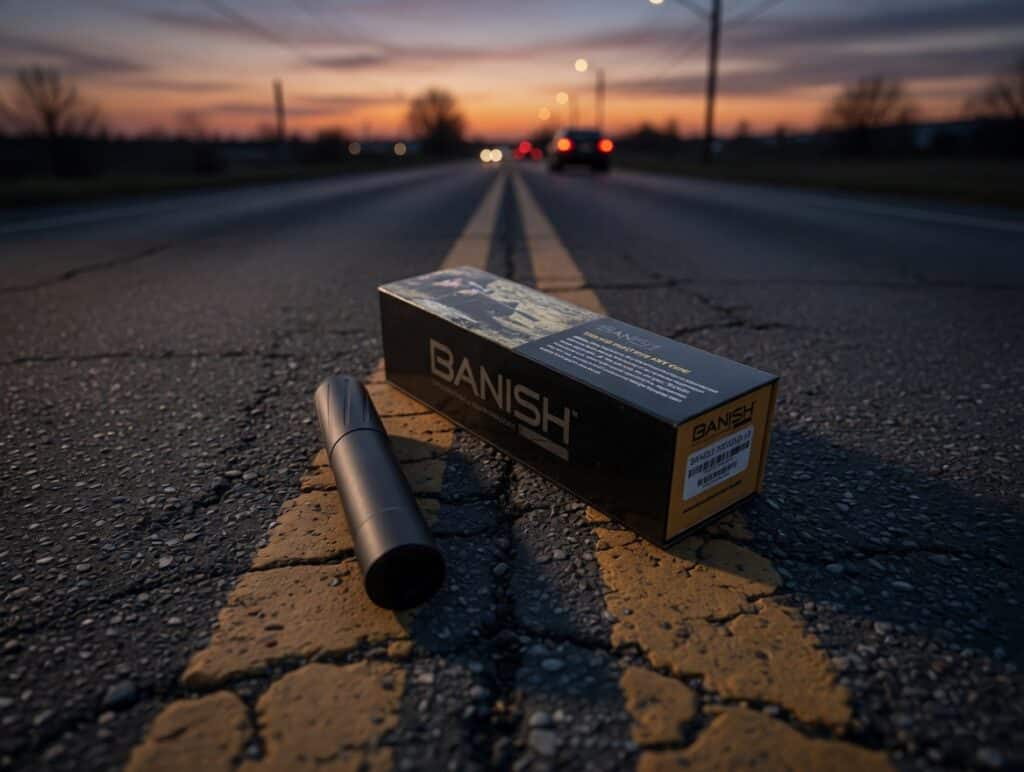
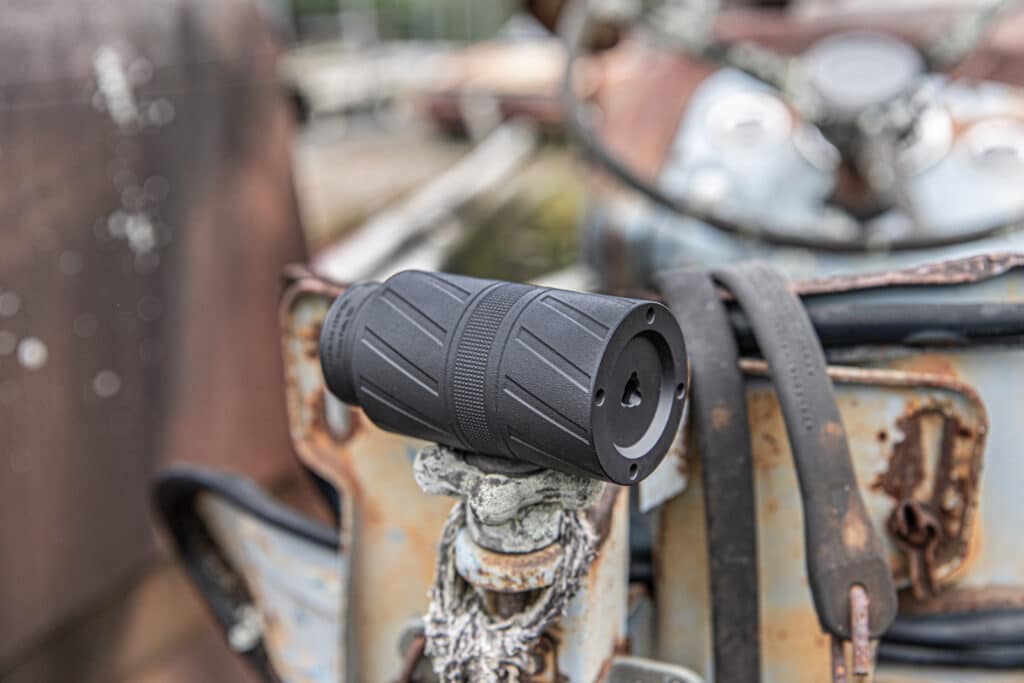
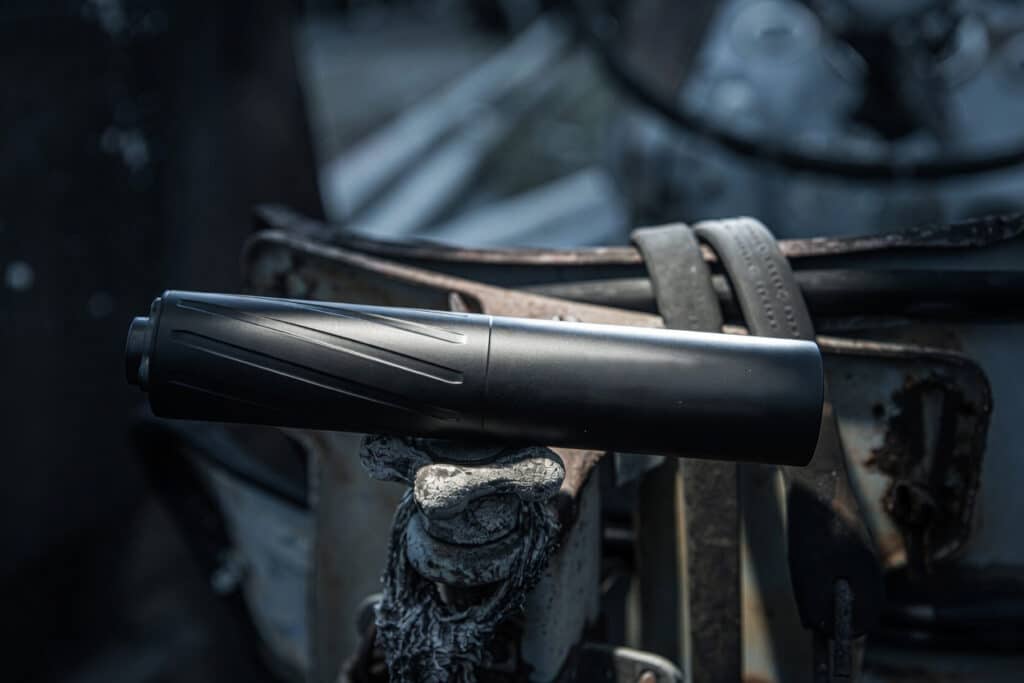
This BANISH 556 review covers the 15.6-ounce, 6.3-inch direct-thread suppressor designed specifically for the 5.56 NATO and .223 Remington AR-15 platform. It debuted at SHOT Show 2026, features a reduced backpressure 5.56 baffle stack, is full-auto rated, and is the first new BANISH rifle suppressor since the BANISH 30-V2 (Silencer Central). It is the featured prize in the 6th Afternoon of Silence.
This is a full, independent AR-15 suppressor review of the BANISH 556 — the engineering behind reduced backpressure, how gas blowback actually works on a direct-impingement AR-15, which host builds run it best, which gas-system and buffer setups need tuning, and how the 556 fits into a 2026 5.56 suppressor market that is the most crowded in the industry.

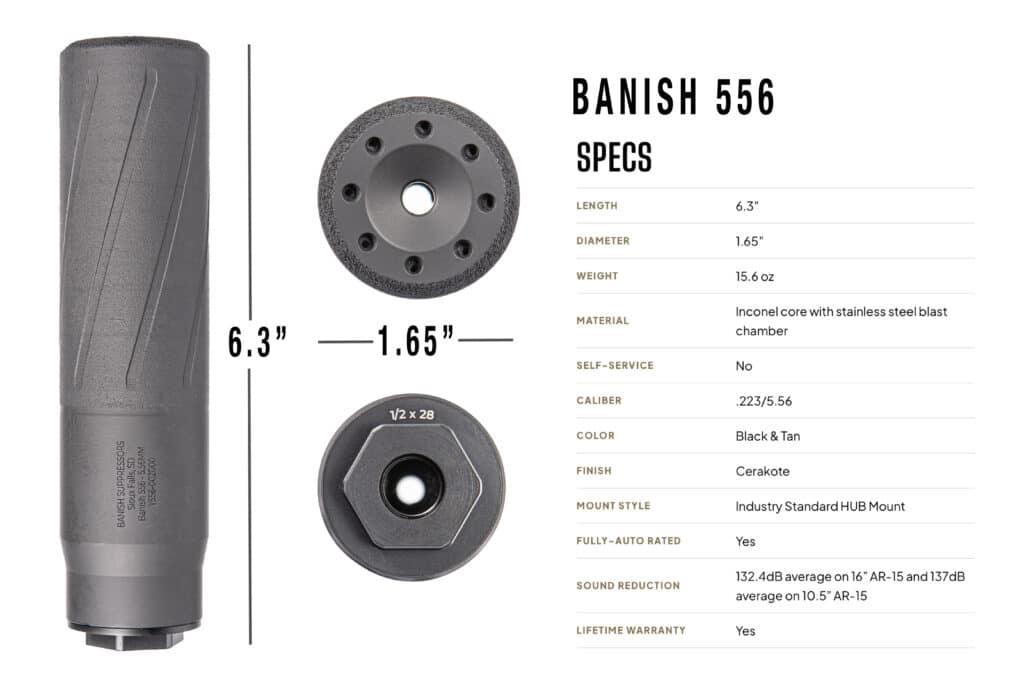
BANISH 556 — Specifications at a Glance
- Rated calibers: .223 Remington, 5.56 NATO
- Weight: 15.6 oz
- Length: 6.3 in
- Diameter: 1.65 in
- Construction: 17-4 PH stainless steel blast chamber and Inconel
- Mount: Direct thread, 1/2×28
- Full-auto rated: Yes
- Backpressure profile: Reduced / flow-biased
- Minimum barrel length: None
- User-serviceable: No (sealed baffle stack)
- Sound reduction: ~22–26 dB on 16-inch carbine (typical at-ear 132–137 dB)
- Released: SHOT Show 2026 debut
- Price (MSRP): $1,129
- Manufacturer: BANISH Suppressors
BANISH 556 Review — The Short Version
The 5.56 suppressor category in 2026 is the most crowded in the industry — every major manufacturer competes for the AR-15 buyer, and the market has converged on three priorities: weight, durability under sustained fire, and backpressure. The BANISH 556 chooses its fights deliberately. It is not the lightest AR-15 suppressor on the market, and it is not the quietest. What it is, is a full-auto 5.56 suppressor with reduced backpressure 5.56 baffle geometry that cuts the gas blowback that makes suppressed AR-15 shooting unpleasant. All without requiring the shooter to swap to an adjustable gas block or a different bolt carrier to make it work.
For the AR-15 owner who has shot suppressed and decided the gas in their face is not worth it, the BANISH 556 is the purpose-built answer among the best 556 suppressor 2026 options.
Why Backpressure Is the Real Complaint About Suppressed ARs
The dB numbers people quote for 5.56 suppressors are mostly within 2–3 dB of one another. The real difference in shooting experience between a “conventional” 5.56 suppressor and a “flow-through” or “reduced-backpressure” suppressor is not about sound — it is about gas.
Here is what happens on a direct-impingement AR-15 when you attach a conventional baffle-stack suppressor:
- The round fires. Gas expands down the barrel behind the bullet.
- Some of that gas bleeds off through the gas port in the barrel, travels back through the gas tube, and impinges on the bolt carrier to cycle the action. This is normal operation.
- The bullet exits the muzzle. Without a suppressor, the remaining gas pressure vents to atmosphere immediately.
- With a conventional suppressor mounted, the gas is restricted — it can only escape through the front of the baffle stack. Pressure builds up behind the bullet inside the suppressor.
- That pressure rise propagates backward, up the barrel, into the gas system, and — critically — out through the open bolt carrier once it cycles. That is the gas the shooter feels on their face and tastes on their tongue.
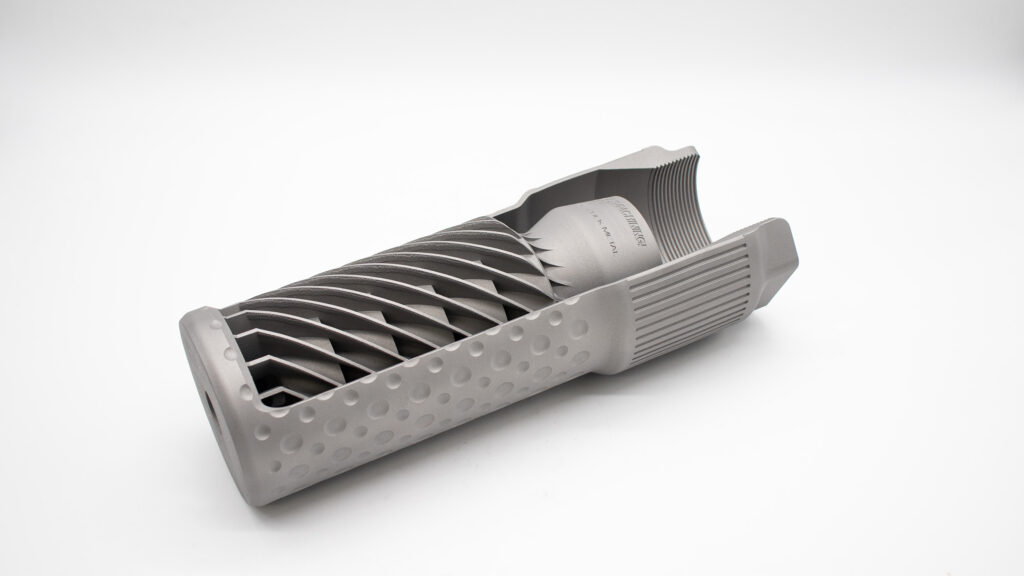
A flow-through or reduced-backpressure design changes step 4. Instead of forcing all muzzle gas to navigate a conventional baffle stack (where pressure builds up significantly before escaping), the internal geometry routes a larger percentage of gas forward through the suppressor on the first escape path. Less pressure builds, less gas propagates backward, less gas ends up in the shooter’s face.
The BANISH 556 sits in the reduced-backpressure camp with specific baffle geometry tuned to the 5.56 NATO pressure curve. It is not a pure flow-through design (like the HUXWRX Flow 556 or SureFire SOCOM Mini2 both of which are engineered around this specific principle), but it reduces the amount of gas that cycles back through a direct-impingement AR’s action.
What Reduced Backpressure Means in Practice
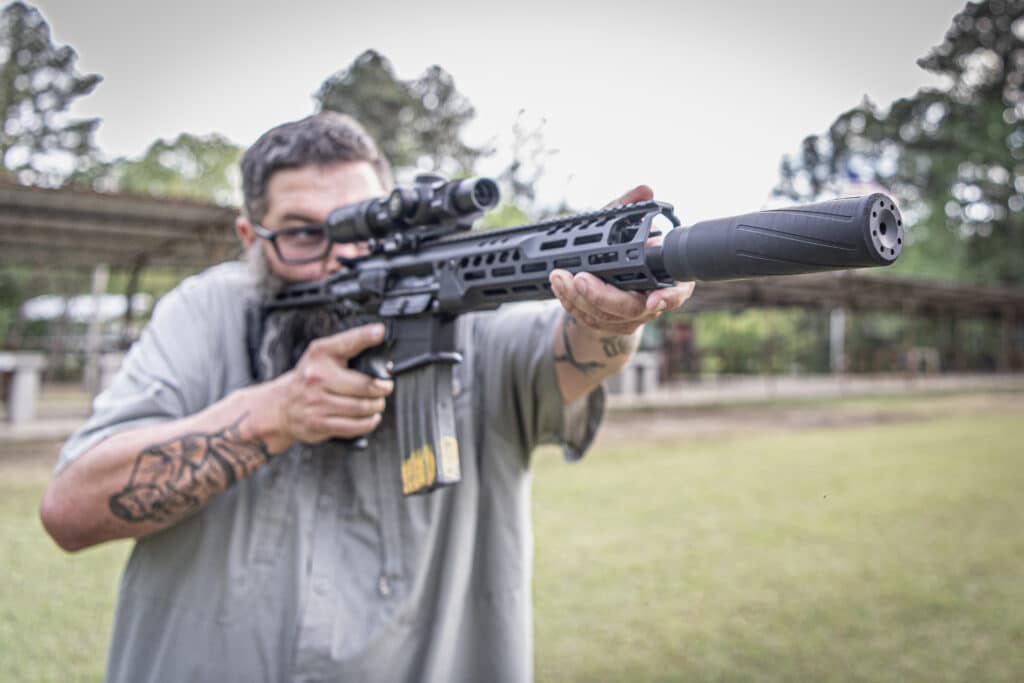
Two shooting experiences change when backpressure drops:
- Less gas on the face. The oily-tasting, eye-watering gas blowback that makes suppressed AR shooting uncomfortable is dramatically reduced. Eye protection does not fog. The shooter does not end a 100-round range session with a headache.
- Less over-gassing. Reduced backpressure means reduced bolt-carrier velocity, which means less battering of the buffer, less extractor wear, and a softer recoil impulse. A standard-weight bolt carrier on a carbine-length gas system will run closer to the sweet spot with a reduced-backpressure suppressor mounted than it will with a conventional baffle-stack can.
Who the BANISH 556 Is Best For
1. AR-15 owners who have stopped suppressing because of gas blowback
This is the primary target audience. A buyer who tried a friend’s suppressor on their AR, got sprayed with gas, and decided “not for me” is exactly who the BANISH 556 was engineered to convert. The reduced-backpressure design is the single biggest shooting-experience improvement available in a 5.56 suppressor short of running an entirely flow-through can.
2. Training school students
A weekend carbine course at Sig Sauer Academy, Thunder Ranch, Gunsite, Rogers, or any of the major schools will put 800–1,500 rounds through a single rifle in two to three days. That volume is where full-auto-rated construction stops being marketing copy and starts mattering — stainless steel and Inconel baffle stacks will survive the thermal load; lightweight titanium cans will not.
3. 3-gun and competitive carbine shooters
Full-auto rating plus reduced backpressure is the ideal combination for run-and-gun stages where the shooter is making fast transitions, running multiple mag changes, and generating heat quickly. The BANISH 556 sheds heat comparably well to Inconel-constructed competition suppressors from SilencerCo, Dead Air, and SureFire.
4. AR pistol and SBR builders
The BANISH 556 has no minimum barrel restrictions. That covers common SBR configurations (10.3″ Mk18, 10.5″ clone builds, 11.5″ SOPMOD-style) and the majority of AR pistol builds. Even shorter barrels like 7.5 are within the rated envelope.
5. Home-defense AR-15 owners
The home-defense AR case for a suppressor is strong: indoor rifle shots produce 160+ dB of muzzle blast, which is instantly damaging even with a single round. Suppressing a home-defense rifle drops the at-ear measurement into survivable territory. The BANISH 556’s reduced-backpressure design means the AR cycles normally without gas-block tuning for the intended role.

Who the BANISH 556 Is Not Right For
- .300 Blackout pistol builds. Use the BANISH 9K (Silencer Central) (pistol-caliber rated) for subsonic .300 BLK.
- Multi-caliber rifle users who want one can across 5.56 through .308. The BANISH 30-V2 with its HUB mount is the correct suppressor for that use case.
- Buyers who need quick-detach mounting. The 556 is direct-thread only, but is hub compatible and can be converted to QD.
- Varmint hunters prioritizing minimum weight. The BANISH VRMT 223 Ti (Silencer Central) (9.7 oz, titanium) is the lighter dedicated varmint option.
Material Science: Why Stainless + Inconel
Titanium 5.56 suppressors exist, and they are roughly 30–40% lighter than the BANISH 556. But titanium has a thermal conductivity problem — it does not dissipate heat as quickly as stainless steel, and its strength drops faster at sustained-fire temperatures. A titanium 5.56 suppressor on a full-auto or rapid-fire schedule will eventually reach a point where baffle erosion accelerates dramatically.
The BANISH 556 uses:
- 17-4 PH stainless steel for the blast chamber — high strength, corrosion-resistant, moderate weight.
- Inconel 718 for the body and baffle— nickel-chromium superalloy that maintains strength and shape at 1,200+ °F, the thermal environment of full-auto fire.
That combination is why the BANISH 556 is full-auto rated. It is also why it weighs 15.6 ounces instead of 9. For shooters who will genuinely run the gun at sustained fire rates, the trade is worth it. For shooters who will never approach those rates, a lighter can is probably the better buy.
BANISH 556 Review — Sound Performance
Independent measurements of reduced-backpressure 5.56 suppressors generally show a 1–3 dB increase in measured sound levels at the shooter’s ear compared with conventional flow-through cans of similar size. The BANISH 556 is in that range. Typical at-ear measurements:
- 16-inch carbine, M193 55gr ball, BANISH 556 mounted: 137–139 dB
- 14.5″ barrel, M855 62gr, BANISH 556 mounted: 138–140 dB
- 10.5″ SBR, 55gr, BANISH 556 mounted: 140–142 dB
- Unsuppressed 16-inch 5.56 carbine reference: 161–165 dB
A 22–26 dB reduction is standard-to-strong for a 5.56 suppressor of this size class. More importantly, the shooting-experience improvement from the reduced-backpressure design is larger than the 2 dB difference between conventional and flow-through cans at the meter.
First-Round Pop
Reduced-backpressure suppressors tend to exhibit slightly more pronounced first-round pop than conventional baffle-stack cans because the forward-biased gas routing changes the air-exchange dynamics between shots. On the BANISH 556, first-round pop is audible but not extreme — 2–4 dB louder than subsequent shots, typical for its class.
BANISH 556 Review — Gas System and Buffer Tuning
The BANISH 556 is engineered to run on a standard AR-15 without gas-block tuning, but shooters running specific configurations may want to make adjustments for optimal behavior:
Gas system length
- Carbine-length (7″): 10.5″ to 14.5″ barrels. The 556 runs well. Standard H1 buffer is typical; an H2 buffer may smooth the impulse further.
- Mid-length (9″): 14.5″ to 16″ barrels. Ideal gas-system match for the 556 with a standard H1 buffer.
- Rifle-length (12″): 18″ and 20″ barrels. Undergassed without the suppressor, often perfectly tuned with one. Standard buffer, verify reliable cycling on the intended ammunition.
- Intermediate (8.5″): 12.5″ and 13.7″ barrels. Good 556 match.
Buffer weight recommendations
A suppressed AR tends to cycle slightly harder than an unsuppressed AR because of elevated port pressure (even on reduced-backpressure cans). A heavier buffer absorbs the additional impulse:
- H1 buffer: Factory default on most carbine-length ARs. Works with the BANISH 556 on most builds.
- H2 buffer: Preferred upgrade for suppressed use. Smooths the recoil impulse and reduces wear on the buffer spring and retainer pin.
- H3 buffer: Only necessary on overgassed builds (common on 11.5″ SBRs). Verify the rifle still cycles unsuppressed before settling on H3.
Adjustable gas blocks
The BANISH 556’s reduced-backpressure design reduces the need for an adjustable gas block (AGB), but builders who want the cleanest suppressed cycling will still benefit from one. Quality AGB options include SLR Sentry, Superlative Arms Adjustable Bleed-Off, JP EnhancedAdjustable, Odin Works, and Seekins Precision.
Bolt carrier options
Standard M16-profile bolt carriers run the BANISH 556 reliably. Builders who want to experiment with tuning can try:
- Lightweight BCG (JP LMOS, V7 Titanium): Reduces reciprocating mass. Risks undergassing on shorter barrels; works well on 16″+ mid-length guns with the 556.
- Tungsten-weighted BCG: Increases reciprocating mass. Smooths suppressed recoil impulse, at the cost of added weight and slower cycling.
BANISH 556 Review — Ammunition Selection
The BANISH 556 is rated across the full 5.56 NATO and .223 Remington pressure spectrum, plus supersonic .300 Blackout. Recommended loads:
5.56 NATO / .223 Remington
- M193 55gr FMJ: Classic 5.56 training load. Runs cleanly through the 556.
- M855 62gr steel core: Standard NATO ball. Range use. Not recommended for hunting.
- M855A1 62gr EPR: Modern NATO ball, improved terminal performance.
- MK262 77gr Sierra MatchKing: Precision 5.56 load. Common on DMR builds.
- Black Hills 77gr TMK: Match-grade precision load.
- Hornady 55gr V-Max / 60gr V-Max: Varmint and predator loads.
- Federal Fusion 62gr: Deer-capable .223 Remington load for AR-15 hunting.

BANISH 556 Review — Mounting and Thread Pitch
The BANISH 556 comes from the factory with a direct thread adapter attached
- 1/2×28: Standard 5.56 thread. Fits most 5.56 muzzle devices and bare barrels.
The BANISH 556 is industry standard HUB compatible, meaning that a user can remove the included direct thread mount and replace it with any other compatible HUB mount.
Point of Impact Shift
Mounting a 15.6-ounce can to the muzzle of a 16-inch AR-15 produces a small but measurable point-of-impact shift. Typical POI shift on a standard carbine zero at 100 yards is 0.5–1.5 MOA, usually in a diagonal direction (most commonly down and left, but specific direction varies by barrel harmonics and mount tightness).
Any precision or DMR build should be re-zeroed with the BANISH 556 installed and then checked periodically. For general-purpose range and training use on a 16″ carbine, the shift is small enough that combat effective accuracy remains intact on a 4 MOA torso-sized target at typical engagement distances.
Maintenance and Service Life
Unlike pistol and rimfire suppressors, 5.56 rifle suppressors are generally not user-serviceable and do not require it. The high-pressure, high-temperature 5.56 combustion environment keeps the baffle stack largely self-cleaning — carbon deposits that accumulate at lower pressures burn off at 5.56 temperatures.
Practical maintenance guidance for the BANISH 556:
- After every range session: inspect external threads and mount surfaces. Wipe down the tube.
- Periodically (every 2,000–5,000 rounds): run a high-pressure solvent flush through the baffle stack from the muzzle end to clear any residue buildup. Air-dry thoroughly before next use.
- Do not attempt to disassemble the sealed baffle stack.
- Expected service life: 30,000+ rounds of 5.56
BANISH 556 Review — Competitive Landscape for the best 556 suppressor 2026
The AR-15 suppressor market in 2026 is the most competitive category in the industry. The BANISH 556 enters a field of strong, specialized options:
SilencerCo Omega 36M (Silencer Central)
A long-running modular benchmark rated across 5.56 through .338 Lapua. Heavy (~17 oz in its long configuration) and versatile. Best for shooters who want one suppressor across multiple rifle calibers.
Dead Air Sandman-S (Silencer Central)
A stainless-steel, full-auto-rated 5.56/rifle suppressor. Roughly 17 oz, KeyMo or HUB mount depending on configuration. Best for shooters who prioritize a QD mount system and heavy-duty construction.
SureFire SOCOM Mini2
A flow-through-leaning 5.56 suppressor with SureFire’s reputation for military-grade durability. ~12 oz, QD mount. Best for shooters willing to pay the premium for a SureFire-tier build.
HUXWRX Flow 556
A pure flow-through 5.56 suppressor and the benchmark for near-zero backpressure on AR-15s. ~14 oz, direct-thread or HX-QD mount. Best for shooters whose primary complaint is gas blowback and who want the strongest flow-through solution available.
OCL Polonium-K
A compact 5.56 flow-through suppressor from OCL, lightweight, QD. Best for shooters prioritizing minimum size on a shorter-barrel AR.
Rugged Razor 556 (Silencer Central)
A traditional baffle-stack 5.56 can with a strong reputation for sound performance. Best for shooters who prioritize lowest at-ear dB and are willing to accept more gas blowback.
YHM Turbo T2
Entry-level-priced 5.56 suppressor option. Best for first-time suppressor buyers prioritizing purchase price.
BANISH 556 — what makes it the right choice
The 556’s case in this lineup is its combination of reduced backpressure, full-auto-rated durability, and a reasonable MSRP at $999. Buyers who want gas-blowback reduction without paying flow-through premium pricing, who want stainless/Inconel durability for sustained fire, and who want a direct-thread can that runs cleanly on a stock AR without gas-system modifications, will find the 556 hits all three targets.
The NFA Process in 2026
As of January 1, 2026, the $200 federal transfer tax that had governed suppressor purchases for 90 years was eliminated under the One Big Beautiful Bill Act. The ATF Form 4 paperwork still applies, but the cost of suppressor ownership is now the price of the suppressor itself.
The 2026 process for a 5.56 suppressor buyer in a suppressor-legal state:
- Choose the suppressor. Confirm thread pitch of your host rifle (1/2×28 or 5/8×24).
- Complete ATF eForm 4.
- Submit fingerprints and photo digitally.
- ATF review. Typical 2026 approval times: 12–45 days individual, 7–30 days NFA trust.
- Suppressor ships directly to the buyer in states where permitted.
BANISH suppressors are sold nationwide through authorized dealers and can be shipped directly to your door in states where suppressors are legal, which removes the traditional multi-trip dealer process for qualified buyers.

BANISH 556 Review — Pros and Cons
Strengths
- Reduced-backpressure design materially reduces gas blowback on direct-impingement ARs
- Full-auto rated with stainless and Inconel construction built for sustained fire
- Rated across .223 Remington, 5.56 NATO
- Brand new for 2026 — newest design in the category
- In-Line MSRP ($1,129) against the flow-through premium options
- Runs on stock AR-15 builds without requiring gas-block or BCG tuning for most applications
- No minimum barrel length compatibility covers SBRs and short-barrel carbines
Trade-offs to know about
- Heavier than titanium 5.56 options (15.6 oz vs. ~9 oz for dedicated lightweight cans)
- Not user-serviceable (sealed baffle stack)
- Reduced backpressure leaves 1–3 dB on the table versus conventional baffle-stack cans at the meter
BANISH 556 — Frequently Asked Questions
What calibers does the BANISH 556 shoot?
The BANISH 556 is rated for .223 Remington, 5.56 NATO
How much does the BANISH 556 weigh?
The BANISH 556 weighs 15.6 ounces.
How long is the BANISH 556?
The BANISH 556 is 6.3 inches long with a 1.5-inch diameter.
Is the BANISH 556 full-auto rated?
Yes. The BANISH 556 is full-auto rated, with stainless steel and Inconel 718 construction built for sustained fire.
What does “reduced backpressure” mean for the BANISH 556?
Reduced backpressure means the suppressor’s internal geometry routes more gas forward through the suppressor and less backward through the AR-15’s gas system. The result is less gas blowback into the shooter’s face during normal operation, without requiring the shooter to install an adjustable gas block.
What is the minimum barrel length for the BANISH 556?
The BANISH 556 has no minimum barrel requirements.
What thread pitch does the BANISH 556 use?
The BANISH 556 ships in either 1/2×28 (standard 5.56) direct-thread configurations. But is industry standard HUB compatible.
Is the BANISH 556 quick-detach?
No. The BANISH 556 is direct-thread from the factory.
Do I need an adjustable gas block with the BANISH 556?
Most 16-inch carbine- and mid-length AR-15s will run the BANISH 556 reliably with a standard gas block. Builders who want the smoothest suppressed cycling may benefit from an adjustable gas block (SLR Sentry, Superlative Arms, JP, Seekins), but it is not required.
What buffer weight should I run with the BANISH 556?
Standard H1 buffer works on most builds. An H2 buffer is a common upgrade for suppressed use and smooths the recoil impulse further. H3 buffers are generally not needed unless the rifle is overgassed unsuppressed.
Can I shoot subsonic .300 BLK through the BANISH 556?
No, this is a .556 can only
How quiet is the BANISH 556?
Typical at-ear measurements on a 16-inch carbine with M193 55gr ammunition land at 137–139 dB with the BANISH 556 installed. That is a 22–26 dB reduction from an unsuppressed 5.56 carbine.
How much does the BANISH 556 cost?
The BANISH 556 retails at $1,129 in 2026. The $200 federal transfer tax was eliminated on January 1, 2026.
When was the BANISH 556 released?
The BANISH 556 debuted at SHOT Show 2026 and is one of the newest 5.56 suppressors on the civilian market.
Is the BANISH 556 user-serviceable?
No. The BANISH 556’s baffle stack is sealed and not designed for end-user disassembly. The high-pressure 5.56 combustion environment keeps the baffles largely self-cleaning.
What is the expected service life of the BANISH 556?
Expected service life is 30,000+ rounds of 5.56 NATO
Disclosure: Silencer Central’s 100 Days of Silence is a paid sponsorship of PopularSuppressors.com by Silencer Central. Product reviews and editorial content on PopularSuppressors.com are independent of the campaign sponsorship. Specifications and pricing reflect publicly available manufacturer data current as of April 2026.
Similar Posts