Pew Science Suppressor Testing: The Gold Standard for Suppressor Data
What Is Pew Science? The Organization Testing Suppressors with Real Data
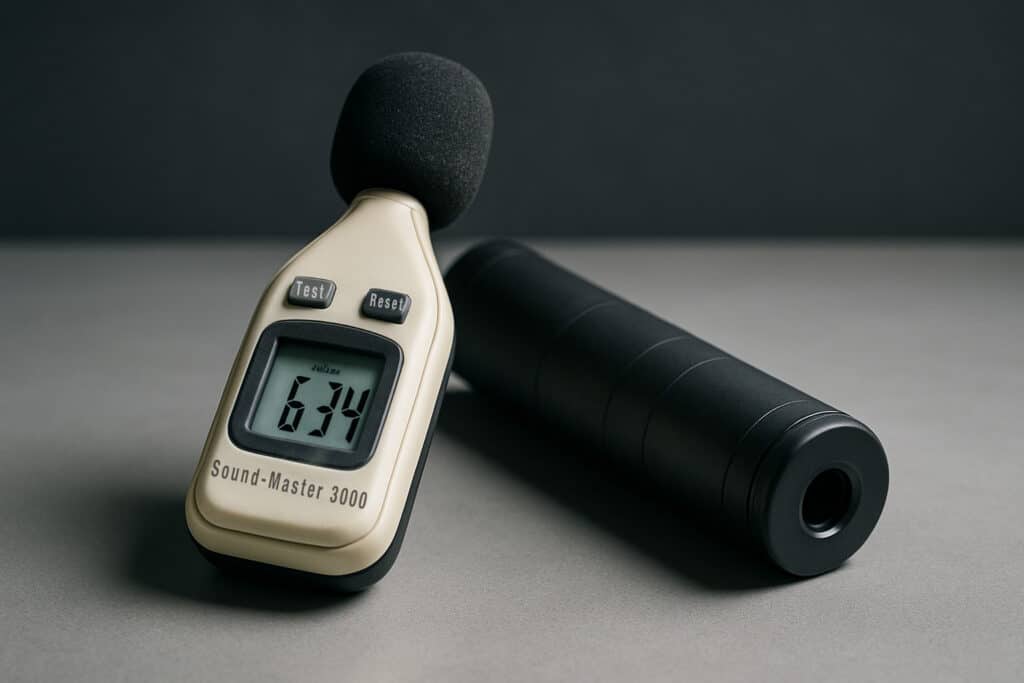
Pew science suppressor testing is a topic every suppressor owner should understand before making any purchase or modification decision. Pew Science is an independent, non-partisan research organization that conducts standardized acoustic testing of suppressors and publishes the results publicly — providing objective sound-level data that buyers and manufacturers can actually compare. In an industry where marketing claims about dB reduction have historically been difficult to verify or compare across products, Pew Science’s standardized testing methodology has become the gold standard for evaluating suppressor sound performance. If you are researching suppressor purchases, understanding Pew Science’s test data helps you cut through marketing noise and make evidence-based decisions.
In This Article
- What Is Pew Science? The Organization Testing Suppressors with Real Data
- Why Independent Suppressor Testing Matters
- How Pew Science Tests Suppressors
- How to read a Suppression Rating
- Understanding Pew Science dB Ratings
- What Pew Science Tests Tell You About Real-World Performance
- Pew Science Beyond Sound Testing
- Using Pew Science Data in Your Suppressor Purchase Decision
- How Manufacturers Respond to Pew Science Testing
- Frequently Asked Questions About Pew Science
Last updated: September 15, 2026 · Originally published March 7, 2026
More suppressor research tools: How Suppressors Work, Best Suppressor for AR-15, BANISH 30 V2 Complete Guide, About Silencer Central, and Suppressor Legal States 2026.
Key Takeaways
- Pew Science uses standardized SAAMI test conditions: 1-meter microphone distance, specific ammunition, controlled environment
- Their database is the most comprehensive independent suppressor sound testing resource available to consumers
- Manufacturer dB claims are often measured under favorable conditions — Pew Science tests all suppressors identically
- Lower dB numbers in Pew Science tests are directly comparable across brands — unlike manufacturer specs
- They test at the muzzle (MIL-SPEC), at the shooter’s ear, and with multiple calibers for each suppressor
Why Independent Suppressor Testing Matters
For years, suppressor sound reduction claims were largely self-reported by manufacturers using inconsistent methodologies — different measurement distances, different microphone placements, different test ammunition, and different host firearms. This made it nearly impossible to make apples-to-apples comparisons between competing products. A manufacturer claiming “30 dB reduction” might be measuring at 1 meter from the muzzle; another might measure at the shooter’s ear. Both numbers could be technically accurate while being practically incomparable. Pew Science addresses this by establishing and rigorously following a standardized test protocol, then publishing all results — including methodology — for public review and scrutiny.
How Pew Science Tests Suppressors
Pew Science uses a standardized acoustic testing protocol derived from MIL-STD-1474D, a military standard for measuring impulsive noise, adapted for civilian suppressor testing. Tests are conducted using consistent host firearms, standardized ammunition, and microphone arrays positioned at defined locations relative to the muzzle. Results are expressed as peak sound pressure level in dB(C) — the C-weighted decibel scale that best represents the physiological impact of impulsive noise on human hearing. By using the same methodology across all tested products, Pew Science’s published data allows direct comparison between suppressors tested under identical conditions.

How to read a Suppression Rating
The number people quote is a Suppression Rating, and it runs 0 to 100 on one comparative scale. Higher is quieter. It is not a decibel figure and it is not a single measurement, which is why it will not match the number on a manufacturer spec sheet. It is built from six things at once, and each one maps to something you actually care about.
| What is measured | Where | What it tells you |
|---|---|---|
| Peak pressure at the muzzle | 1.0 m to the left of the muzzle, firearm 1.6 m off the ground | How loud it is for anyone standing beside you on the line |
| Peak pressure at the ear | 0.15 m to the right of the shooter right ear, with the head in place | What you hear, including sound bouncing off your own head |
| How long the pressure wave lasts | Both positions | Why two cans with the same peak can feel completely different |
| Phase and frequency | Both positions | Whether the report is a sharp crack or a dull thump |
| Hearing damage risk | Modeled for shooter and bystander, warned and unwarned | Roughly how many rounds a day you can fire before doing permanent damage |
| The can paired with its host | Whole weapon system, about five shots per configuration | That a rating belongs to a can on a specific rifle, not to the can alone |
Method summarized from the PEW Science Silencer Sound Standard and test method pages, read September 15, 2026. The ratings themselves are PEW Science data and live on their site; we do not republish them.
Understanding Pew Science dB Ratings
Pew Science reports sound levels in dB(C) Peak rather than the A-weighted dB(A) scale common in industrial noise measurement. For impulsive sounds like gunshots, peak dB(C) is more physiologically relevant — the human ear responds to peak sound pressure, and impulsive sounds like gunshots cause damage based on peak level rather than average level. When comparing Pew Science data across suppressors, lower numbers indicate better sound reduction. A difference of 3 dB represents a doubling or halving of sound energy; a difference of 10 dB is perceived as roughly twice or half as loud by the human ear. Even 1–2 dB differences between quality suppressors are meaningful when you are near the hearing-safe threshold.

What Pew Science Tests Tell You About Real-World Performance
Pew Science’s standardized test data is the best available proxy for real-world suppressor performance in controlled conditions. However, real-world results will vary based on several factors: your specific host firearm’s barrel length and gas system tuning, the specific ammunition lot and temperature on the day you shoot, and environmental acoustics (indoor vs. outdoor, terrain reflections). Pew Science’s data is best used as a comparative tool — identifying which suppressors perform better relative to each other in the same caliber — rather than as an absolute prediction of exactly how loud your specific setup will be. Suppressors that score well in Pew Science testing consistently perform well in real-world use, but the exact dB numbers will vary.
Pew Science Beyond Sound Testing
Pew Science’s scope has expanded beyond acoustic testing to include research on hearing damage from firearms, advocacy for evidence-based hearing conservation policy, and education about the genuine health risks of unsuppressed shooting. The organization publishes accessible summaries of the scientific literature on noise-induced hearing loss from firearms, helping shooters understand cumulative exposure risk. This broader mission positions Pew Science as both a consumer testing resource and a voice for hearing health in the shooting community — providing the scientific foundation for policy arguments around suppressor deregulation and hearing protection measures.

Using Pew Science Data in Your Suppressor Purchase Decision
When comparing suppressor options, check Pew Science’s published database for test results on models you are considering. Look for tests conducted with the same host firearm and ammunition you plan to use, or the closest available equivalent. Pay attention to the measurement location — muzzle measurements and shooter’s-ear measurements tell you different things about real-world use. Compare the tested suppressor’s performance against both other suppressors in the same class and against unsuppressed baseline measurements for the same caliber. A suppressor that reduces muzzle sound from 165 dB to 135 dB represents 30 dB of genuine protection — the difference between certain hearing damage and significant (though not complete) hearing protection.
How Manufacturers Respond to Pew Science Testing
Many suppressor manufacturers actively submit products for Pew Science testing because objective third-party data strengthens marketing claims and differentiates quality products from budget competitors. Manufacturers whose products perform well in standardized testing prominently feature those results. Some manufacturers have improved designs based on Pew Science data, using the testing as a development tool rather than purely a marketing asset. Consumers should view a manufacturer’s willingness to submit products for independent testing — and their transparency about the results — as a positive signal about product quality and corporate confidence in their suppressor’s real-world performance.
Frequently Asked Questions About Pew Science
Is Pew Science affiliated with any suppressor manufacturer?
No. Pew Science operates as an independent organization and accepts no compensation from manufacturers whose products it tests. The organization’s funding comes from individual donors, grants, and membership support. This independence is central to the credibility of its testing data — results are not influenced by commercial relationships with the tested manufacturers. Some manufacturers sponsor Pew Science’s broader hearing health research mission separate from product testing.
Where can I find Pew Science suppressor test data?
Pew Science publishes its suppressor test results at pewscience.org. The database is searchable by suppressor model, caliber, and host firearm. Results include peak sound levels at multiple measurement points, test conditions, and methodology notes. The database is regularly updated as new products are tested. Many suppressor review sites and forums reference Pew Science data; always verify that referenced data comes from the Pew Science published database rather than from a manufacturer’s marketing materials that may cherry-pick favorable measurements.
How does Pew Science’s data compare to manufacturer dB claims?
Manufacturer dB claims often differ from Pew Science’s independently measured results — sometimes favorably, sometimes not. Differences arise from testing methodology: manufacturers may use shorter measurement distances, different reference levels, or test conditions optimized for their product’s best performance. Pew Science’s standardized methodology produces conservative, real-world-representative numbers. When evaluating a suppressor with both manufacturer claims and Pew Science data available, trust the Pew Science numbers for comparative purposes, and treat manufacturer claims as directional marketing rather than precise specifications.
Disclosure: PopularSuppressors.com is a media property of Brand Avalanche Media, Inc. All editorial opinions are our own.
For in-depth suppressor sound comparisons, testing methodology, and performance reviews, visit Guns & Gadgets Daily, BAM’s firearms gear publication.
Related guides: common suppressor myths, subsonic ammo guide, and best 5.56 suppressor.
Similar Posts




More Questions
What is PEW Science?
PEW Science is an independent suppressor testing organization providing standardized, peer-reviewed sound reduction data. It was founded to bring scientific rigor to suppressor performance claims, testing cans under controlled conditions and publishing results consumers and manufacturers can rely on.
How does PEW Science test suppressors?
PEW Science tests suppressors using standardized microphone placement, ammunition, and host firearms to produce comparable dB readings across brands and models. Their Sound Summit events are the primary venue for published data, designed to eliminate variables that cause inconsistent results in manufacturer-published specs.
Why does PEW Science data matter when buying a suppressor?
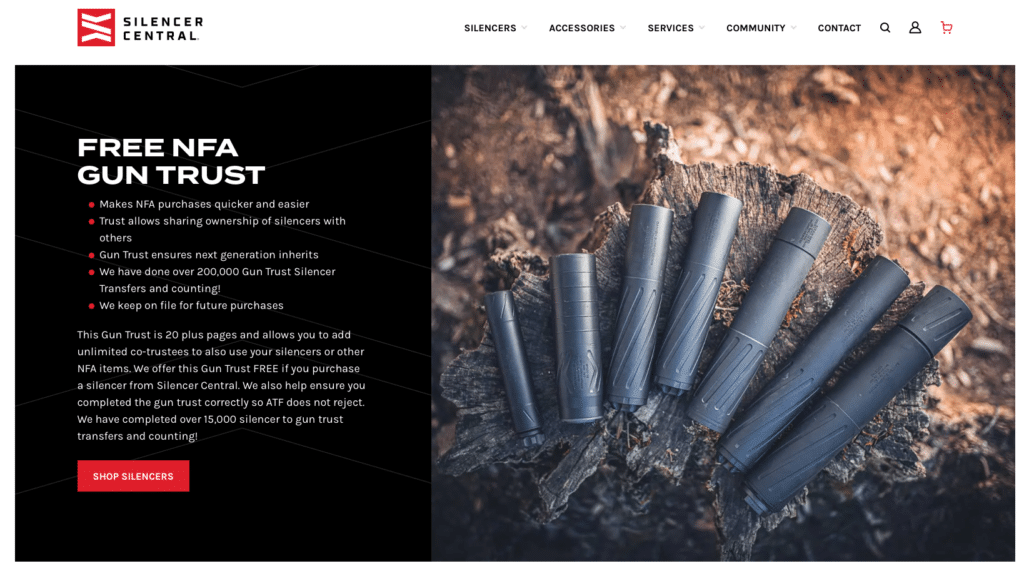
Manufacturer sound reduction claims are often measured under ideal conditions, making direct comparisons unreliable. PEW Science data lets buyers compare suppressors on equal footing. Silencer Central's BANISH suppressors have participated in independent testing — check real-world performance data at SilencerCentral.com before buying.