Suppressor Service Life: How Long Does a Suppressor Last?
In This Article
- The Modern Suppressor: Built to Last Decades
- Expected Service Life by Caliber and Use
- Factors Affecting Suppressor Lifespan
- Does a Suppressor Lose Effectiveness Over Time?
- Suppressor Repair and Replacement
- The Value of Buying Quality: Long-Term Investment Thinking
- Get Your Suppressor — Delivered to Your Door
- Products and Brands Mentioned
- Official Resources
- Frequently Asked Questions
Last updated: September 15, 2026 · Originally published April 17, 2026
Modern suppressors are built to last decades with proper care. Rimfire suppressors typically handle 20,000–40,000 rounds; 9mm pistol suppressors handle 60,000–100,000+ rounds; .223/5.56 rifle suppressors handle 30,000–50,000 rounds; and larger caliber suppressors handle 10,000–30,000 rounds. With a lifetime warranty like BANISH provides, your suppressor investment is protected against manufacturing defects throughout its lifespan.
A quality suppressor, properly maintained and stored, will continue delivering excellent sound reduction for decades of regular shooting. This comprehensive guide details realistic service life expectations for different caliber suppressors, explains the factors affecting longevity, and reveals how lifetime warranties like BANISH provide protection for your investment. Whether you’re buying your first suppressor or evaluating upgrade options, understanding service life helps you make informed decisions and appreciate the true value of your equipment. Explore our suppressor maintenance guide to learn how proper care extends service life, read our suppressor materials guide to understand which materials last longest, or discover our how suppressors work physics overview.

The Modern Suppressor: Built to Last Decades
Today’s suppressors represent engineering excellence achieved through decades of refinement. Unlike suppressors from twenty years ago that frequently exhibited premature failures, modern centerfire suppressors routinely deliver reliable performance for tens of thousands of rounds. Even rimfire suppressors, which operate under more demanding conditions due to lead fouling, consistently exceed 20,000 rounds when properly maintained. The combination of advanced materials, precision manufacturing, and proven baffle designs creates suppressors that truly are lifetime investments.
The investment perspective has shifted fundamentally with the elimination of the NFA tax stamp in January 2026. Previously, the recurring costs of suppressor ownership included both the initial suppressor purchase and a one-time $200 transfer tax, which ended on 1 January 2026. Today, a single purchase delivers a suppressor you can own, maintain, and shoot for life without any recurring costs. This shift makes the lifetime durability of quality suppressors particularly significant—you’re purchasing one piece of equipment that will serve you reliably for potentially decades.
Quality Construction as the Foundation
Modern suppressor manufacturers employ precision engineering, quality materials, and rigorous testing to ensure reliability. Baffle designs are optimized to minimize erosion while maximizing sound suppression. Materials like titanium and stainless steel withstand the heat and pressure of thousands of firing cycles. Welding and assembly processes are performed to exacting standards ensuring structural integrity under demanding conditions. This attention to engineering quality translates directly into longer service life and more reliable performance over the life of the suppressor.
Expected Service Life by Caliber and Use
Service life expectations vary by caliber and use pattern. Understanding realistic expectations for your specific suppressor helps you evaluate its long-term value and plan for maintenance or eventual replacement if necessary.
Rimfire Suppressors: The High-Maintenance Category
Rimfire suppressors typically deliver 20,000–40,000 rounds of service with regular cleaning and maintenance. Some exceptionally well-maintained rimfire suppressors exceed 40,000 rounds, particularly those using premium ammunition. The limiting factor for rimfire service life is baffle erosion from lead deposits and fouling accumulation. Regular cleaning every 250–500 rounds directly extends service life by removing fouling that would otherwise accelerate erosion and cause internal damage.
The wider range for rimfire service life reflects variation in ammunition quality, shooting frequency, and cleaning discipline. Budget ammunition with variable powder charges and inconsistent bullet quality fouls suppressors faster than premium ammunition, reducing service life. Similarly, shooters who clean regularly after every 250 rounds achieve longer service than those who wait until 500 rounds between cleanings. Premium ammunition combined with diligent maintenance can extend rimfire suppressor life significantly beyond the average range.
9mm Pistol Suppressors: Reliable Long-Service Options
Centerfire pistol suppressors handling 9mm ammunition typically deliver 60,000–100,000+ rounds of reliable service. The cleaner combustion of centerfire ammunition compared to rimfire, combined with lower pressure and temperature compared to rifle calibers, creates favorable conditions for extended suppressor life. Many shooters report their 9mm suppressors remain in regular use after 100,000+ rounds with minimal performance degradation.
Service life for 9mm suppressors is limited primarily by baffle erosion rather than fouling issues. As baffle surfaces gradually wear smooth from thousands of pressure cycles, sound suppression gradually decreases. This degradation is so gradual that most shooters would not notice a significant sound difference between a fresh suppressor and one with 50,000 rounds. The performance loss becomes obvious only after very high round counts.

.223/5.56 Rifle Suppressors: Balanced Performance and Durability
Suppressors designed for .223 Remington and 5.56 NATO—the standard modern rifle calibers—typically deliver 30,000–50,000 rounds of service. The higher pressure and temperature of rifle cartridges compared to pistol rounds accelerates baffle erosion, reducing service life compared to pistol suppressors. However, the cleaner combustion of centerfire ammunition and lower powder volume compared to larger rifle calibers creates balanced longevity expectations.
Within this category, suppressors designed for semi-automatic rifles achieve longer service life than those rated for full-automatic use, which are engineered for extreme duty and reliability under sustained fire. For the average shooter using their suppressor for hunting and recreational shooting, 30,000–50,000 rounds represents many years of service—easily a decade or more depending on annual shot volume.
.30 Caliber and Magnum Suppressors: Higher Pressure, Shorter Service
Suppressors designed for .30-06, .300 Win Mag, and other large, powerful cartridges typically deliver 10,000–30,000 rounds of service. The significantly higher pressure and temperature of these larger calibers accelerates baffle erosion compared to smaller cartridges. Additionally, recoil and stress from larger calibers place greater mechanical demands on the suppressor structure, potentially limiting service life.
The wider service life range reflects major differences in suppressor design philosophy. Standard suppressors for hunting use might deliver 10,000–15,000 rounds reliably, while specialized designs for particular cartridges or use cases might extend to 30,000 rounds. Shooters using large calibers should expect to eventually replace their suppressors after sustained use, though replacement after 20,000+ years represents excellent longevity for equipment under such demanding conditions.
Factors Affecting Suppressor Lifespan
Several factors interact to determine how long your specific suppressor will deliver reliable performance. Understanding these factors helps you maximize your suppressor’s lifespan through proper maintenance and use.
Material Selection: Titanium vs. Aluminum vs. Steel
Material choice significantly affects suppressor durability. Titanium offers superior corrosion resistance, higher melting temperature, and excellent strength-to-weight ratio. Titanium suppressors typically outlast aluminum equivalents by several thousand rounds. Steel suppressors occupy a middle ground—heavier than aluminum but very durable, though requiring more careful storage to prevent rust. For centerfire rifles, titanium suppressors represent the optimal choice for longevity if budget allows; aluminum suppressors offer excellent value but slightly reduced lifespan; steel suppressors work well for users prioritizing cost over weight.
Rimfire suppressors are typically aluminum due to its lighter weight and adequate durability for rimfire use. The lower pressure and temperature of rimfire ammunition doesn’t stress aluminum as heavily as centerfire uses. Titanium rimfire suppressors are available but provide limited practical advantage given rimfire’s lower operating pressure.
Baffle Design and Geometry
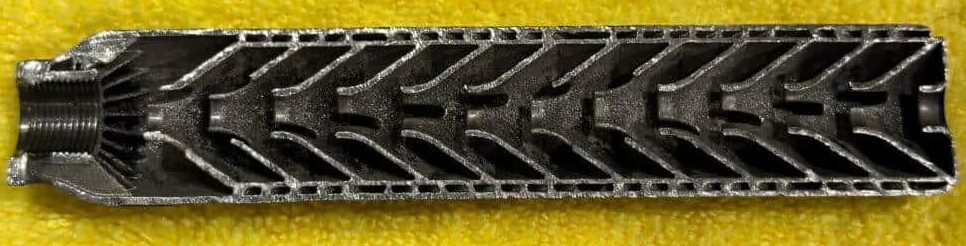
Suppressor designers optimize baffle shape, spacing, and material thickness to balance sound suppression against service life. Designs emphasizing maximum sound reduction may sacrifice some durability by using thinner baffles that wear faster. Conversely, designs emphasizing durability may achieve slightly less sound suppression. Quality manufacturers achieve excellent balance, designing baffles that wear slowly while delivering competitive sound reduction. Premium suppressors incorporate materials and designs that minimize erosion without compromising performance.
Caliber and Operating Pressure
Larger, more powerful calibers accelerate suppressor wear through higher pressure and temperature exposure. .223 rifles create less demanding conditions than .308 rifles, which create less demanding conditions than .300 magnums. This is a fundamental physics reality—higher pressure environments accelerate material erosion. Shooters should realistically expect their magnum suppressors to require eventual replacement before their 9mm suppressors, even with identical maintenance and use frequency.
Round Count and Shooting Frequency
Raw round count directly determines baffle erosion and wear. Higher round counts inevitably produce more wear. However, shooting frequency interacts with service life in interesting ways—a suppressor used heavily but maintained regularly may outlast one used lightly but neglected. The key variable is maintenance consistency: whether you shoot 10,000 rounds annually or 2,000 rounds annually, regular cleaning and proper storage maximize your suppressor’s lifespan.
Ammunition Quality and Consistency
Premium, consistent ammunition produces less fouling and cleaner combustion compared to budget ammunition. Rimfire suppressor owners particularly notice this distinction—premium ammunition extends service life significantly compared to budget options. Centerfire shooters experience the effect more subtly but still measurably. Using high-quality ammunition is an easy way to extend suppressor service life, particularly for rimfire applications.
Maintenance Discipline and Storage Conditions
Regular maintenance directly extends service life. Rimfire suppressors cleaned every 250 rounds will outlast those cleaned every 1,000 rounds due to reduced fouling-induced erosion. Similarly, suppressors stored in dry, stable conditions will resist corrosion and degradation compared to those stored in damp environments. Shooters committed to proper maintenance can expect to exceed average service life expectations; conversely, neglectful storage and maintenance can reduce service life below normal expectations.
Does a Suppressor Lose Effectiveness Over Time?
Yes, suppressors gradually lose effectiveness as operating hours accumulate. This is normal, expected, and gradual enough that most shooters never notice unless they compare a brand-new suppressor directly against their high-round-count model.
The Gradual Nature of Performance Degradation
Baffle surface erosion happens continuously during firing. Smooth, sharp baffle edges gradually become rounded as pressure waves and projectile wakes wear them. This rounding reduces the precision with which baffles redirect pressure waves and disrupt sound energy. The cumulative effect is a barely perceptible increase in sound level over thousands of rounds.
Quantifying this degradation is difficult because suppressor sound depends on so many variables: ammunition, barrel length, shooting location, ambient temperature, and measurement methodology. However, professional testing of heavily used suppressors consistently shows that a 30,000-round suppressor typically produces sound levels only 1–2 dB louder than a new suppressor. A 3 dB sound increase is barely perceptible to the human ear—you would need to fire both suppressors immediately adjacent to recognize the difference. In practical shooting, this degradation is imperceptible to the shooter.
The Investment Perspective: One-Time Cost, Decades of Use
Even accounting for gradual performance degradation, a quality suppressor represents exceptional long-term value. You purchase it once, receive NFA approval once, and maintain it minimally for potential decades of use. The end of the $200 transfer tax further improves the value proposition. A suppressor that delivers 90% of new performance after 30,000 rounds is still an excellent investment compared to purchasing a new suppressor every few years.
Suppressor Repair and Replacement
When suppressors show signs of wear or damage, several options exist depending on severity and warranty status.
Professional Repair and Gunsmith Service
Licensed gunsmith FFL dealers can evaluate and repair suppressors. Simple repairs include re-threading the muzzle threads to a larger diameter if threads have become worn, replacing damaged end caps, or addressing loose baffles. More complex repairs might involve baffle replacement or full internal refurbishment. Repair costs vary widely from fifty to several hundred dollars depending on damage severity and required work.
Professional evaluation is essential before continuing to shoot a damaged suppressor. Internal damage can progress during firing, potentially causing catastrophic failure or firearm damage. If you suspect suppressor damage, contact a professional before your next shooting session.
Lifetime Warranty Coverage: The BANISH Advantage
BANISH suppressors from Silencer Central are backed by a comprehensive lifetime warranty covering manufacturing defects under normal use. This is a significant value proposition that distinguishes BANISH from many competitors. If your BANISH suppressor fails due to a manufacturing defect, Silencer Central provides repair or replacement at no cost to you, regardless of how many years have passed since purchase.
The lifetime warranty essentially eliminates financial risk from suppressor failure. You purchase once, maintain it properly, and Silencer Central backs your investment for life. This warranty is particularly valuable given that suppressors are one-time purchases with no recurring costs (since the NFA tax stamp was eliminated January 1, 2026).
NFA Registration and Suppressor Replacement
When a suppressor becomes damaged beyond practical repair, its NFA registration terminates. If you file an ATF Form 2 reporting the suppressor as destroyed, you can register a replacement suppressor under a new serial number. Alternatively, you can simply let the registration lapse if you’re not replacing the suppressor. Never destroy a registered NFA suppressor without proper documentation and ATF notification—doing so without proper filing can create legal complications.
The Value of Buying Quality: Long-Term Investment Thinking
Purchasing a quality suppressor with a lifetime warranty is fundamentally different from purchasing budget equipment. Quality suppressors deliver superior sound suppression from day one and maintain that performance for decades with minimal maintenance. BANISH suppressors from Silencer Central exemplify this philosophy—engineered for durability, backed by lifetime warranty, and designed to deliver a lifetime of reliable service.
Cost Per Year of Service
Consider suppressor cost from a years-of-service perspective. A quality suppressor costing two thousand dollars that delivers twenty years of regular use works out to one hundred dollars per year of service. A budget suppressor costing eight hundred dollars that delivers five years of use also works out to one hundred fifty dollars per year. Quality suppressors, despite higher initial cost, deliver superior lifetime value due to extended service life and maintained performance.
The elimination of the NFA tax stamp further improves the value proposition. Previously, suppressor ownership cost two hundred dollars annually in tax stamp renewal costs. A suppressor purchased today costs nothing to own indefinitely. This shifts the value calculation dramatically in favor of quality, long-lived equipment.
Get Your Suppressor — Delivered to Your Door
Silencer Central handles all NFA paperwork and delivers your suppressor direct to your door. Visit SilencerCentral.com and enter the 100 Days of Silence giveaway for your chance to win a free suppressor.
Products and Brands Mentioned
- BANISH suppressors (lifetime warranty, sealed centerfire)
- Silencer Central (NFA dealer, warranty service, processing)
- Titanium suppressors (superior corrosion resistance, longer life)
- Aluminum suppressors (good value, adequate durability)
- Steel suppressors (cost-effective, rust management required)
- Gunsmith FFL dealers (professional repair and service)
- Premium ammunition (extended suppressor service life)
Official Resources
Frequently Asked Questions
How many rounds can a suppressor handle?
Rimfire suppressors: 20,000–40,000 rounds with regular cleaning. Nine-millimeter pistol suppressors: 60,000–100,000+ rounds. .223/5.56 rifle suppressors: 30,000–50,000 rounds. .30 caliber and magnum suppressors: 10,000–30,000 rounds. Service life depends on maintenance, ammunition quality, and suppressor design. Quality maintenance extends these ranges significantly.
Do suppressors lose effectiveness over time?
Yes, suppressors gradually lose effectiveness as baffle surfaces erode. This degradation is gradual and subtle—a quality suppressor after 30,000 rounds typically sounds only 1–2 dB louder than brand new, an imperceptible difference to the human ear. Professional sound testing reveals the degradation, but in practical shooting, most users never notice.
What does a BANISH lifetime warranty cover?
BANISH lifetime warranty covers manufacturing defects under normal use. If your suppressor fails due to a defect, Silencer Central provides repair or replacement at no cost, regardless of how many years have passed since purchase. This is a significant value proposition protecting your investment for life.
Can my suppressor be repaired?
Yes, licensed gunsmith FFL dealers can repair suppressors. Simple repairs include re-threading worn muzzle threads, replacing damaged end caps, or addressing loose baffles. More complex repairs might involve baffle replacement. BANISH warranty covers defects at no cost. Budget fifty to several hundred dollars for non-warranty repairs depending on damage severity.
What factors affect suppressor lifespan?
Material (titanium outlasts aluminum), baffle design, caliber (larger calibers wear faster), round count, ammunition quality (premium outlasts budget), and maintenance all affect service life. Proper maintenance and dry storage extend lifespan significantly, while neglectful storage can reduce it.
Similar Posts