Suppressor Maintenance Guide: Keep Your Can Running Right
Most modern suppressors—especially sealed centerfire models—require minimal routine maintenance. Store your suppressor in a cool, dry place, keep muzzle threads clean and lightly oiled, and always use a thread protector when the suppressor is not mounted. Rimfire suppressors require regular cleaning every 250–500 rounds. Watch for signs of wear like increased sound levels or baffle strikes, and contact a professional if damage occurs.
In This Article
- Understanding Suppressor Maintenance Philosophy
- Thread Maintenance: The Foundation of Proper Suppressor Care
- Storage: Creating the Ideal Environment for Your Suppressor
- Understanding Baffle Strikes: Prevention and Response
- Rimfire Suppressors: When Maintenance Becomes Essential
- Sound Performance Changes: What’s Normal and What Isn’t
- BANISH Suppressors and Manufacturer Service Support
- Professional Gunsmith Service: When to Contact an Expert
- Get Your Suppressor — Delivered to Your Door
- Products and Brands Mentioned
- Official Resources
- Frequently Asked Questions
Last updated: October 19, 2026 · Originally published April 17, 2026
Suppressor maintenance doesn’t have to be complicated. Whether you own a sealed centerfire can or a serviceable rimfire suppressor, this guide covers everything you need to keep your investment running smoothly for decades. Learn the difference between sealed and serviceable suppressors, master thread maintenance, understand proper storage, and discover when to seek professional service. A well-maintained suppressor will continue delivering consistent sound reduction and reliability year after year. Explore our suppressor materials guide to understand your can’s construction, or jump to our how suppressors work overview for the physics behind your equipment.
Understanding Suppressor Maintenance Philosophy
Modern suppressors are engineered for durability and minimal maintenance requirements. The best way to think about suppressor maintenance is preventive care—keeping your can clean, dry, and protected from environmental damage is far easier than dealing with corrosion or performance degradation later. High-quality suppressors, particularly those with a lifetime warranty like BANISH models, are designed to last for decades with just basic care.
The maintenance philosophy varies depending on whether you own a sealed or serviceable suppressor. Sealed suppressors, which make up the majority of centerfire options, offer the advantage of “set it and forget it” ownership. Serviceable suppressors, primarily rimfire models, require more hands-on care but reward you with easy cleaning and customization options. Both approaches deliver excellent results—it simply depends on your shooting habits and preference for control over your equipment.
Sealed Versus Serviceable: Understanding the Difference
Sealed suppressors permanently enclose the baffle stack inside a tube with welded end caps that prevent disassembly. This design eliminates the possibility of accessing internal components for cleaning. Because centerfire ammunition produces cleaner combustion byproducts compared to rimfire lead deposits, sealed suppressors rarely require internal cleaning. Think of sealed suppressors as the low-maintenance option—they’re engineered to deliver decades of performance without user intervention beyond basic thread care.
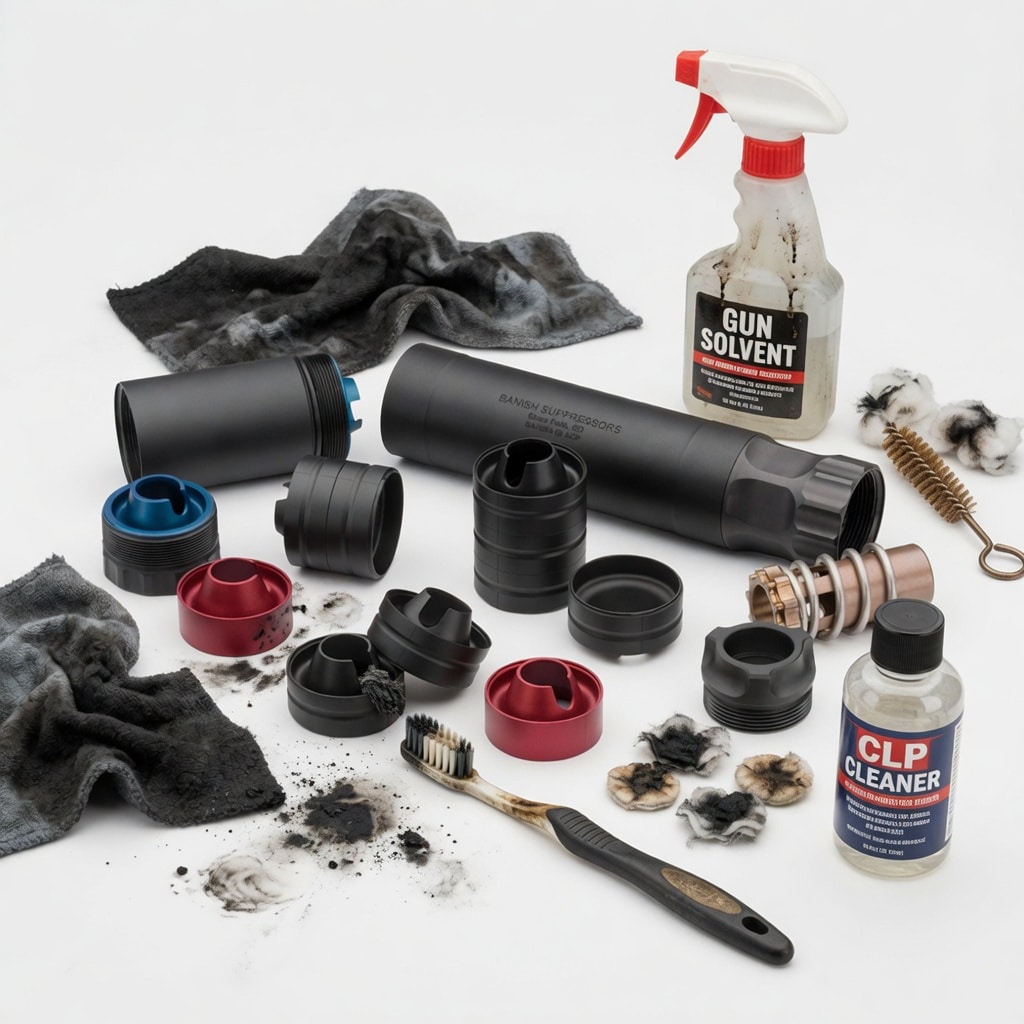
Serviceable suppressors, by contrast, feature a removable end cap that allows you to disassemble and clean the baffle stack. This design is nearly universal among rimfire suppressors because rimfire ammunition deposits lead and unburned powder directly on internal baffles. Regular cleaning is essential for rimfire suppressors to maintain performance and prevent internal component fusion. Serviceable designs also appeal to enthusiasts who enjoy maintaining and customizing their equipment throughout the year.


Thread Maintenance: The Foundation of Proper Suppressor Care
One of the most overlooked yet critical aspects of suppressor maintenance is thread care. Your suppressor attaches to your firearm through muzzle threads, and keeping these threads clean and properly lubricated directly impacts both attachment reliability and sound suppression performance. Dirty or damaged threads can cause the suppressor to attach misaligned, increasing the risk of baffle strikes and degraded sound reduction.

Keeping Your Muzzle Threads Clean
Muzzle threads accumulate fouling from firing residue, dust, and environmental debris over time. Before each mounting session, inspect both the muzzle threads on your rifle and the threads inside the suppressor’s rear cap. Use a clean cloth or patch to wipe away any visible fouling. A small brass brush works well for more stubborn deposits. This simple fifteen-second check prevents the buildup that can cause attachment problems and misalignment issues down the road.
After cleaning your firearm, pay special attention to the muzzle threads. Carbon and powder residue naturally collect in the thread valleys, and moisture can trap in these areas promoting corrosion and rust formation. A quick wipe-down with a dry patch followed by a very light application of gun oil prevents both fouling and rust. For most shooters, this monthly maintenance is entirely sufficient. If you shoot frequently in wet or dusty conditions, increase the frequency to every two weeks.
Thread Protectors: Your First Line of Defense
Always reinstall a thread protector on your rifle when the suppressor is not mounted. Thread protectors are inexpensive insurance against damage and contamination. They keep dirt, moisture, and impact damage away from your muzzle threads. A single thread protector costs ten to thirty dollars and protects against expensive thread repair work that might cost hundreds of dollars. Additionally, a protective cap prevents the suppressor from accidentally striking concrete, rocks, or other hard surfaces when carried or stored.
Many modern rifles ship with factory thread protectors included. If your rifle didn’t come with one, consider purchasing quality protectors for each rifle in your collection. Silencer Central and most online retailers stock thread protectors in common caliber threads: 1/2×28 for 5.56 and .308 centerfire rifles, 5/8×24 for .300 Win Mag and larger calibers, 1/2×20 for handguns, and 13.5x1mm left-hand for some AR pistols. Store a spare thread protector in your range bag alongside your suppressor case for backup.

Storage: Creating the Ideal Environment for Your Suppressor
Where and how you store your suppressor directly impacts its longevity and performance. The primary enemies of suppressor longevity are moisture, extreme heat, and physical damage. A properly maintained storage environment prevents corrosion and keeps your investment safe for the decades ahead.
Home Storage Best Practices
The ideal storage location is inside a locked gun safe in a cool, dry area of your home. Gun safes protect your suppressor from theft, unauthorized access, and environmental exposure. Position your suppressor vertically—either muzzle-up or muzzle-down—rather than horizontally. Vertical storage allows any residual moisture to drain away from critical internal components. If you store multiple suppressors, use foam dividers or separate compartments to prevent metal-on-metal contact that can cause scratches and cosmetic damage over time.
Place silica gel desiccant packets inside your gun safe to absorb ambient moisture. Desiccant packets are inexpensive, last for months, and can be recharged by baking in an oven at low temperature. A safe interior maintained at low humidity prevents rust formation on steel components and corrosion on aluminum alloy bodies. Check humidity levels monthly with an inexpensive hygrometer—aim for below 30 percent relative humidity for optimal protection.
Never store your suppressor in areas subject to extreme temperature swings like an attic, basement, or garage. These locations experience moisture condensation as temperature fluctuates daily and seasonally, creating an ideal environment for corrosion and rust. Interior closets and bedroom safes maintain more stable temperatures and humidity levels year-round, extending suppressor lifespan significantly.
Moisture and Corrosion Prevention
Titanium suppressors are highly corrosion-resistant and can withstand years of exposure to moisture with minimal risk of damage. However, aluminum and steel components still require active protection. Apply a very light coat of gun oil to external metal surfaces before extended storage periods. This protective layer prevents rust formation without accumulating grime or dust that might affect function. Use a microfiber cloth to apply oil evenly, then wipe away excess with a clean cloth for a polished appearance.
Never store a wet or damp suppressor in your gun safe or case. Always allow your suppressor to air dry completely after cleaning or use in wet conditions. Even a few hours of residual dampness trapped inside a tube can begin rust formation on steel components. If you’ve used your suppressor in rain or near water, remove the thread protector and allow the interior to air dry in a warm, dry location for several hours before storing it away for the season.
Understanding Baffle Strikes: Prevention and Response
A baffle strike occurs when a fired projectile contacts the inside surface of a baffle during its passage through the suppressor tube. This contact can cause erratic performance, a sharp noise distinct from normal suppressor function, and in severe cases, structural damage to the suppressor internals. Understanding what causes baffle strikes allows you to prevent them entirely through proper maintenance and careful handling.

What Causes Baffle Strikes
Baffle strikes result from suppressor misalignment during firing. The most common causes are worn or damaged muzzle threads that prevent the suppressor from sitting perfectly concentric with the barrel, use of an incorrect adapter for your caliber or thread pitch, and accumulation of fouling in threads that creates a slight gap and angular offset. Even a misalignment of just one or two degrees can cause a baffle strike, particularly with larger caliber suppressors where internal clearances are tighter than in rimfire models.
Impact damage can also cause baffle strikes. If a suppressor hits concrete, rock, or other hard surfaces, the internal baffle stack can shift slightly out of alignment. Always inspect your suppressor after any impact or drop to your range bag. If you suspect internal damage, do not fire through the suppressor—contact a professional gunsmith or dealer immediately for evaluation before your next shooting session.
Prevention Through Thread Inspection and Correct Adapters
Prevent baffle strikes by maintaining clean threads and using the correct suppressor adapter for your specific rifle and caliber. Verify your muzzle thread pitch and diameter before mounting any suppressor. Common centerfire pitches are 1/2×28 and 5/8×24; using the wrong thread adapter creates misalignment. Always mount your suppressor by hand first, then gently tighten with a suppressor wrench to a firm but not overtight fit. Overtightening can strip threads and cause future misalignment problems.

Inspect muzzle threads before each use for signs of wear or damage. Threading wears gradually with repeated mounting and removal cycles, and damaged threads cannot provide proper suppressor alignment. If threads show significant wear or damage, a professional gunsmith can re-thread your barrel to the next standard size. This is far preferable to continuing to use a suppressor on damaged threads that cannot be seated properly.
Rimfire Suppressors: When Maintenance Becomes Essential
Unlike sealed centerfire suppressors, rimfire suppressors require regular maintenance to maintain performance and prevent internal damage. The lead bullet design of rimfire ammunition deposits lead and unburned powder directly onto baffle surfaces, creating buildup that degrades sound suppression and can eventually cause component fusion if left unaddressed.
Cleaning Intervals and Signs of Fouling
Clean your rimfire suppressor every 250 to 500 rounds, depending on ammunition quality and performance observation. Budget ammunition with inconsistent powder charges and unreliable bullet seating fouls suppressors faster than premium match-grade ammunition. Monitor your suppressor’s sound signature—if it gradually becomes louder over a shooting session, fouling buildup is reducing its effectiveness, and it’s time to clean before the next range visit.
Extended periods without cleaning can cause permanent damage to internal components. Baffle material erodes when lead deposits build up, and in extreme cases, internal components can actually fuse together if the suppressor operates at very high temperatures with heavy fouling accumulation. These repairs are expensive or impossible, so regular cleaning is essential preventive maintenance for long-term reliability.
Sound Performance Changes: What’s Normal and What Isn’t
Suppressors naturally exhibit slight variations in sound suppression based on ammunition type, barrel length, and shooting conditions. However, significant and gradual increases in sound level over weeks or months can indicate fouling buildup or internal damage that requires attention. Understanding what sound changes are normal helps you maintain your suppressor properly and catch problems early.
Expected Performance Variations
Minor sound variations between shooting sessions are normal and expected from any suppressor. Ammunition type significantly affects perceived sound—subsonic rounds are inherently quieter than supersonic ammunition regardless of suppressor condition. Shorter barrel firearms produce higher sound levels than longer barrels, and shooting indoors makes suppressors sound louder than outdoors due to acoustic reflections from walls and ceiling. Cold temperature shooting also produces different sound characteristics than warm weather shooting due to powder burn rates.
Degradation in sound suppression happens gradually over thousands of rounds as baffle surfaces erode slightly through normal use. This process is normal and expected with heavy use. High-quality suppressors maintain excellent sound suppression even after substantial round counts. A properly maintained suppressor that has seen 30,000 rounds will typically sound only marginally louder than a brand-new suppressor fresh from the manufacturer.
BANISH Suppressors and Manufacturer Service Support
BANISH suppressors are exclusive to Silencer Central and backed by a comprehensive lifetime warranty covering defects under normal use. Because BANISH centerfire suppressors are sealed, they require no routine maintenance beyond occasional visual inspection and thread care. This design philosophy emphasizes reliability and ease of ownership for shooters who want to purchase a suppressor and use it for decades without concern.

When to Seek Manufacturer Service
Contact Silencer Central’s service team if your suppressor develops unusual sounds like metallic rattling, exhibits signs of baffle strikes such as erratic performance, or sustains visible physical damage from impact. Silencer Central’s lifetime warranty covers genuine defects under normal use, and their service team can quickly diagnose whether a suppressor requires repair or warranty replacement. Never attempt to disassemble a sealed centerfire suppressor yourself—this requires specialized equipment and expert knowledge.
The lifetime warranty is one of the most compelling reasons shooters choose BANISH suppressors. You purchase the suppressor once, maintain basic care, and Silencer Central backs your investment for life. This eliminates the concern about eventual suppressor failure or the need for expensive repairs down the road.
Professional Gunsmith Service: When to Contact an Expert
While most maintenance is straightforward and requires only basic tools, certain situations demand professional expertise. Licensed gunsmith FFL dealers can accept suppressors for repair, inspection, and service. If you’re uncertain about your suppressor’s condition or suspect internal damage, having a professional inspect it before your next use prevents potential firearm damage or safety issues.
When Professional Service Is Necessary
Contact a professional gunsmith if you hear unusual sounds like rattling, grinding, or whistling from inside your suppressor, observe evidence of baffle strikes such as erratic performance or fire coming back out the muzzle, see physical damage from impact or drops, or notice your suppressor has become noticeably loose on your rifle despite using a suppressor wrench. A professional inspection typically costs fifty to one hundred dollars and provides peace of mind that your equipment is safe to use.
Never attempt field repairs or modifications to your suppressor. NFA items are tightly regulated, and modification requires specific licensing. Your local gunsmith FFL or Silencer Central can handle any necessary service work while maintaining compliance with ATF regulations and preserving your warranty coverage.
Get Your Suppressor — Delivered to Your Door
Silencer Central handles all NFA paperwork and delivers your suppressor direct to your door. Visit SilencerCentral.com to get started.
Products and Brands Mentioned
- BANISH 30 Gold (Silencer Central) (sealed, lifetime warranty)
- Silencer Central (NFA dealer, processing, service)
- Thread protectors (1/2×28, 5/8×24, 1/2×20, 13.5x1mm)
- Suppressor wrenches (installation tools)
- Silica gel desiccant packets (storage moisture control)
- Gun oil (thread maintenance, corrosion prevention)
- Brass bore brushes (thread cleaning)
- Hard suppressor cases (Pelican-style storage)
Official Resources
Frequently Asked Questions
How often should I clean my suppressor?
Most modern centerfire suppressors require minimal maintenance—often only an occasional visual inspection. Rimfire suppressors are the exception and need regular cleaning every 250–500 rounds, depending on your ammunition quality and shooting frequency. Sealed suppressors require virtually no internal maintenance; serviceable rimfire suppressors need periodic disassembly and baffle cleaning to maintain optimal performance and prevent component fusion.
What is a baffle strike and how do I prevent one?
A baffle strike occurs when a bullet grazes the inside of a suppressor’s baffle stack, causing misalignment or contact. This usually produces an unusual sharp sound and can damage the suppressor internally. Prevent baffle strikes by keeping muzzle threads clean and free of fouling, using the correct adapter for your rifle’s thread pitch and diameter, maintaining thread integrity through regular inspection, and ensuring proper suppressor alignment during installation.
Can I store my suppressor vertically?
Yes, you can store suppressors vertically with either the muzzle end up or down. Vertical storage actually prevents moisture accumulation in the tube. Store your suppressor in a cool, dry location inside a gun safe with silica gel desiccant. Always reinstall the thread protector when the suppressor is removed from your firearm to protect threads from damage and environmental contamination.
Does my BANISH suppressor require routine maintenance?
BANISH sealed centerfire suppressors are engineered for minimal maintenance and require no routine internal cleaning. Their design philosophy emphasizes reliability and ease of ownership. Simply keep the muzzle threads clean and lightly oiled, store in a dry environment, and use a thread protector when not in use. BANISH suppressors are backed by a lifetime warranty that covers defects under normal use.
What should I do if my suppressor sounds louder than normal?
If your suppressor becomes noticeably louder over time, fouling buildup (common in rimfire suppressors) or internal damage may be responsible. Shut down and cease firing immediately. Have a professional gunsmith or dealer inspect the suppressor before using it again. Contact Silencer Central directly for BANISH warranty service evaluation. Never continue shooting if you suspect internal damage—this can cause firearm damage or safety issues.
Related guides: how to clean a suppressor, how wet suppressors work, and suppressor mounting systems.


Similar Posts