Subsonic vs. Supersonic: What’s Quieter With a Suppressor
Last updated: April 23, 2026 · Originally published: April 17, 2026
In This Article
- The Critical Distinction: Speed of Sound
- How Suppressors Work With Each Ammunition Type
- Practical Subsonic and Supersonic Ammunition by Caliber
- When Supersonic Is the Right Choice
- When Subsonic Is Ideal
- Subsonic Ammunition and Reliable Cycling
- Terminal Performance: Subsonic vs. Supersonic
- Decibel Levels: Real-World Suppression Data
- Key Takeaways
- Get Your Suppressor — Delivered to Your Door
- Products and Brands Mentioned
- Official Resources
- Frequently Asked Questions

The Critical Distinction: Speed of Sound
All ammunition noise comes from two sources: muzzle blast and ballistic crack. Understanding the difference between subsonic and supersonic ammunition requires understanding which source each eliminates.
What Is Subsonic Ammunition?
Subsonic ammunition travels below the speed of sound—approximately 1,125 feet per second (fps) at sea level. This velocity threshold is the cornerstone of suppressor performance. Subsonic ammunition is typically heavier and slower than its supersonic counterpart. For example, 9mm subsonic loads use 147-grain bullets at ~980 fps, while standard 9mm uses lighter 115-grain bullets at ~1,300 fps.
Because subsonic ammunition stays below the speed of sound, it produces no sonic boom—no ballistic crack. The bullet flies quietly through air. A suppressor attached to a subsonic load hears only muzzle blast, which it can reduce to hearing-safe levels (often 135–140 decibels for suppressed subsonic 9mm).
What Is Supersonic Ammunition?
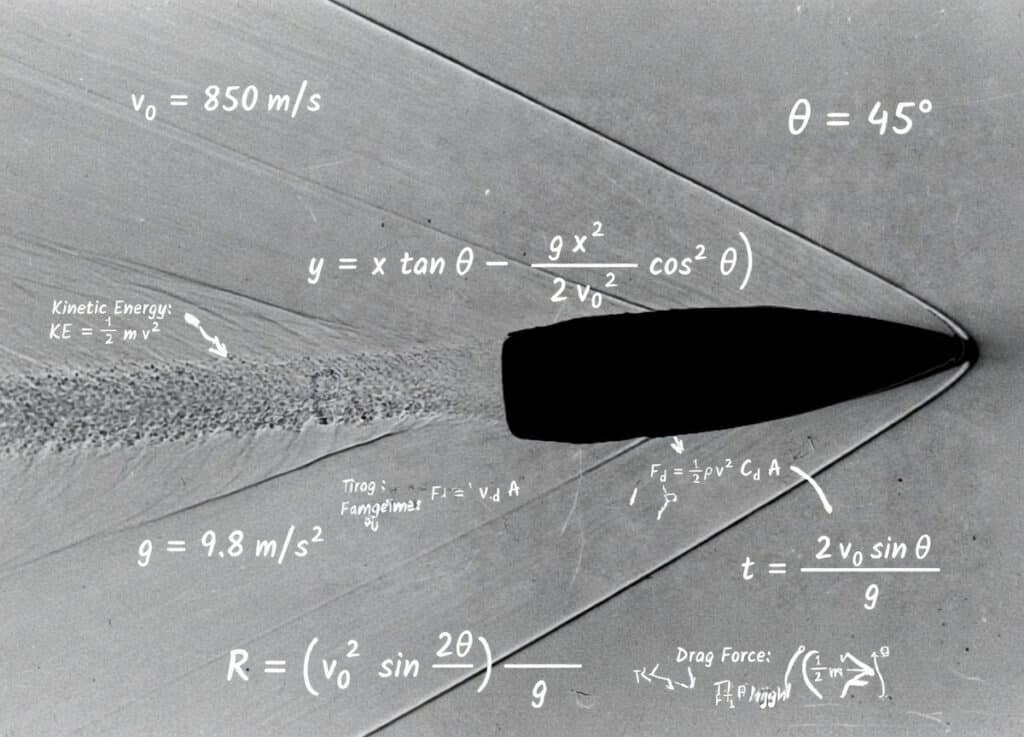
Supersonic ammunition travels faster than the speed of sound, typically 1,200–2,800+ fps depending on caliber and load. Most common ammunition is supersonic: standard 9mm, .45 ACP, 5.56 NATO, and .308 Winchester are all supersonic. These rounds deliver excellent velocity, energy, and long-range accuracy.
The downside for suppressor use: supersonic ammunition creates a ballistic crack—a sonic shock wave—as it travels through air faster than sound can propagate. This crack is a second noise source that no suppressor can eliminate. A suppressor reduces the muzzle blast of supersonic ammo, but the ballistic crack remains audible, typically 160+ decibels in unsuppressed guns and 145–160 decibels even with a suppressor.

How Suppressors Work With Each Ammunition Type
A suppressor’s job is to slow and cool expanding gases exiting the barrel. It does this brilliantly—reducing muzzle blast by 25–35 decibels. However, a suppressor cannot suppress a ballistic crack because the ballistic crack happens in front of the gun, not behind it. The bullet is already gone.
Suppressor + Subsonic Ammo = Maximum Quiet
This is the holy grail of suppressed shooting. When you fire subsonic ammunition through a suppressor:
- Muzzle blast: Suppressor eliminates 25–35 decibels of muzzle blast.
- Ballistic crack: Subsonic ammo produces zero ballistic crack (travels below sound speed).
- Result: Hearing-safe sound levels (130–140 decibels) with a true suppressor effect.
Examples of subsonic suppressor performance:
- 9mm subsonic (147gr at 980 fps) + suppressor: ~135 dB (hearing-safe with proper ear protection)
- .45 ACP (230gr at 850 fps is naturally subsonic) + suppressor: ~135 dB (naturally subsonic, excellent suppression)
- .300 BLK subsonic (220gr at 1,010 fps) + suppressor: ~140 dB (the gold standard for rifle suppression)
Suppressor + Supersonic Ammo = Muzzle Blast Reduction Only
When you fire supersonic ammunition through a suppressor:
- Muzzle blast: Suppressor eliminates 25–35 decibels.
- Ballistic crack: Supersonic ammo creates an unavoidable sonic boom in front of the gun.
- Result: Audible gunshot (typically 160+ dB) with reduced muzzle blast. Not hearing-safe without additional ear protection.
Supersonic suppressor performance:
- 9mm supersonic (115gr at 1,300 fps) + suppressor: ~160 dB (ballistic crack dominates)
- 5.56 NATO (55gr at 3,100 fps) + suppressor: ~155–160 dB (supersonic crack very audible)
- .308 Winchester (168gr at 2,680 fps) + suppressor: ~165 dB (supersonic signature clear)
Practical Subsonic and Supersonic Ammunition by Caliber
Choosing the right ammunition for your suppressor depends on your caliber and intended use. Here’s how subsonic and supersonic options compare across popular suppressor calibers.
9mm: The Most Popular Suppressor Caliber
Subsonic 9mm: 147-grain bullets at ~980 fps are the standard subsonic load. This weight is the sweet spot—heavy enough for defensive performance, slow enough to stay subsonic in virtually all 9mm barrel lengths. Subsonic 9mm achieves approximately 135–140 dB with a suppressor.
Supersonic 9mm: Standard 9mm ammunition (115gr at ~1,300 fps or 124gr at ~1,150 fps) is supersonic. When suppressed, it still produces an audible ballistic crack at 160+ dB, though notably quieter than unsuppressed. Useful for training or situations where maximum quiet isn’t critical, but shooters seeking true suppression choose subsonic.

.22 Long Rifle: The Rimfire Classic
Subsonic .22 LR: CCI Quiet-22 (710 fps) and Aguila Subsonic (950 fps) are popular options. Standard-velocity .22 LR (1,070–1,080 fps from a rifle barrel) is borderline subsonic—just barely below the sound threshold. These loads are ideal for suppressed rimfire shooting, producing some of the quietest shots possible from a firearm.
Supersonic .22 LR: CCI Mini-Mag and other high-velocity loads (1,200+ fps) produce an audible sonic crack even when suppressed, though much less pronounced than center-fire supersonic ammunition. Rimfire supersonic rounds are quieter overall than center-fire supersonic because of their low power.
.45 ACP: Naturally Subsonic
.45 ACP is unique: Standard .45 ACP ammunition (230-grain bullets at ~850 fps) is already subsonic. No special “subsonic” load is needed. Firing standard .45 ACP through a suppressor achieves excellent sound reduction (135–140 dB) without seeking specialized ammunition. This natural subsonic nature makes .45 ACP an excellent suppressor choice.
Supersonic .45 ACP: +P loads (230gr at ~920 fps, still subsonic) or heavier bullets pushed faster are rare. Most .45 ACP remains subsonic, which is why .45 ACP pistols pair so well with suppressors.
.300 Blackout: The Subsonic Specialist
.300 BLK subsonic: This caliber was engineered for suppressed use. A 220-grain bullet at ~1,010 fps in a standard 16-inch rifle barrel achieves excellent energy (468 ft-lbs) while remaining subsonic. Paired with a suppressor like the BANISH 30, .300 BLK subsonic is one of the quietest rifle combinations available.
.300 BLK supersonic: 125-grain bullets at ~2,200 fps provide excellent velocity and hunting performance, but the ballistic crack remains audible even when suppressed. Most .300 BLK hunting requires supersonic ammunition for energy and range.

.308 Winchester: A Hunting Caliber
.308 subsonic: Theoretically possible but impractical. A 240-grain bullet would need to be pushed so slowly (~1,100 fps) that energy drops below useful levels for hunting. No commercially viable .308 subsonic exists because hunters prioritize velocity and energy.
.308 supersonic: All practical .308 ammunition (168gr at ~2,680 fps, 180gr at ~2,600 fps) is supersonic. Even suppressed, .308 produces an audible ballistic crack around 165–170 dB. For hunting, this supersonic crack is acceptable because hunting rarely requires stealth beyond typical field distances.
When Supersonic Is the Right Choice
Despite subsonic’s advantages for suppression, supersonic ammunition remains essential in many scenarios.
Hunting at Distance
Subsonic ammunition delivers less energy than supersonic, especially at distance. A 220-grain .300 BLK subsonic (468 ft-lbs at the muzzle) delivers significantly less energy than a 125-grain .300 BLK supersonic (1,290 ft-lbs at the muzzle). For hunting deer, elk, or similar game beyond 100 yards, supersonic ammunition is the responsible choice. You need the velocity and energy for reliable, ethical kills.
Long-Range Accuracy
Subsonic bullets drift more dramatically over distance because they slow faster than supersonic bullets. A subsonic load accurate at 50 yards may impact 12 inches low at 150 yards due to a slower ballistic arc. For precision shooting beyond 100 yards, supersonic ammunition is more consistent.
Training and Practice
If you’re shooting at an outdoor range where suppression isn’t a concern, supersonic ammunition is cheaper and more available. Standard 9mm is less expensive than subsonic 147-grain loads. If stealth isn’t critical, supersonic makes sense economically.
Defensive Situations
While suppressed subsonic ammunition is excellent for home defense, some shooters prefer supersonic for its proven terminal ballistics. Subsonic ammunition in defensive calibers is newer and less battle-tested than standard supersonic defensive ammunition. If you carry a suppressed handgun, confirm your choice of subsonic or supersonic defensive ammunition in your specific firearm before relying on it.
When Subsonic Is Ideal
Subsonic ammunition transforms suppressed shooting from “still loud” to genuinely quiet. Choose subsonic when stealth, hearing protection, or shooting in noise-sensitive environments matters.
Home Defense
Suppressed subsonic ammunition is one of the best home defense setups because it dramatically reduces muzzle blast inside your home. A suppressed subsonic 9mm or .300 BLK discharge is hearing-safe without additional ear protection—critical if you must defend yourself without pre-inserted earplugs. The reduced blast also prevents permanent hearing damage to family members in the home.
Indoor Shooting Ranges
Indoor ranges often restrict suppressors or permit them only with subsonic ammunition. Subsonic ammunition’s hearing-safe sound levels make it ideal for indoor shooting. You can train comfortably without doubling over from muzzle blast.
Pest Control and Predator Hunting
Eliminating coyotes, feral hogs, or pest species often requires stealth so you can engage multiple animals without spooking remaining animals. Suppressed subsonic ammunition is ideal. A suppressed .22 LR is quiet enough for farm use without disturbing neighbors a half-mile away.
Training with Focus on Suppression Technique
If you’re learning suppressor fundamentals—how to pair ammunition with a specific suppressor, how to judge suppressor effectiveness, how to maintain accuracy with reduced recoil—subsonic ammunition provides clarity. The lack of ballistic crack makes it obvious that your suppressor is working.
Subsonic Ammunition and Reliable Cycling
Subsonic ammunition can sometimes cause issues in semi-automatic firearms. Subsonic loads generate less gas pressure than supersonic loads because the lower velocity means lower chamber pressure. In some gas-operated or blowback pistols, this reduced pressure may not cycle the slide reliably.
When Cycling Issues Occur
Blowback 9mm pistols (like most Glock clones) typically cycle subsonic 147gr loads without issue. Delayed-blowback designs or gas-operated pistols may short-stroke with subsonic ammo. Modern AR-platform rifles with adjustable gas blocks handle subsonic .300 BLK well when the gas block is tuned appropriately.
Solutions for Cycling Issues
If your firearm short-strokes subsonic ammo, consider these solutions:
- Install an adjustable gas block (AR platforms): Open the gas port to increase pressure for subsonic loads.
- Use a lighter recoil spring: Reduces the force needed to cycle the slide.
- Hand-cycle or use a charging handle: Manually cycle if semi-automatic cycling fails (pistols require hand-cycling; rifles use the charging handle).
- Switch to a different subsonic load: Some subsonic ammunition produces higher pressure than others; try a different brand.
Most modern firearms cycle subsonic ammunition reliably without modification, but it’s worth testing before depending on your setup in a critical situation.
Terminal Performance: Subsonic vs. Supersonic
Both subsonic and supersonic ammunition can deliver reliable terminal performance, but the dynamics differ.
Supersonic Advantages
Supersonic ammunition maintains higher velocity longer, which means more energy available for expansion and penetration. A .300 BLK supersonic 125-grain bullet maintains more energy at 200 yards than the subsonic 220-grain load, making it better for game animals at distance.
Subsonic Advantages
Subsonic loads are typically heavier (more momentum) and designed specifically for low-velocity expansion. Modern subsonic ammunition like Hornady Sub-X and Federal Fusion are engineered to expand reliably at subsonic velocities. For close-range work (<100 yards), subsonic terminal performance is excellent.
The tradeoff: subsonic is superior for stealth and hearing protection; supersonic is superior for distance and energy. Choose based on your intended use.
Decibel Levels: Real-World Suppression Data
Here’s what actual suppression sounds like across common calibers and ammunition types (measured at the shooter’s ear with a microphone):
| Caliber & Ammunition | Unsuppressed dB | Suppressed dB | Reduction |
|---|---|---|---|
| 9mm subsonic 147gr + suppressor | 160 | 135 | 25 dB |
| 9mm supersonic 115gr + suppressor | 165 | 160 | 5 dB |
| .22 LR subsonic + suppressor | 140 | 120 | 20 dB |
| .300 BLK subsonic 220gr + suppressor | 167 | 140 | 27 dB |
| .308 supersonic + suppressor | 175 | 165 | 10 dB |
Note: Decibel levels vary by suppressor design, barrel length, ammunition velocity variations, and measurement distance. These figures represent typical data from popular suppressors like BANISH models.
Key Takeaways
Subsonic ammunition stays below the speed of sound (~1,125 fps), eliminating the ballistic crack. Paired with a suppressor, subsonic ammunition achieves dramatic sound reduction (25–35 dB more than supersonic through the same suppressor). Supersonic ammunition delivers superior velocity, energy, and long-range accuracy but produces an unavoidable sonic boom even when suppressed.
Choose subsonic for home defense, stealth, indoor shooting, and hearing protection. Choose supersonic for hunting beyond 100 yards, long-range accuracy, and situations where suppression isn’t critical. Most serious suppressor users keep both subsonic and supersonic ammunition available for different missions.
Get Your Suppressor — Delivered to Your Door
Silencer Central handles all NFA paperwork and delivers your suppressor direct to your door. Visit SilencerCentral.com and enter the 100 Days of Silence giveaway for your chance to win a free suppressor.
Products and Brands Mentioned
- CCI Quiet-22 (subsonic .22 LR)
- Aguila Subsonic Ammunition (.22 LR)
- CCI Mini-Mag (.22 LR)
- Hornady Sub-X (.300 BLK subsonic)
- Federal Fusion MSR (.300 BLK)
- BANISH 30 (rifle suppressor)
- Remington Golden Saber (defensive ammunition)
- Federal HST (defensive ammunition)
Official Resources
Frequently Asked Questions
What is the speed of sound for bullets?
The speed of sound at sea level is approximately 1,125 feet per second (fps) in standard conditions. Subsonic ammunition travels below this threshold, while supersonic ammunition exceeds it. This critical distinction determines whether a suppressor can eliminate the ballistic crack. Temperature and altitude affect the exact speed of sound slightly, but 1,125 fps is the standard reference used in ammunition design.
Does a suppressor work on supersonic ammunition?
Yes, but with limitations. A suppressor reduces the muzzle blast significantly on supersonic ammo by 25–35 dB, but the ballistic crack (sonic boom from the bullet) remains audible. For maximum sound reduction and hearing-safe levels, pair your suppressor with subsonic ammunition. Suppressors cannot eliminate the sonic boom—only subsonic ammo can.
Why does subsonic ammo have less recoil?
Subsonic ammunition is typically heavier but much slower. Recoil energy depends on both bullet weight and velocity. The lower velocity of subsonic loads (980 fps for 9mm subsonic vs. 1,300 fps for 9mm supersonic) translates to significantly reduced recoil impulse, even though the bullet is heavier. This lighter recoil makes subsonic ammunition pleasant to shoot and improves follow-up shot accuracy in pistols.
What is the ballistic crack, and can a suppressor eliminate it?
The ballistic crack is a shock wave created when a supersonic bullet travels through air faster than sound can propagate—similar to a sonic boom from a jet. A suppressor cannot eliminate this shock wave because it occurs in front of the gun, not at the muzzle where the suppressor is attached. Only subsonic ammunition, which travels below the speed of sound, eliminates the ballistic crack entirely.
Which is better for hunting: subsonic or supersonic?
Supersonic ammunition is better for hunting at typical hunting ranges (50–300 yards) because it delivers superior velocity, energy, and long-range accuracy. Subsonic ammunition works excellently for close-range hunting (<100 yards) where the lower velocity and energy are sufficient for reliable kills. For ethical game hunting, choose based on your range: subsonic for close work, supersonic for distance.