
Best Suppressor Setup for Home Defense: The Complete 2026 Guide
A suppressed home defense firearm protects your hearing in enclosed spaces where a single unsuppressed shot can cause permanent damage.
Suppressor for Home Defense in 2026: The Case for a Suppressed Platform at Home
Suppressor home defense is a topic every suppressor owner should understand before making any purchase or modification decision. A suppressor on a home defense firearm addresses one of the most overlooked and serious risks of defensive shooting — the permanent hearing damage that results from firing an unsuppressed rifle or pistol in an enclosed space. Indoor gunfire is dramatically louder than outdoor shooting because sound reflects off walls, ceilings, and floors rather than dissipating into open air. A single unsuppressed 9mm pistol shot inside a hallway or bedroom can produce peak sound pressures of 165+ decibels at the shooter’s ear — above the immediate-damage threshold for a single exposure. A suppressed shot in the same space drops peak levels by 25–35 decibels, substantially reducing the risk of immediate hearing damage and the disorientation that accompanies it. With the $200 federal tax stamp eliminated effective January 1, 2026, and ATF eForm 4 processing now taking days rather than months, the suppressed home defense platform is more financially and practically accessible than at any prior point in NFA history.
In This Article
- Suppressor for Home Defense in 2026: The Case for a Suppressed Platform at Home
- Suppressor setup for home defense: The Hearing Protection Argument for Home Defense Suppressors
- Suppressor setup for home defense: Best Suppressed Home Defense Platforms in 2026
- Suppressor setup for home defense: Subsonic vs. Supersonic for Suppressed Home Defense
- Suppressor setup for home defense: Storage and Immediate-Access Considerations
- Suppressor setup for home defense: Night Vision and Low-Light Use with a Suppressed Platform
- Suppressor setup for home defense: Training with Your Suppressed Home Defense Setup
- Suppressor setup for home defense: Legal Considerations for Suppressed Home Defense
- Suppressor setup for home defense: The $0 Tax Stamp and Home Defense Suppressor Accessibility in 2026
- Frequently Asked Questions About Suppressors for Home Defense
Last updated: September 15, 2026 · Originally published March 8, 2026

This guide covers the home defense case for suppressors, how to select the right suppressed home defense platform, ammunition considerations for indoor defensive use, mounting and storage for immediate access, and the training requirements for a suppressed defensive firearm.
Key Takeaways
- One unsuppressed indoor gunshot can cause permanent hearing damage — a suppressor is genuine hearing safety equipment
- Best suppressed home defense calibers: 9mm (compact suppressors, subsonic ammo), .300 BLK (AR platform, subsonic), .45 ACP
- No $200 tax stamp since January 1, 2026 — ATF Form 4 now free, approved in 30–90 days via eForm
- Keep your Form 4 approval letter accessible with your home defense firearm for any law enforcement interaction
- Flash suppression benefit: suppressors dramatically reduce muzzle flash, preserving night vision in a dark home

Suppressor setup for home defense: The Hearing Protection Argument for Home Defense Suppressors
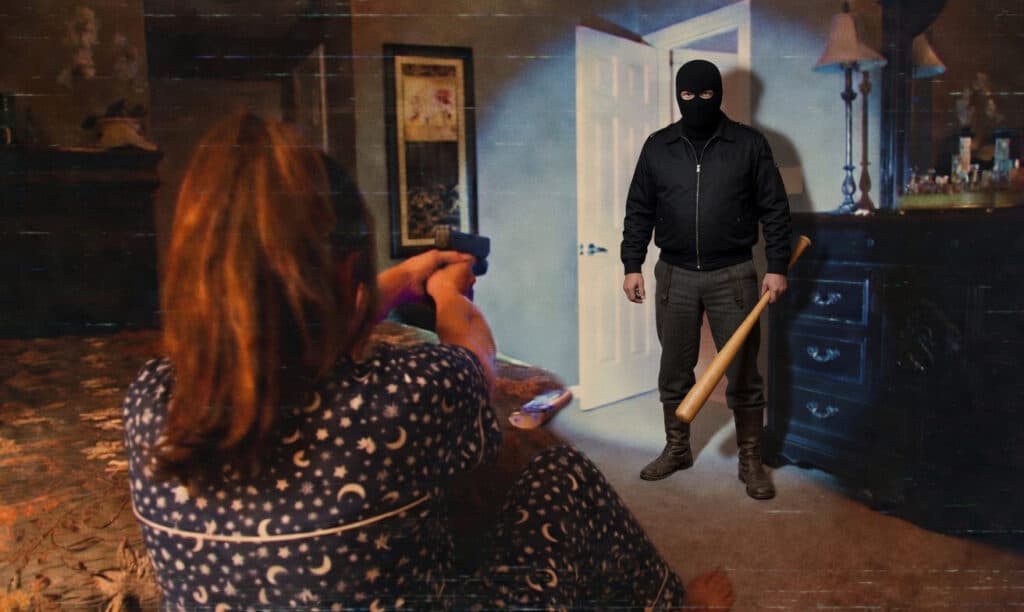
The hearing damage risk of defensive firearm use inside a home is not hypothetical — it is well-documented in audiological research and in after-action reports from law enforcement officers who have fired their weapons indoors during real defensive encounters. At 165 decibels, a single unsuppressed shot indoors exceeds the NIOSH threshold for instantaneous hearing damage by a wide margin. The immediate effects include temporary threshold shift (TTS) — a reduction in hearing sensitivity that can last minutes to hours and, in the immediate aftermath of a defensive encounter, significantly impairs situational awareness needed for assessing whether additional threats exist. The long-term effect of repeated unsuppressed indoor defensive practice or multiple shots in a single encounter is progressive permanent hearing loss. A suppressed platform reduces this risk substantially. Even supersonic defensive loads through a quality 9mm suppressor produce 120–130 dB at the shooter’s ear indoors — still requiring hearing protection for extended range sessions but dramatically less damaging in a single defensive event than unsuppressed fire.
Suppressor setup for home defense: Best Suppressed Home Defense Platforms in 2026
The suppressed 9mm pistol is the most popular and practical home defense suppressor platform for most households, balancing compact size, wide ammunition availability, manageable handling in confined spaces, and the broad availability of quality 9mm suppressors. Service-size pistols with factory threaded barrels (Sig P320 or P226 TB, Glock 19 MOS with aftermarket threaded barrel, HK VP9 TB) provide the length and weight that help manage a suppressor’s added muzzle mass while remaining maneuverable in typical home spaces. The suppressed AR-9 PCC (pistol-caliber carbine) in 9mm is the choice for households that want more accuracy, greater maneuverability than a rifle-length host, and a platform well-suited to adding night vision or weapon lights. The 9mm PCC with a fixed or folding stock, a compact 9mm suppressor, and a quality white light is a highly capable home defense configuration. For households in rural or large-property settings where longer engagement distances are realistic, a suppressed .300 Blackout AR with subsonic loads provides exceptional close-range quiet combined with intermediate cartridge capability at 100 yards and within.
Suppressor setup for home defense: Subsonic vs. Supersonic for Suppressed Home Defense
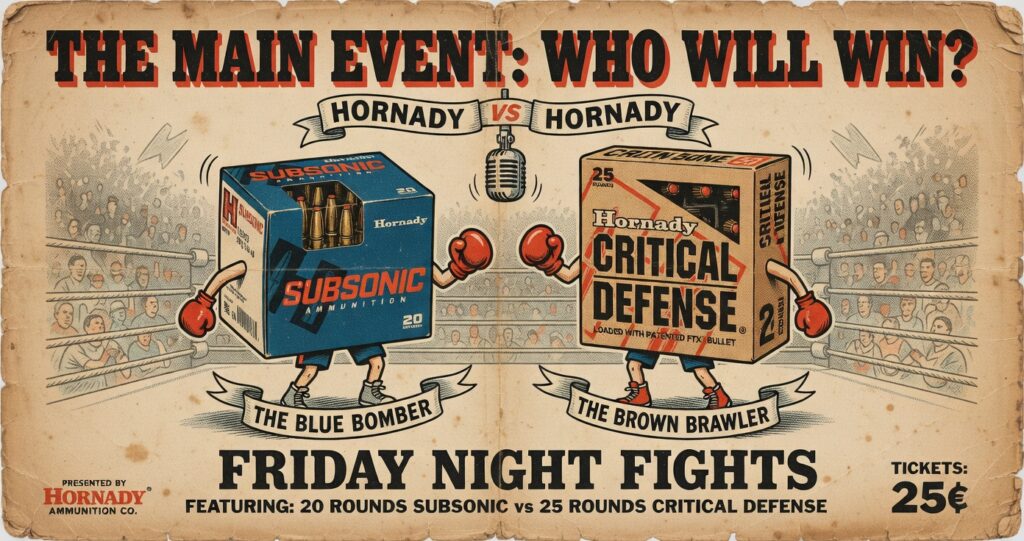
The ammunition choice for a suppressed home defense platform involves a meaningful trade-off between maximum quietness and maximum terminal performance. Subsonic defensive loads — 147-grain 9mm, 230-grain .45 ACP, or 200–220-grain .300 BLK — produce the quietest possible report through a suppressor and eliminate the ballistic crack of supersonic ammunition. The trade-off is that many conventional hollow point bullets do not expand reliably at subsonic velocities unless specifically engineered for low-speed terminal performance. Supersonic defensive loads — 124-grain 9mm +P, standard 115-grain, or standard .45 ACP 230-grain +P — produce better-documented terminal performance from a wider selection of defensive hollow points, but the ballistic crack of the supersonic bullet is still audible even through the suppressor. For most home defense applications where engagement distances are measured in feet and reliability of terminal performance is paramount, a supersonic defensive load through a suppressor still provides substantial hearing protection benefit compared to unsuppressed fire while maintaining the terminal performance advantages of proven defensive loads. Federal HST 147-grain Subsonic is the recommended compromise — specifically engineered to expand at subsonic velocities and naturally subsonic from standard 9mm barrel lengths.
Suppressor setup for home defense: Storage and Immediate-Access Considerations
A suppressed home defense firearm presents specific storage and access considerations. The added length of the suppressor (typically 5–8 inches for a pistol suppressor) may affect holster compatibility, safe storage dimensions, or maneuvering through doorways in a home defense scenario. Options: store with the suppressor permanently mounted on the host and secured in a quick-access pistol safe (fingerprint or keypad access) sized to accommodate the suppressor length; or store the suppressor dismounted in the same safe and trust the speed of direct-thread or quick-detach mounting in a real scenario. For most home defense configurations, permanently mounting the suppressor and storing the combination ready in a quick-access safe is the right answer — a defensive scenario does not afford time for suppressor mounting, and a QD or direct-thread attachment that is not fully engaged is unsafe to fire. Quick-detach systems that allow fast mounting may provide a middle option for households where the suppressor serves both a home defense pistol and a hunting rifle. Ensure the storage solution is both child-resistant and immediately accessible to authorized adults at any hour.
Suppressor setup for home defense: Night Vision and Low-Light Use with a Suppressed Platform
The combination of a suppressed firearm and night vision or thermal optics is increasingly common in home defense setups for property owners who take nighttime security seriously. Suppressors reduce the muzzle flash that would otherwise destroy night-adapted vision with every shot fired in darkness — a significant tactical advantage in a low-light defensive scenario where maintaining situational awareness after the first shot matters. The combination of a suppressed rifle or pistol, a quality white light for target identification, and a red dot or low-magnification optic represents the current standard for serious home defense configurations. Night vision — either passive ambient-light amplification or thermal imaging — adds significant capability for rural property defense and is increasingly affordable in 2026. A suppressed subsonic .300 BLK or 9mm PCC paired with a thermal optic provides a capable, quiet, and low-signature defensive configuration for property owners in states where suppressor use is legal.
Suppressor setup for home defense: Training with Your Suppressed Home Defense Setup
Owning a suppressed home defense firearm without training with it regularly is the most common mistake suppressor owners make. Training requirements for a suppressed defensive platform include: familiarization with the additional weight and length of the suppressed configuration (draw from a home-defense position, maneuver through doorways and around furniture, present to target quickly); function testing with your chosen defensive ammunition to verify cycling reliability; zeroing and point-of-aim verification at realistic home defense distances (3–15 yards); and dry-fire practice that includes safe handling, sight alignment, and trigger manipulation with the suppressor installed. Hearing protection remains important for live-fire range training with any suppressed platform — a suppressed pistol still produces 120–130 dB at the shooter’s ear indoors, which warrants hearing protection for extended training sessions even if it is safer than unsuppressed defensive fire in a real scenario. Train the way you intend to defend.
Suppressor setup for home defense: Legal Considerations for Suppressed Home Defense
Using a legally registered suppressor in a lawful home defense situation is no different legally from using any other legally owned firearm in a lawful defensive context. The suppressor’s registration status does not affect your right to use it in self-defense or the legal framework governing defensive use of force in your jurisdiction. After any defensive use of a firearm, the weapon and suppressor will likely be taken into evidence by law enforcement — be prepared for this and have your Form 4 registration documentation readily accessible (a copy stored digitally and a copy in the case with the firearm). Contact your attorney immediately following any defensive shooting incident. In suppressor-legal states, there is no additional legal exposure from having used a suppressed rather than unsuppressed platform in a lawful defensive context — the suppressor is a legal accessory on a legal firearm used in a lawful defensive act.
Suppressor setup for home defense: The $0 Tax Stamp and Home Defense Suppressor Accessibility in 2026

The elimination of the $200 NFA tax stamp effective January 1, 2026, directly improved the economics of the suppressed home defense setup. A quality 9mm pistol suppressor that previously cost $700 all-in ($500 suppressor + $200 tax) now costs $500 total — a meaningful reduction that has brought the suppressed home defense platform within reach of a significantly broader population of buyers. Combined with Silencer Central’s direct-to-door delivery, free NFA Gun Trust, and full-service Form 4 handling, the barriers to acquiring a legally registered suppressor for home defense are now lower than at any prior point in NFA history. The remaining barrier is primarily awareness — many home defense-focused gun owners do not know that suppressor ownership in suppressor-legal states is straightforward, fast, and now more affordable than ever.
Frequently Asked Questions About Suppressors for Home Defense
Is a suppressor legal to use in home defense?
Yes. A legally registered suppressor may be used in any lawful defensive context in suppressor-legal states, including home defense. The suppressor is a legal accessory on a legal firearm, and using it in a lawful act of self-defense does not create any additional legal exposure compared to using an unsuppressed firearm in the same context. After any defensive incident, the firearm and suppressor will typically be taken into police custody as evidence — have your Form 4 documentation accessible and consult an attorney immediately following any defensive shooting.
Will I still damage my hearing if I fire a suppressed gun indoors?
A suppressor dramatically reduces hearing damage risk compared to unsuppressed fire in the same scenario, but does not eliminate it entirely. A suppressed 9mm pistol indoors produces approximately 120–130 dB at the shooter’s ear — still above the NIOSH threshold for safe extended exposure, but substantially less than the 165+ dB of unsuppressed indoor fire. A single suppressed defensive shot is unlikely to cause severe acute hearing damage, though cumulative exposure over multiple shots increases the risk. The benefit compared to unsuppressed fire is substantial and practically meaningful in a real defensive scenario. Hearing protection should still be used for all range practice sessions, including practice with suppressed defensive firearms.
Should I keep my suppressor permanently mounted on my home defense gun?
Yes, for most home defense configurations. A real defensive scenario does not provide time to mount a suppressor — you need to be able to access and use the firearm immediately. Permanently mounting the suppressor on your home defense host and storing the combination secured in a quick-access safe is the most practical ready configuration. Verify that your storage solution (safe, holster, or mounting location) is designed to accommodate the suppressor-installed length and weight of your specific setup. If you use the same suppressor on a hunting rifle that must be transported frequently, a quick-detach system allows the suppressor to serve double duty while still being mounted on the home defense host when at home.
Disclosure: PopularSuppressors.com is operated by Brand Avalanche Media, Inc. This article contains general information about suppressors for home defense use. It is not legal advice. Always consult a licensed attorney familiar with firearms law in your jurisdiction before making decisions about home defense setups. Silencer Central is a paid sponsor of this website.
For concealed carry gear reviews, holster guides, and EDC loadout advice, visit Popular EDC, BAM’s everyday carry resource.


Similar Posts




More Questions
Why should I consider a suppressor for home defense?
Indoor gunshot noise without hearing protection can exceed 165 dB — causing immediate, permanent hearing loss. A suppressor on a home defense firearm brings most pistol and rifle calibers to 130–140 dB — far safer for your hearing. It also allows you to hear threats, give verbal commands, and communicate after firing.
Does a suppressor make a home defense gun less effective?
No. A suppressor does not reduce bullet velocity or terminal performance in any meaningful way. It adds some length and weight to the muzzle, which can affect maneuverability in tight spaces. A pistol with a compact suppressor like the BANISH 9K remains highly maneuverable for home defense.
What is the best suppressor for home defense through Silencer Central?
For pistol caliber carbines, the BANISH 9K is compact, hearing-safe, and reliable on 9mm hosts like the Ruger PC Carbine. For an AR-15 home defense rifle, the BANISH 30 Gold handles 5.56 and .300 Blackout. Both ship directly to your door after ATF Form 4 approval. Browse home defense options at SilencerCentral.com.