Best Suppressor for .300 Blackout in 2026: The Quietest Rifle Setup Available
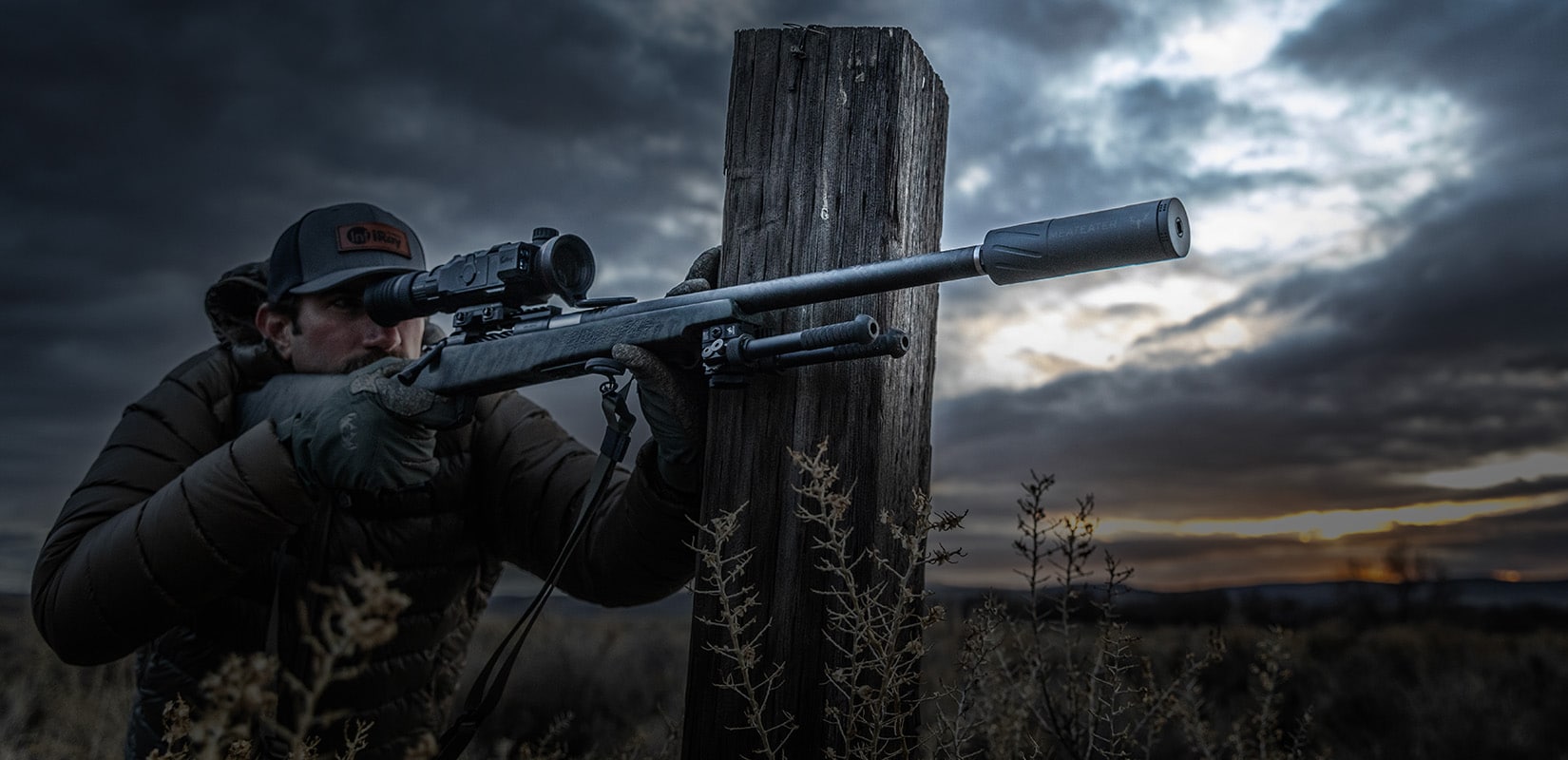
300 BLK suppressors run quietest on heavy subsonic ammo, because a bullet kept under the speed of sound adds no sonic crack.
Last updated: October 19, 2026 · Originally published April 18, 2026
Often sold as a .300 Blackout or 7.62×35 suppressor, a 300 BLK suppressor is a .30-caliber suppressor rated for the cartridge Advanced Armament Corp developed with Remington for the AR-15. What separates a quiet setup from a loud one is the ammunition more than the badge. Pick the load first, and check your state law before you buy.
Best .300 Blackout Suppressor: Maximizing the Most Suppressor-Friendly Centerfire Cartridge
The best .300 Blackout suppressor is a .30-caliber rifle suppressor run with subsonic ammunition, because 300 BLK (7.62×35mm) was built by Advanced Armament Corp. to fire heavy subsonic bullets from an AR-15 with nothing more than a barrel change. For an owner who also shoots .223, .308 or 6.5 Creedmoor, a multi-caliber model such as the BANISH HNT 30 TI (formerly the BANISH 30-V2) covers 300 BLK too; for a rifle that only ever shoots 300 BLK, a dedicated or large-volume suppressor is the quieter choice. The ammunition matters more than the suppressor, since supersonic loads keep their sonic crack no matter what is on the muzzle. Check your state’s suppressor law before you buy.
For the BANISH 30-V2 product specifics, see the BANISH 30-V2 complete guide. For the best AR-15 suppressor guide, see the best suppressor for AR-15. For the complete BANISH brand overview, see about BANISH suppressors. For cleaning protocols for suppressors used in .300 Blackout applications, see the how to clean a suppressor guide. For choosing the right ammunition, see our subsonic ammo guide. For how suppressors attach to your host, see suppressor mounting systems explained. For terminology, see suppressor vs. silencer.
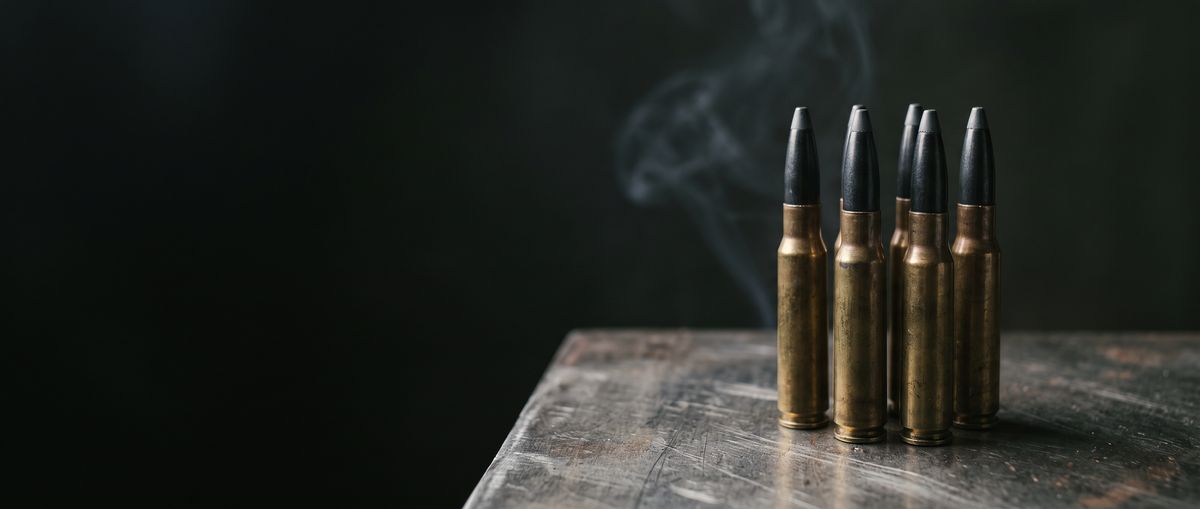

.300 Blackout Suppression Advantage
Why This Cartridge Was Built for Suppression
The .300 Blackout (7.62×35mm) was developed in collaboration between Remington Defense and Advanced Armament Corporation to meet a U.S. Special Operations Command requirement for a 5.56mm-compatible platform (same AR-15 lower receiver, same bolt carrier group, same magazine) that could effectively use subsonic ammunition for suppressed operations — a capability the 5.56×45 cannot provide because all practical 5.56 loadings are significantly supersonic. The cartridge achieves this through a wider, shorter case design (the 5.56 brass is trimmed and reformed) that accommodates heavy subsonic bullets (200 to 230 grain) at velocities of 900 to 1,050 fps while using standard AR-15 components without modification. The only change required to run .300 Blackout in an AR-15 is a barrel change — the bolt, magazine, and lower receiver are all 5.56-compatible.

For suppressor users, the .300 Blackout’s subsonic capability means achieving the complete suppression effect — eliminating both muzzle blast and (because the subsonic projectile produces no sonic crack) the ballistic shockwave that limits centerfire suppression on supersonic cartridges. On subsonic .300 Blackout, the action cycling and the bullet hitting the target become a much bigger share of what you hear. This is genuinely different from .223 suppression (where the supersonic projectile’s sonic crack remains the dominant sound regardless of suppressor quality) and explains why .300 Blackout in an AR-15 platform has become the dominant choice for users who want maximum suppression in a rifle-caliber platform.
Subsonic vs Supersonic .300 Blackout
Two Different Use Cases Requiring Different Expectations
The .300 Blackout’s versatility in both subsonic and supersonic loadings defines two distinct suppressor performance profiles. Subsonic .300 Blackout (200 to 230 grain at 900 to 1,050 fps) gives maximum suppression and terminal ballistics suited to close-range defensive use and short-range hunting, but not to ranges beyond 100 to 150 yards because of its trajectory. Supersonic .300 Blackout (110 to 125 grain at 2,000 to 2,300 fps) gives extended range and adequate terminal performance for deer-class game to 300+ yards, but the sonic crack stays no matter what is on the muzzle. The same multi-caliber suppressor, such as the BANISH HNT 30 TI, handles both loadings; the sound and the use case are what change. Wear hearing protection with either.

Short-barrel .300 Blackout configurations (7-inch to 10.5-inch SBRs or AR-15 pistols) maximize the subsonic suppression advantage and are the most common configuration for close-range defensive and hunting use. Longer barrels (16-inch configurations for supersonic use) trade maximum suppression for extended range and velocity, producing a ballistically versatile platform that benefits from suppression primarily for hearing protection rather than maximum sound reduction. The BANISH 30-V2 performs consistently across both barrel lengths, with slight acoustic performance improvement on longer barrels due to lower residual muzzle gas pressure.
Can You Use a 9mm Suppressor on 300 Blackout?
Only when the maker rates it for 300 BLK, and a few makers do, with limits attached. SilencerCo rates its titanium Spectre 9 (3.9 ounces) full-auto for subsonic 300 BLK and semi-auto for supersonic, and its Osprey 9 for subsonic 300 BLK only. A rifle cartridge puts more pressure and more gas into a suppressor than a pistol round does, which is why the rating on the maker’s page, not the size of the hole in the end cap, is the rule.
Read the caliber list before you buy. If supersonic is not on it, do not shoot supersonic through it (no matter what the guy at the range swears he has done for years). Built right, a pistol-size suppressor on a short subsonic 300 BLK is about as compact as a suppressed rifle gets.
Sound Performance Reality
What the Numbers Look Like in Real Testing
Supersonic .300 Blackout through a quality suppressor behaves like suppressed .223, for the same physical reason: the bullet’s sonic crack dominates what is left. The gap between subsonic and supersonic .300 Blackout through the same suppressor makes ammunition the most important variable in the experience, not suppressor selection. The best suppressor in the category cannot close the gap the ammunition creates.
Is a Suppressed 300 BLK Hearing Safe?
Not by any federal standard, because “hearing safe” is a sales phrase, not a measurement. OSHA’s ceiling for impulse noise is 140 dB peak sound pressure. NIOSH researchers who measured suppressed firearms found suppressors cut the peak at the shooter’s ear by 17 to 24 dB, a big drop, and their conclusion was blunt: firearm users should always wear hearing protection.
That holds double on a semi-auto 300 BLK, where gas and noise come back out of the ejection port right beside your face. A suppressor turns a dangerous report into a much less dangerous one. It does not make plugs optional. Wear them anyway (your future self, the one asking everyone at dinner to repeat themselves, will thank you).
What Is the Quietest .300 Blackout Suppressor?
The quietest 300 BLK setups in independent testing are large, high-back-pressure .30-caliber suppressors on subsonic ammunition. PEW Science, the independent lab most shooters cite for suppressor sound data, credits the CGS Hyperion with “extreme sound signature suppression performance” on 300 BLK and gives the Q Full Nelson and the CAT ODB similar marks on subsonic loads. It rates the BANISH 30 Gold at “relatively high performance sound signature reduction.” Makers publish their own decibel figures measured in different ways, so this page does not rank them against each other.
Four things decide how quiet your own rifle gets, roughly in this order:
- Subsonic ammunition. Bullets of 200 grains or more, kept below the speed of sound (about 1,125 fps), so there is no sonic crack.
- A bigger suppressor. More internal volume gives the gas room to expand and cool before it leaves the muzzle.
- The right barrel. Pick a length that suits your load, and check your subsonic ammunition’s velocity from your own barrel, because the box figure comes from a test barrel.
- An adjustable gas block. On a semi-auto, it cuts the gas and noise that come back out of the ejection port.
Low-back-pressure designs give up some of that quiet on purpose. PEW Science notes that the SureFire SOCOM762-RC2’s subsonic performance suffers for its low back pressure, and that the Sig SLH300Ti trades suppression for flow. Those are good choices for a shooter who hates gas in the face, not for the quietest possible 300 BLK.
Barrel Length Optimization
How Barrel Length Affects Suppressor Performance on .300 Blackout
Barrel length optimization for .300 Blackout suppressor use balances three considerations: subsonic bullet velocity (longer barrels provide more velocity with subsonic loads, improving terminal performance without crossing the sonic threshold), suppressed sound levels (shorter barrels produce lower muzzle velocity but also generate more unburned powder that exits the muzzle and increases suppressor fouling and first-round pop), and overall package length (the suppressor adds 6 to 8 inches regardless of barrel length, so a 7-inch barrel with a 7.5-inch suppressor produces an overall length of approximately 14.5 inches — a compact and maneuverable configuration for close-range use). The practical sweet spot for subsonic .300 Blackout suppressor use: 7- to 10-inch barrels for maximum compactness and close-range defensive application; 16-inch barrels for supersonic use where extended range matters. The middle ground (12 to 14 inch barrels) provides adequate performance for both subsonic and supersonic use without fully optimizing either.
Durability Considerations
What .300 Blackout Does to a Suppressor
.300 Blackout subsonic loadings produce significantly more unburned powder than supersonic loadings because the reduced propellant charge in subsonic ammunition is not fully consumed before the bullet exits the barrel — particularly in short barrels where the burn time is shorter. This unburned powder exits as a fine carbon/powder cloud that enters the suppressor and accumulates as fouling more rapidly than fully burned supersonic ammunition. The practical result: suppressors used exclusively with subsonic .300 Blackout require cleaning more frequently. BANISH’s own 30-V2 manual says to clean that suppressor every 50 to 100 rounds, and it does not recommend solid or plated lead bullets. Specifically the BANISH 30-V2 is a good fit for a dedicated .300 Blackout suppressor since it is fully user serviceable and can easily be disassembled for cleaning and maintenance.
Top Suppressors for .300 Blackout

The Models That Earn Recommendation
BANISH HNT 30 TI (formerly the BANISH 30-V2): covers .300 Blackout, both supersonic and subsonic, while staying versatile for .223, .308, 6.5 Creedmoor and the other common centerfire calibers. BANISH rates it from .17 HMR to .300 Weatherby Magnum, lists 34.5 dB of reduction at the ear on .308, and sets the MSRP at $1,129. The first recommendation for any .300 Blackout owner who also shoots other centerfire calibers.
AAC 300-SD: the dedicated 300 BLK suppressor from the company that developed the cartridge with Remington. A two-piece printed titanium build, 8.00 inches and 12.2 ounces long or 5.43 inches and 5 ounces short, rated to supersonic 300 BLK. AAC publishes no decibel figure for it. The right choice for a collection with no other rifle calibers.
SilencerCo Omega 300: versatile option covering .300 Blackout through .300 Win Mag, a direct rival to the BANISH on multi-caliber coverage. Dead Air Sandman-S: multi-caliber coverage from a maker known for hard-use rifle suppressors.
Is a Dedicated 300 BLK Suppressor Quieter Than a Multi-Caliber One?
It can be, but no maker publishes a like-for-like number that proves it, so be suspicious of any “one to two dB quieter” line, including the one this page used to carry. AAC publishes no decibel figure for its 300-SD at all. What a dedicated 300 BLK suppressor does give you is size. AAC, the company that developed the cartridge with Remington, builds the 300-SD as a two-piece printed titanium suppressor: 8.00 inches and 12.2 ounces long, or 5.43 inches and 5 ounces short, with supersonic 300 BLK as its maximum rating.
A multi-caliber .30 suppressor such as the BANISH HNT 30 TI (sold before 2026 as the BANISH 30-V2) runs 6.4 or 8.17 inches and 9.5 or 12.4 ounces, and BANISH rates it from .17 HMR to .300 Weatherby Magnum. So the call is simple. One 300 BLK rifle, buy the specialist. A safe full of rifles, buy the generalist.
Do You Need a Form 4 for a 300 BLK Suppressor in 2026?
For most buyers, no. ATF stopped enforcing the approval, registration and tax-stamp requirements for suppressors on October 9, 2026, and the federal making and transfer tax on suppressors had already gone to $0 (ATF says the old tax remains only for machine guns and destructive devices). That does not mean a suppressor ships like a sling. A licensed dealer still completes a Form 4473 and, unless you are exempt, runs a NICS background check.
ATF also tells buyers to check with state and local authorities, and notes that most states require people who possess NFA items to comply with federal law, so read your own state’s statute before you order, not after. ATF says enforcement can come back if the tax is reimposed, the court order behind this is overturned, or the guidance is withdrawn. Source: ATF, Update to NFA Transfer Guidance.
Ammo Selection Impact
Why Ammunition Choice Matters More Than Suppressor Choice
The most consequential decision for .300 Blackout suppressor performance is ammunition, specifically whether you shoot subsonic or supersonic loads. Subsonic ammunition through any quality .300 Blackout suppressor beats supersonic ammunition through the category’s best dedicated suppressor, because nothing on the muzzle removes a sonic crack. Subsonic .300 Blackout loadings to look at: Remington 220-grain OTM, Hornady 190-grain Sub-X (1,050 fps from a 16-inch test barrel, per Hornady), and HSM 220-grain Sierra MatchKing. Verify velocity from the barrel on your own rifle, since the subsonic rating on factory ammunition comes from a test barrel that may differ from yours.

Frequently Asked Questions About .300 Blackout Suppressors
Why is .300 Blackout ideal for suppressors?
.300 Blackout was engineered for suppressor use, specifically for reliable subsonic operation in an AR-15 with minimal component changes. With subsonic ammunition (200 to 220 grain at 900 to 1,050 fps), the bullet makes no sonic crack, so a suppressor is left to deal only with muzzle blast. Few centerfire rifle cartridges quiet down as well. Wear hearing protection anyway.
What suppressor is best for .300 Blackout?
For an owner with other rifles, a multi-caliber .30 suppressor such as the BANISH HNT 30 TI (formerly the 30-V2), rated .17 HMR to .300 Weatherby Magnum. For a rifle that only shoots 300 BLK, AAC’s dedicated 300-SD is shorter and lighter in its short form (5.43 inches, 5 ounces). AAC publishes no decibel figure for it, so no one can say from maker data that it is quieter.
Does barrel length matter for .300 Blackout suppression?
Yes — shorter barrels (7 to 10 inch) leave more unburned powder in the muzzle gases that the suppressor manages, accelerating fouling accumulation and increasing first-round pop. However, shorter barrels with subsonic ammunition produce the most compact and maneuverable suppressed .300 Blackout configurations, which is the primary reason for choosing the short-barrel configuration in the first place. For the best suppressor performance from subsonic .300 Blackout, 10-inch or longer barrels balance compactness against the cleaner combustion that reduces fouling pressure on the suppressor. For supersonic .300 Blackout at extended range, 16-inch barrels maximize velocity and minimize muzzle residue.
What is the quietest .300 Blackout suppressor?
The quietest 300 BLK setups are large, high-back-pressure .30-caliber suppressors on subsonic ammunition. In PEW Science’s independent testing the CGS Hyperion, Q Full Nelson and CAT ODB stand out on subsonic 300 BLK. Subsonic ammunition matters as much as the model you pick.
How quiet is a suppressed .300 Blackout with subsonic ammo?
Much quieter than unsuppressed, but not hearing safe. NIOSH measured suppressors cutting the peak sound at the shooter’s ear by 17 to 24 dB and still advises hearing protection every time. A semi-auto also vents noise at the ejection port.
Can you put a 5.56 suppressor on a 300 BLK rifle?
No. A 5.56 suppressor is bored for a .22-caliber bullet, and a 300 BLK bullet is .30 caliber, so it would strike the baffles. AAC’s M4-2000, for example, lists 6mm ARC as its largest cartridge. Use a suppressor the maker rates for 300 BLK.
Do you need a tax stamp for a 300 BLK suppressor in 2026?
No. The federal tax on suppressors is $0, and since October 9, 2026, ATF has not enforced the registration or tax-stamp requirement for suppressors. A dealer still runs a background check, and your state’s law still applies.
What ammo makes a 300 BLK suppressor quietest?
Heavy subsonic loads that stay under the speed of sound, roughly 1,125 feet per second. Hornady’s 190-grain Sub-X, for example, is listed at 1,050 fps from a 16-inch test barrel. Check velocity from your own barrel length.
Disclosure: Silencer Central was a paid sponsor of PopularSuppressors.com through the 100 Days of Silence series, which has ended. This article reflects independent editorial judgment, and Silencer Central did not review or approve it.
Running subsonic for hunting? Popular Outdoorsman rounds up the best budget hunting rifles to pair it with.
Suppressing an AR? See our best AR-15 suppressor guide.


Similar Posts