How to Choose Your First Suppressor: A Decisive Buyer Guide
Start with the firearm you shoot most often.
Last updated: April 23, 2026 · Originally published: March 8, 2026
In This Article
- How to Choose Your First Suppressor: A Practical Buyer’s Guide for 2026
- How to choose your first suppressor — Step One: Define Your Primary Use Case
- How to choose your first suppressor — Step Two: Determine Caliber Compatibility Requirements
- How to choose your first suppressor — Step Three: Direct Thread vs. Quick-Detach Mounting
- How to choose your first suppressor — Step Four: User-Serviceable vs. Sealed Construction
- How to choose your first suppressor — Step Five: Material Selection — Aluminum, Steel, or Titanium
- How to choose your first suppressor — Step Six: Budget Considerations in 2026
- How to choose your first suppressor — Step Seven: Evaluating Manufacturers and Warranty Coverage
- How to choose your first suppressor: The NFA Process Timeline for Your First Suppressor
- Frequently Asked Questions About Choosing Your First Suppressor
How to Choose Your First Suppressor: A Practical Buyer’s Guide for 2026
How to choose your first suppressor is a topic every suppressor owner should understand before making any purchase or modification decision. Choosing your first suppressor is about matching the tool to the job before comparing specifications, prices, or brand prestige — a $1,400 titanium rifle suppressor is the wrong answer for a buyer who primarily runs a .22 LR plinker, and a $450 rimfire can is the wrong answer for the hunter who needs to cover five calibers across two different rifle platforms. The suppressor market in 2026 is larger, more varied, and more accessible than at any prior point in NFA history, with the $200 tax stamp eliminated and ATF processing now measured in days rather than months. That accessibility is a reason to take the buying decision seriously rather than rushing — the right first suppressor is one that serves your actual intended use well, cleans up reasonably, and connects to a manufacturer with good support and warranty coverage.
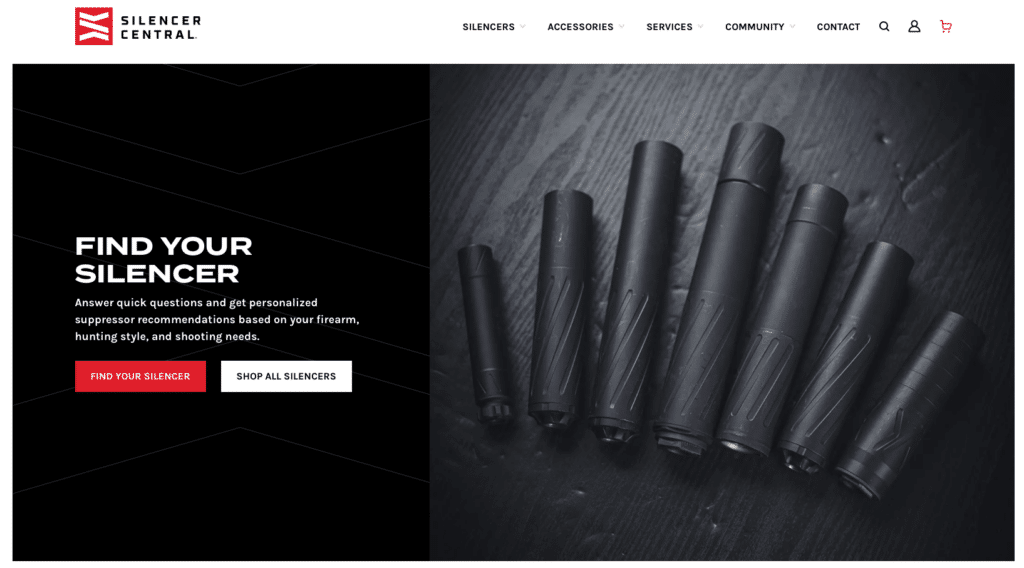
This guide walks through every key decision in first suppressor selection: starting with intended use, selecting caliber compatibility, choosing between direct thread and quick-detach mounting, evaluating materials and construction, and understanding what the NFA process involves so there are no surprises between purchase and possession.
Key Takeaways
- Most versatile first suppressor: a .30 caliber rifle can (covers 5.56, .308, .300 BLK, 6.5 CM, and more)
- Best bang for buck: a .22 LR rimfire suppressor — lowest cost, most dramatic noise reduction, easiest to experience the suppressor lifestyle
- If you primarily shoot 9mm pistol: a 9mm pistol suppressor paired with a threaded barrel is the natural choice
- Don’t over-optimize on specs — any quality suppressor from a reputable brand will transform your shooting experience
- Since January 1, 2026, the $200 tax stamp is eliminated — total cost is suppressor + transfer fee only
How to choose your first suppressor — Step One: Define Your Primary Use Case
The most important question in first suppressor selection is not “which suppressor is best” — it is “what do I primarily want to do with it?” The answer to that question filters out most of the market and points toward a small group of options that actually fit your situation. Common primary use cases and their implications: rimfire plinking and pest control — a dedicated rimfire suppressor on a .22 LR host is the most accessible, quietest, and lowest-cost-per-round suppressed shooting experience available; home defense with a pistol or PCC — a pistol-caliber suppressor rated for 9mm or .45 ACP is the answer, prioritizing compact size and host-firearm compatibility; deer and elk hunting — a quality rifle suppressor rated for your hunting caliber is needed, with durability and sound reduction appropriate for field use; hog hunting with an AR platform — a .30 caliber suppressor rated for 5.56 through .308 covers the widest range of AR calibers and allows caliber switching; precision long-range rifle — a suppressor rated for your specific caliber (usually 6.5 Creedmoor, .308, or larger) that does not adversely affect point of impact at long ranges. Most first-time buyers have more than one use case in mind — identify the primary one, then evaluate whether multi-caliber options serve the secondary uses without compromising primary performance.
How to choose your first suppressor — Step Two: Determine Caliber Compatibility Requirements
Every suppressor has a rated maximum caliber — the largest bore diameter and cartridge pressure it is designed to safely handle. A .30 caliber suppressor handles all cartridges with bullet diameters of .308 inches or smaller, which covers an enormous range including 5.56/.223, 6mm, 6.5mm, .270, 7mm, and all .30 caliber cartridges through .308 Winchester and .30-06 Springfield. For shooters with multiple rifle platforms in different calibers, a .30 caliber (or larger) multi-caliber suppressor may be the most practical first choice — one suppressor, multiple hosts with appropriate thread adapters. For dedicated pistol use, a pistol-caliber suppressor rated to the largest pistol caliber in your collection (typically .45 ACP for maximum caliber coverage or 9mm for a lighter, more compact option) covers most pistol applications. For pure rimfire use, a dedicated rimfire suppressor provides optimal performance for .22 LR — do not try to use a .30 caliber rifle suppressor on a rimfire host, as it will perform adequately but without the optimized baffle design of a dedicated rimfire can. Verify thread compatibility between your suppressor and each intended host — most suppressors come with a primary thread pattern (such as 1/2×28 or 5/8×24) and accept adapters for other patterns.
How to choose your first suppressor — Step Three: Direct Thread vs. Quick-Detach Mounting

Suppressor mounting systems divide primarily into direct-thread designs and quick-detach (QD) systems. Direct-thread suppressors thread directly onto the host barrel’s muzzle threads — they are simpler, typically more concentric, slightly quieter than QD equivalents of the same design, and less expensive. The downside is that installation requires tool-assisted torqueing and removal is similarly deliberate, making frequent swapping between hosts more time-consuming. Quick-detach systems use a muzzle device (flash hider, compensator, or brake) permanently attached to each host barrel, and the suppressor mounts and locks to that muzzle device in a fraction of a turn. QD systems are ideal for owners who run one suppressor on multiple host rifles, who need to mount or remove the suppressor quickly in field conditions, or who use the suppressor interchangeably between a rifle and a pistol-caliber carbine. Most premium suppressor lines offer both mounting options, or include a QD mount accessory as an optional add-on to a direct-thread design. For a first suppressor buyer with one primary host, direct thread is the simpler and often less expensive choice. For buyers who already own multiple suppressor-ready hosts or plan to add them, a QD system pays for itself in convenience.
How to choose your first suppressor — Step Four: User-Serviceable vs. Sealed Construction
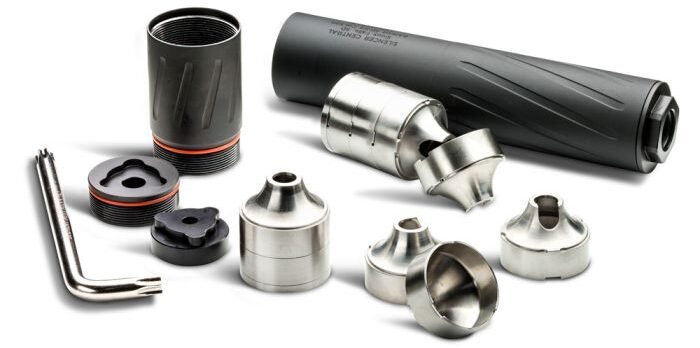
User-serviceable suppressors — those designed to be disassembled for cleaning and component replacement — are strongly recommended for first-time buyers in most use cases. The practical reasons: rimfire suppressors especially require regular cleaning that is only possible with disassembly; user-serviceable designs allow visual inspection of baffle condition and detection of early wear before it becomes a safety concern; and individual component replacement (end cap, baffles) can extend the suppressor’s effective service life beyond what a fully sealed design can offer. The only scenario where a sealed suppressor may be preferred over user-serviceable is in centerfire rifle applications where the owner expects very low round counts (fewer than 5,000 rounds total) and wants maximum structural simplicity. BANISH line is user-serviceable across its full product range — rimfire, pistol, and rifle models all disassemble for cleaning and inspection.
How to choose your first suppressor — Step Five: Material Selection — Aluminum, Steel, or Titanium
Suppressor construction material affects weight, durability, and price. Aluminum-body suppressors are the lightest and least expensive but are limited to specific caliber ratings (typically rimfire or pistol calibers only) and have lower round count ratings than steel or titanium. Steel suppressors offer excellent durability and high round count ratings but are significantly heavier than titanium equivalents — a steel rifle suppressor can weigh 20–30 ounces versus 12–18 ounces for a comparable titanium model. Titanium suppressors represent the premium tier: lighter than steel while matching or exceeding steel’s durability, corrosion-resistant, and typically carrying the highest round count ratings and lifetime warranties of any material. For a first rifle suppressor, titanium is the best long-term investment if budget allows — the weight savings are meaningful for hunting carry and field use, and the durability and warranty terms justify the price premium over a multi-year ownership horizon. BANISH titanium line covers rimfire through .30 caliber in user-serviceable, lifetime-warranty designs that represent the best combination of these criteria.
How to choose your first suppressor — Step Six: Budget Considerations in 2026
The $200 tax stamp elimination effective January 1, 2026, changed the true first-cost calculation for suppressor buyers at every price point. A suppressor previously priced at $500 total ($300 suppressor + $200 tax) now costs $300 total — a category that was previously entry-level now feels substantially more accessible. Budget planning for 2026: entry-level rimfire suppressors are available from $250–$450; quality mid-tier rimfire suppressors with titanium or stainless construction range $450–$650; entry-level pistol suppressors start around $350–$500; quality pistol suppressors with good warranty coverage range $500–$800; entry-level rifle suppressors (aluminum or hybrid) start around $400–$600; quality rifle suppressors in titanium with lifetime warranties range $750–$1,400. The right budget decision is to buy the best suppressor you can afford in the category that matches your use case, prioritizing manufacturer warranty, user-serviceability, and caliber coverage over the lowest entry price. A $750 titanium suppressor with a lifetime warranty and multi-caliber coverage will serve you for decades; a $350 aluminum entry-level can may need replacement after a few years of active use.
How to choose your first suppressor — Step Seven: Evaluating Manufacturers and Warranty Coverage
The suppressor industry includes several manufacturers with decades of established track records and strong warranty programs, and a longer tail of newer entrants with less established service records. For a first suppressor, prioritize manufacturers who: offer lifetime warranties against defects in materials and workmanship; maintain spare parts inventories for their product lines; have accessible customer service with documented responsiveness; and have a track record of honoring warranties without excessive process burden on the buyer. Silencer Central, Dead Air, Rugged Suppressors, SilencerCo, and OSS are among the most established and service-proven options in 2026. Research warranty terms specifically — understand what is and is not covered, how warranty claims are processed, and whether the warranty is transferable.
How to choose your first suppressor: The NFA Process Timeline for Your First Suppressor
Understanding the timeline from purchase decision to possession prevents surprises. You select and purchase your suppressor from a licensed dealer (or online dealer with a dealer transfer arrangement or direct-to-door service like Silencer Central). The dealer submits your ATF Form 4 electronically via eForm — this includes your fingerprints, photograph, personal information, CLEO notification, and suppressor details. ATF reviews your application and performs an FBI background check. In 2026, eForm 4 processing for individual buyers takes single-digit to low double-digit days in most cases. Upon ATF approval, the suppressor is transferred to you (shipped to your door through Silencer Central, or available for pickup from your local dealer). The total time from purchase to possession in 2026 is typically 2–4 weeks including shipping, dramatically improved from the 6–12 month wait that characterized prior years. Silencer Central handles all Form 4 preparation, CLEO notification, and NFA Gun Trust setup as part of every purchase.
Frequently Asked Questions About Choosing Your First Suppressor
Should I start with a rimfire or centerfire suppressor?
Start with the caliber that matches your most frequent shooting activity. If you shoot .22 LR most often — for plinking, small game, pest control, or training — start with a dedicated rimfire suppressor. The rimfire suppressor experience is the most impressively quiet and accessible, and it provides the best introduction to the shooting experience that suppressors enable. If you primarily shoot a centerfire rifle or pistol and have no regular rimfire activity, start with the caliber suppressor that serves your actual shooting. Do not buy a rimfire suppressor first purely because it is less expensive if your actual shooting is all centerfire — you will not use it enough to appreciate the investment, and the caliber-appropriate suppressor for your primary use should take priority.
How do I know if my firearm is suppressor-ready?
A suppressor-ready firearm has a threaded muzzle with a thread pitch and diameter that matches the suppressor’s attachment requirement. For rifles, check the barrel for a thread protector at the muzzle — if there is a thread protector, the barrel is threaded. If there is no thread protector and the muzzle appears unthreaded, the barrel may need to be professionally threaded by a gunsmith before suppressor use. For pistols, many manufacturers offer factory threaded barrel models (often designated TB in the model name) for popular duty pistol lines. Confirm the thread pitch with your barrel manufacturer or by using a thread gauge, and verify that the thread pitch matches the suppressor you intend to purchase. Silencer Central can advise on thread compatibility and provide thread adapters when needed.
Is Silencer Central’s direct-to-door delivery available in my state?
Silencer Central is licensed to conduct NFA transfers in all suppressor-legal states and offers direct-to-door delivery to buyers in those states — meaning after ATF approval, the suppressor ships directly to your home address rather than requiring pickup from a local dealer. Suppressor-legal states include the majority of the United States; states where civilian suppressor ownership is prohibited include California, Hawaii, Illinois, Massachusetts, New York, New Jersey, Delaware, Rhode Island, and a small number of others. If you are unsure whether your state is suppressor-legal, contact Silencer Central directly — their team can confirm your eligibility and walk you through the full process for your specific location.
Disclosure: PopularSuppressors.com is operated by Brand Avalanche Media, Inc. This article contains general information about suppressor selection and the NFA process. It is not legal or financial advice. Verify all information with Silencer Central or a licensed NFA dealer before making a purchase decision. Silencer Central is a paid sponsor of this website.
Similar Posts



Frequently Asked Questions
How do I choose my first suppressor?
Start with three questions: (1) What host firearm are you suppressing? (2) What caliber or calibers do you need to cover? (3) Do you prioritize compact size or maximum sound reduction? From there, choose between a dedicated can for one caliber or a multi-cal suppressor for flexibility. Silencer Central can walk you through the decision at SilencerCentral.com.
Should my first suppressor be multi-caliber or dedicated?
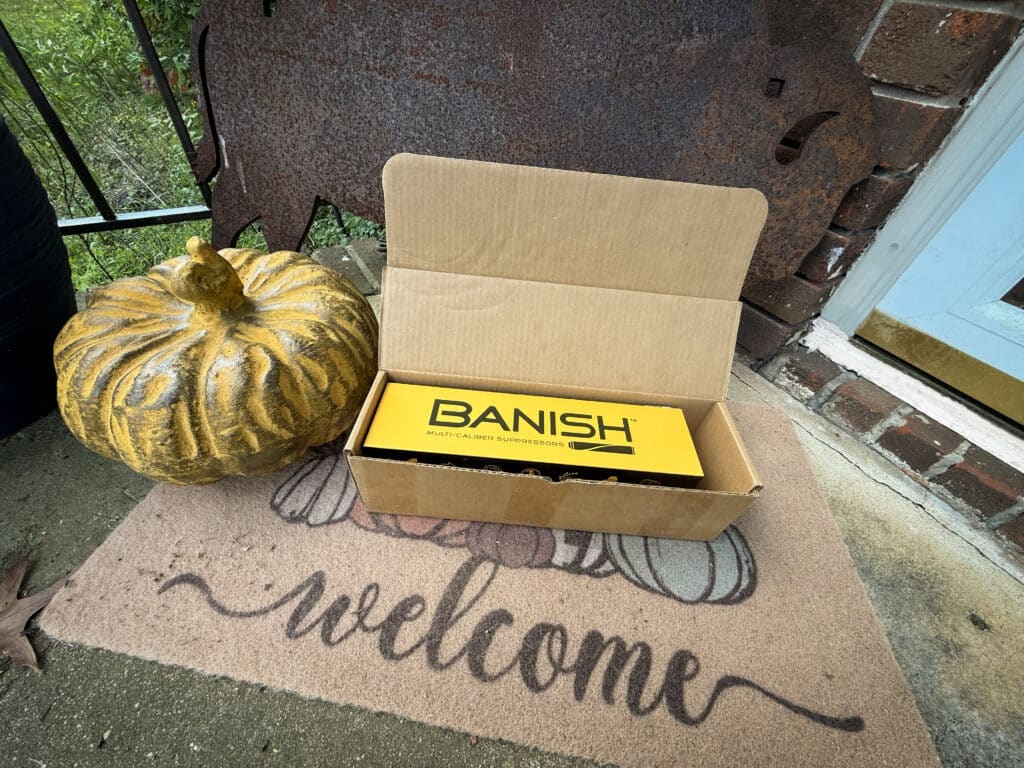
For most first-time buyers, a multi-caliber suppressor like the BANISH 30 Gold is the smarter investment — it covers multiple rifles you might own now or in the future. A dedicated can makes sense if you have one specific host and want optimized performance for that platform.
What mistakes do first-time suppressor buyers most often make?
The most common mistakes: buying the wrong thread pitch for their host, purchasing a suppressor not rated for their caliber, skipping an NFA trust (making shared use with family illegal), and not budgeting for the $200 tax stamp. Silencer Central prevents all of these by walking you through compatibility, trust setup, and full cost before purchase at SilencerCentral.com.