
Suppressor Cleaning Guide: Why Regular Maintenance Matters for Owners
Suppressor Cleaning and Maintenance: Complete Guide for Every Suppressor Type
Proper suppressor cleaning guide keeps your suppressor performing at spec and extends its service life. Proper cleaning and maintenance keeps your suppressor performing at peak efficiency, prevents damage from fouling buildup, and ensures long service life — but the right approach varies significantly by suppressor type, caliber, and construction. Rimfire suppressors demand frequent disassembly and cleaning; most centerfire rifle suppressors are largely self-cleaning. Understanding what your specific suppressor needs prevents both under-maintenance (leading to damage) and over-maintenance (risking improper reassembly). This guide covers the maintenance requirements for every major suppressor category.
In This Article
- Suppressor Cleaning and Maintenance: Complete Guide for Every Suppressor Type
- Suppressor cleaning guide — Rimfire Suppressor Cleaning: Frequency and Method
- Suppressor cleaning guide: Pistol Suppressor Maintenance
- Suppressor cleaning guide: Centerfire Rifle Suppressor Maintenance
- Suppressor cleaning guide: Anti-Seize and Thread Care
- Suppressor cleaning guide: Identifying a Baffle Strike
- Suppressor cleaning guide: Storage and Corrosion Prevention
- Suppressor cleaning guide: Cleaning Tools You Need
- Frequently Asked Questions About Suppressor Maintenance
Last updated: September 15, 2026 · Originally published March 7, 2026

More on suppressor care: How to Clean a Suppressor, Suppressor Maintenance Schedule, About BANISH Suppressors, BANISH 30 V2 Complete Guide, and About Silencer Central.
Key Takeaways
- Rimfire suppressors need cleaning every 500–1,000 rounds — .22 LR leaves heavy carbon and lead deposits
- Centerfire suppressors are largely self-cleaning from hot gas; clean every 3,000–5,000 rounds or annually
- Never use steel brushes or harsh solvents on aluminum components — use bronze brushes and dedicated suppressor solvent
- Titanium and stainless baffles are more robust; aluminum baffles require gentler cleaning protocols
- Never use an ultrasonic cleaner on aluminum cans — it accelerates corrosion and voids warranties


Suppressor cleaning guide — Rimfire Suppressor Cleaning: Frequency and Method
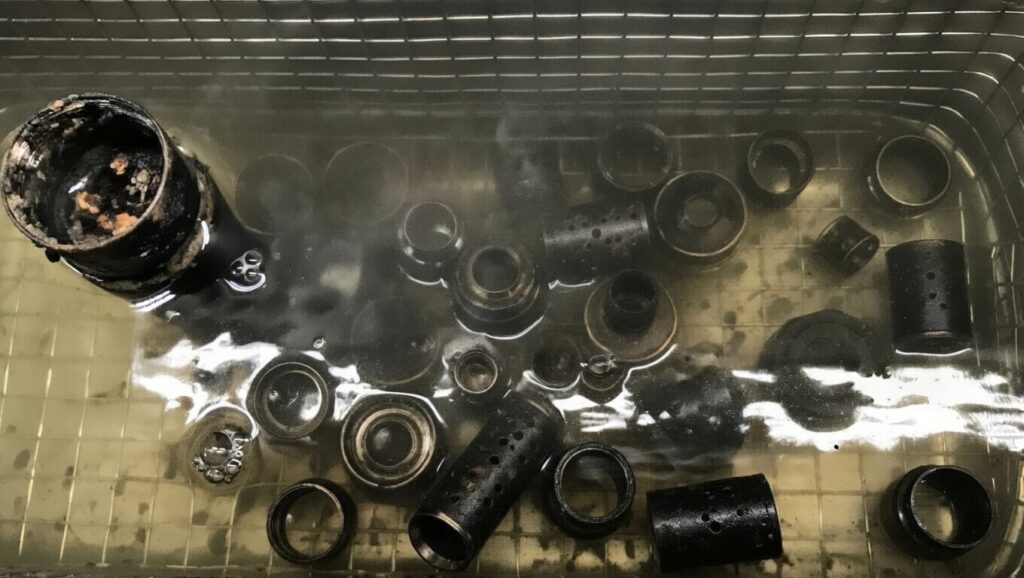
Rimfire suppressors accumulate lead and carbon fouling faster than any other suppressor type. Standard .22 LR lead-bullet ammunition deposits significant fouling with every shot; after 500–1,000 rounds, buildup can affect sound performance and eventually fuse the end cap or baffle stack in place if ignored. Disassemble your rimfire suppressor following the manufacturer’s instructions — typically removing the end cap and pulling out the baffle stack. Soak the baffles in a dedicated suppressor cleaning solvent or use an ultrasonic cleaner for thorough results. Allow to dry completely, inspect for baffle strikes, apply a light coat of anti-seize to threaded surfaces, and reassemble. Copper-washed or plated .22 LR ammunition extends cleaning intervals compared to lead-bullet loads.
Suppressor cleaning guide: Pistol Suppressor Maintenance
Pistol suppressors accumulate carbon fouling more than lead deposits (unless running lead-bullet handloads) and require cleaning less frequently than rimfire models. Many pistol suppressors are user-serviceable — check whether yours allows disassembly. If serviceable, clean every 1,000–2,000 rounds of standard jacketed ammunition. If sealed, inspect the exterior for carbon deposits and the bore for baffle strikes, but leave the internals to self-clean over continued use. The Nielsen device (piston assembly) on pistol suppressors used with tilting-barrel hosts requires separate attention: clean carbon from the piston threads and bore, inspect the spring for deformation, and replace the spring if it shows significant compression set or corrosion.
Suppressor cleaning guide: Centerfire Rifle Suppressor Maintenance
Most centerfire rifle suppressors are sealed — baffles are not user-accessible. These suppressors rely on the heat and pressure of firing to burn off carbon deposits over time. They require minimal active maintenance: inspect the exterior for damage, ensure mounting threads are clean and free of carbon, and verify the bore alignment by looking through the tube (the bore should be centered and clear). The blast baffle is the highest-wear component and shows erosion first after high round counts. Manufacturers of serviceable rifle suppressors like some BANISH models allow blast baffle inspection and replacement — extending suppressor service life significantly for high-volume shooters.
Suppressor cleaning guide: Anti-Seize and Thread Care
Suppressor threads — both the muzzle threads that attach to the host firearm and the end-cap threads on serviceable suppressors — are subject to galling (adhesive metal-on-metal wear) under heat and repeated cycling. Applying a thin coat of high-temperature anti-seize compound to these threads prevents galling, makes disassembly easier, and protects against corrosion. Use anti-seize sparingly — excess compound can contaminate the suppressor internals. Nickel-based anti-seize rated for high-temperature applications works well; avoid copper-based anti-seize around aluminum components. Check thread engagement after each cleaning to ensure no cross-threading or deformation.
Suppressor cleaning guide: Identifying a Baffle Strike

A baffle strike occurs when a projectile impacts a baffle instead of passing cleanly through the bore. Causes include misaligned mounting, oversized projectiles, bore obstructions, or structural failure of a component. The result is a visible gouge, dent, or hole in the baffle. Symptoms include dramatically louder sound on a particular shot, a distinct impact sensation when shooting, and reduced sound reduction thereafter. If you suspect a baffle strike, stop shooting and inspect the suppressor before continuing. Run a cleaning rod through the bore — any obstruction indicates a strike. A suppressor with baffle strike damage should be returned to the manufacturer for inspection and repair before further use.
Suppressor cleaning guide: Storage and Corrosion Prevention
Storing suppressors properly prevents internal corrosion, particularly in humid environments. After shooting, allow the suppressor to cool completely before sealing it in storage to prevent condensation from trapped moisture inside the tube. For suppressed firearms stored loaded or in emergency-use locations, remove the suppressor if practical to allow ventilation. Wipe down exterior surfaces with a light coat of oil or rust preventative. For long-term storage, a moisture-absorbing desiccant packet inside the storage case helps maintain a dry environment. Stainless steel and titanium suppressors are highly corrosion-resistant; aluminum suppressors benefit from more careful moisture management.
Suppressor cleaning guide: Cleaning Tools You Need
A proper suppressor cleaning kit includes several essential tools. An ultrasonic cleaner is the most effective tool for removing lead and carbon fouling from rimfire baffles — far superior to solvent soaking alone. Dedicated suppressor cleaning brushes (nylon or bronze; avoid steel) help loosen deposits without scratching baffle surfaces. A quality suppressor solvent like Montana X-Treme Carbon Cleaner or Slip 2000 725 degrades carbon effectively. High-temperature anti-seize compound protects threads during reassembly. A suppressor wrench or strap wrench aids disassembly of end caps that may tighten during firing. Nitrile gloves protect your hands from solvent exposure during cleaning sessions.

Frequently Asked Questions About Suppressor Maintenance
Can I put my suppressor in the dishwasher?
Some owners report success cleaning rimfire suppressors in dishwashers, particularly for stubborn lead fouling. The high temperature and detergent help dissolve deposits. However, this practice carries risks: dishwasher detergent is highly alkaline and can damage aluminum anodizing and some coatings. Check your manufacturer’s guidance before attempting this — some explicitly void the warranty if the suppressor is dishwashed. Ultrasonic cleaners with proper suppressor solvent are safer and more effective for consistent results.
How do I know if my suppressor needs cleaning?
For rimfire suppressors, track your round count and clean at manufacturer-recommended intervals, typically 500–1,000 rounds of lead-bullet .22 LR. Sound quality degradation — noticeably louder report than when clean — is a sign of significant fouling buildup. For pistol suppressors, visible carbon deposits at the muzzle end of the suppressor indicate active fouling accumulation. For sealed rifle suppressors, there are no user-observable cleaning triggers; maintain per manufacturer schedule and inspect regularly for baffle strikes.
What happens if I don’t clean my rimfire suppressor?
Neglecting rimfire suppressor cleaning has progressively serious consequences. Initial fouling reduces sound performance. More advanced buildup can cause the baffle stack to seize inside the tube, making disassembly difficult or impossible without professional intervention. In extreme cases, extreme fouling can increase backpressure to the point of affecting host firearm reliability. The most dangerous outcome is a lead fouling obstruction in the bore, which causes dramatically elevated pressure on the next shot — potentially damaging the suppressor, the host firearm, and injuring the shooter. Regular maintenance is far less costly than the alternative.
Disclosure: PopularSuppressors.com is a media property of Brand Avalanche Media, Inc. All editorial opinions are our own.


Similar Posts





More Questions
How often should I clean my suppressor?
Rimfire suppressors need cleaning every 500 rounds — rimfire ammo is extremely dirty. Pistol suppressors running subsonic or wet need cleaning every 1,000–1,500 rounds. Centerfire rifle suppressors can typically go 3,000–5,000 rounds between cleanings. When in doubt, inspect the baffles.
Can all suppressors be disassembled and cleaned?
No. Welded or sealed suppressors cannot be disassembled. These are typically rated for a service life and then replaced. User-serviceable suppressors like the BANISH line from Silencer Central can be fully disassembled and cleaned. Always verify serviceability before purchasing, especially for high-volume rimfire use.
What tools do I need to maintain my BANISH suppressor?
Basic BANISH maintenance requires: a suppressor end cap wrench, a bronze cleaning brush, a cleaning solvent like Hoppes No. 9 or Carbon Killer, anti-seize compound for threads, and clean rags. An ultrasonic cleaner is optional but dramatically speeds up heavy fouling removal. Details at SilencerCentral.com.