Suppressors for Youth Shooting: Why They Make It Safer and More Enjoyable
Children's hearing is more susceptible to noise damage.
Youth Shooting and Suppressors: Protecting Young Ears and Building Lifelong Shooters
Suppressors for youth shooting is a topic every suppressor owner should understand before making any purchase or modification decision. Children’s hearing is more vulnerable to noise-induced damage than adults’, their ears develop through their teenage years, and a single unsuppressed rifle shot produces enough sound energy to cause permanent hearing damage to a young shooter without adequate protection — which makes suppressors one of the most genuinely important firearm safety tools for families who introduce children to shooting sports. Beyond hearing protection, suppressors dramatically reduce the intimidation factor of first shooting experiences, allowing young shooters to focus on the fundamentals of marksmanship rather than bracing for a loud, frightening blast. Families who start young shooters on suppressed .22 LR platforms consistently report faster skill development, more positive first experiences, and greater long-term interest in shooting sports than those who start on unsuppressed platforms.
In This Article
- Youth Shooting and Suppressors: Protecting Young Ears and Building Lifelong Shooters
- Why Young Ears Need Extra Protection
- Suppressors for youth shooting — NFA Legal Framework: How Minors Can Use Suppressors
- Suppressors for youth shooting: Best Suppressed Platforms for Young Shooters
- Suppressors for youth shooting — First Range Sessions: What to Expect with a Suppressed Rimfire
- Suppressors for youth shooting: Teaching Fundamentals on a Suppressed Platform
- Suppressors for youth shooting: Hunting Applications for Youth Shooters
- Suppressors for youth shooting: Youth Shooting Organizations and Community
- Suppressors for youth shooting: Talking to Kids About Suppressor Ownership and NFA Items
- Frequently Asked Questions About Youth Shooting and Suppressors
Last updated: September 15, 2026 · Originally published March 8, 2026

This guide covers everything parents and families need to know about suppressors and youth shooting: the hearing science behind why young ears need extra protection, how the NFA Gun Trust makes legal supervised youth shooting possible, the best suppressed platforms for young shooters, and practical guidance for first range sessions with young family members on a suppressed firearm.
Key Takeaways
- Youth hearing is more vulnerable to noise damage than adult hearing — suppressed shooting is a genuine health protection
- Reduced noise dramatically reduces flinch in youth shooters — the #1 enemy of accurate fundamentals
- Suppressed .22 LR is the ideal introductory platform for youth — minimal recoil, near-hearing-safe noise levels
- Youth cannot own NFA items independently but can shoot under supervision of the registered adult owner
- Communication on the range is natural with a suppressor — no shouting through ear protection
Why Young Ears Need Extra Protection
The auditory system is fully developed by approximately age 25, meaning that children and teenagers are shooting with ears that are still developing and may be more sensitive to noise-induced damage than fully developed adult hearing. Noise-induced hearing loss is permanent, cumulative, and largely silent in its progression — a young shooter who suffers hearing damage at 12 will not notice meaningful degradation until years later, but the damage is already done. Standard firearms produce muzzle blast levels of 140–165 decibels depending on caliber. NIOSH standards identify 140 decibels as a level that can cause immediate hearing damage with a single unprotected exposure. Traditional hearing protection (foam inserts, muffs) reduces exposure to safer levels during range sessions, but proper double-protection insertion is difficult for young children, and children are often reluctant to wear hearing protection correctly and consistently. A suppressor on a .22 LR rifle reduces muzzle blast to approximately 110–118 decibels — below the threshold for immediate damage and substantially safer for young ears even with single-layer hearing protection. For families who are serious about long-term hearing health for their children, a suppressed rimfire platform is the most impactful hearing protection investment available.
Suppressors for youth shooting — NFA Legal Framework: How Minors Can Use Suppressors
Minors (persons under 18) cannot own NFA items. An individual must be at least 21 years of age to purchase a suppressor from a licensed dealer through an ATF Form 4 transfer. However, minors may legally use and possess a suppressor under the supervision of a parent or guardian who is the registered owner or who is a named co-trustee of an NFA Gun Trust that holds the suppressor registration. This is the most important legal structure for families introducing youth shooters to suppressed shooting: the parent or adult guardian registers the suppressor (through the Form 4 process), holds the registration, and the minor child shoots under direct adult supervision with the adult present. The NFA Gun Trust adds additional flexibility — a parent and both spouses, or multiple adult family members, can all be named as co-trustees, ensuring that the registered suppressor is legally accessible to all adults in the family who may supervise youth shooting sessions. This structure is straightforward, legally sound, and used routinely by families across suppressor-legal states.
Suppressors for youth shooting: Best Suppressed Platforms for Young Shooters
The starting point for nearly every young shooter’s introduction to suppressed shooting should be a .22 LR rifle — the most accessible, lowest-recoil, lowest-cost-to-shoot, and flattest-shooting caliber available. The Ruger 10/22 with a threaded barrel is the most popular suppressed youth platform in the country, offering a durable semi-automatic action with a comfortable length of pull, widely available youth-specific stocks that shorten the length of pull for smaller-framed shooters, and compatibility with the widest selection of rimfire suppressors available. The CZ 452/457 bolt-action in .22 LR offers a more precision-oriented platform for young shooters interested in accuracy fundamentals, with a smooth bolt action that teaches the importance of the firing sequence and a typically excellent trigger. For older teens (14 and above) who are ready to step up from rimfire, a suppressed AR-9 (9mm pistol-caliber carbine) provides a mild-recoiling, easy-to-handle platform with rifle ergonomics and a 9mm suppressor that can eventually serve a dual adult home-defense role. Youth-specific stocks — those with shortened length of pull and reduced weight — make any of these platforms fit correctly for smaller shooters, which is essential for teaching correct technique.
Suppressors for youth shooting — First Range Sessions: What to Expect with a Suppressed Rimfire
A first shooting session with a young shooter on a suppressed .22 LR is likely to be the most positive first shooting experience possible. With subsonic ammunition and a quality rimfire suppressor, the sound of the shot is often described by children as a “click” or a “pop” — substantially quieter than the child may have expected and far less intimidating than the sharp crack of unsuppressed rimfire. The absence of the disorienting blast allows the child to immediately observe the results of their shot (the impact on target), to listen to the instructor’s feedback clearly, and to process the full shooting experience without the sensory overload that unsuppressed fire creates. Most children shoot better and with more confidence on their first session with a suppressed platform than comparable first sessions on unsuppressed equivalents. Families who introduce shooting this way report that young shooters ask to return to the range — a markedly different response than the mixed or reluctant reactions that sometimes follow first unsuppressed sessions.
Suppressors for youth shooting: Teaching Fundamentals on a Suppressed Platform
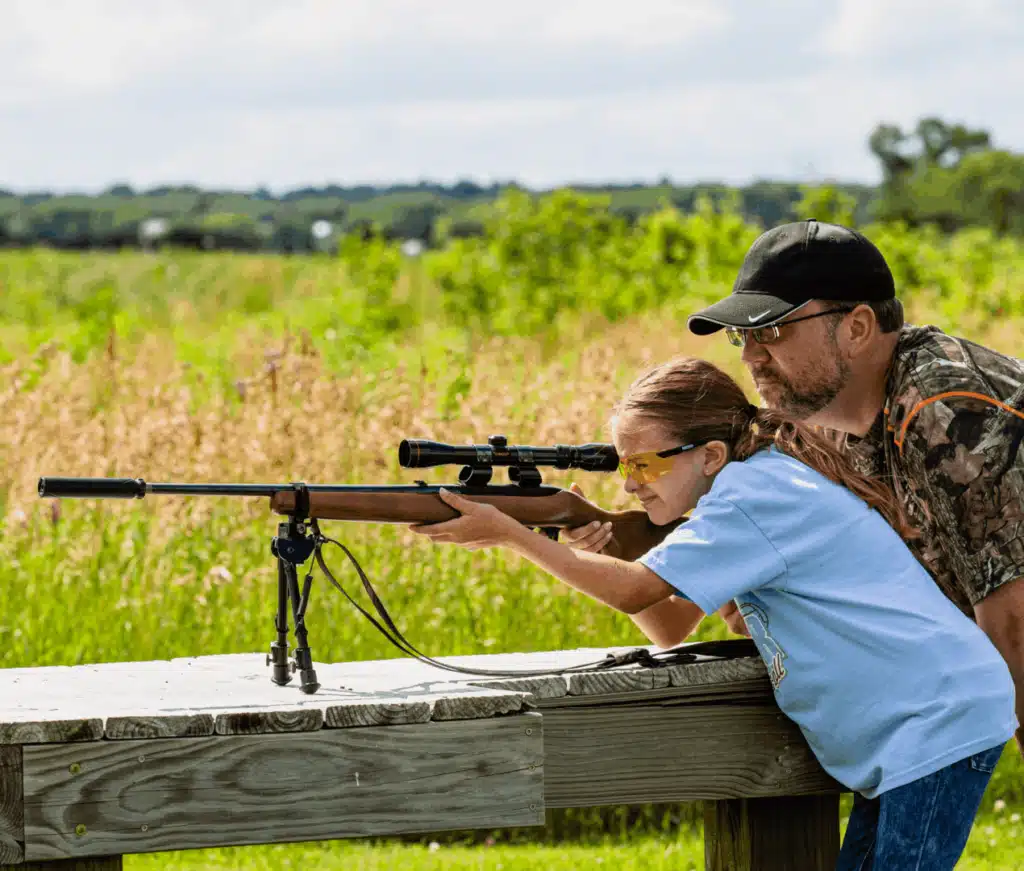
The reduced noise and recoil of a suppressed rimfire platform creates an optimal environment for teaching the core fundamentals of marksmanship: stance, grip, sight alignment, sight picture, breath control, and trigger press. When a young shooter is not anticipating a loud, jarring report, they are free to focus on the fundamentals rather than flinching or bracing. Flinch is the most common accuracy-degrading habit that new shooters develop, and it is almost entirely caused by anticipation of the loud, startling muzzle blast of unsuppressed fire. On a suppressed platform, the learning curve from first shot to consistent accuracy is measurably shorter because the flinch reflex does not develop in the first place. Firearm safety fundamentals — always treat as loaded, never point at anything you don’t intend to shoot, keep finger off trigger until ready to fire, know your target and what is beyond it — can be taught and reinforced more effectively in a calm, non-startling environment than in a loud, intimidating one.
Suppressors for youth shooting: Hunting Applications for Youth Shooters
Youth hunters who shoot suppressed have a meaningful advantage in hearing protection over those who hunt unsuppressed. Many youth hunters do not consistently use hearing protection in the field — earplugs are uncomfortable, muffle important ambient sounds like game movement, and young hunters are reluctant to wear them. A suppressed rifle eliminates the need for hearing protection during hunting shots without sacrificing ambient hearing. For youth whitetail deer hunters taking their first deer, the shot is often the most physically and emotionally intense moment of the experience — a suppressed shot reduces the shock of the moment and allows the young hunter to remain calm and observe the deer’s reaction, which is critical for tracking and recovery. Hunter education programs in suppressor-legal states increasingly acknowledge the practical hearing safety benefits of suppressed hunting for all ages, particularly youth. Verify your state’s hunting regulations regarding suppressor use and any youth-specific hunting restrictions before taking a young hunter afield with a suppressed rifle.
Suppressors for youth shooting: Youth Shooting Organizations and Community
Young shooters interested in pursuing shooting sports competitively have access to organized youth programs through the Civilian Marksmanship Program (CMP), USA Shooting, 4-H Shooting Sports, and many state-level shooting associations. While most formal youth competition programs use unsuppressed firearms under supervised range conditions with mandatory hearing protection, the foundational skills developed on suppressed platforms translate directly to competitive performance. Young shooters who learn to read targets, execute trigger press, and manage fundamentals on suppressed rimfire are well-prepared for the transition to any competitive shooting discipline. Families who invest in a suppressed rimfire platform for youth development are giving their young shooters both the safety benefit of hearing protection and a skill-building foundation that pays dividends for years.
Suppressors for youth shooting: Talking to Kids About Suppressor Ownership and NFA Items
Families who own NFA items including suppressors should discuss the legal responsibilities of NFA ownership with their children in age-appropriate terms. The suppressor is a federally registered item that belongs to the adult owner (or trust), and children should understand that they may use it only under adult supervision and should never handle it without an adult present. The registration paperwork should be kept secure but accessible to authorized adults. As young shooters grow into adults and eventually become eligible to own NFA items themselves (at age 21 for dealer transfers), parents who have modeled responsible NFA ownership provide an excellent foundation for informed, legal, and safe suppressor ownership in the next generation of shooters.
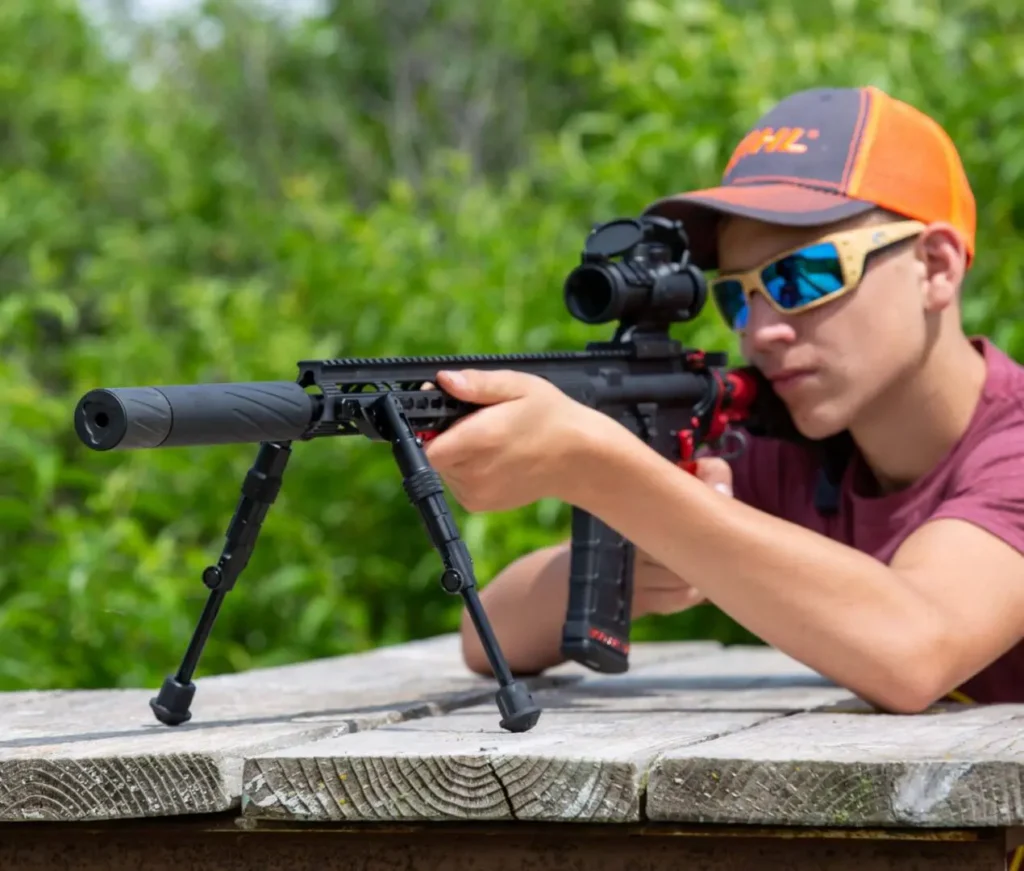
Frequently Asked Questions About Youth Shooting and Suppressors
Can my 10-year-old use my suppressor at the range?
Yes, under your direct supervision and with you present as the registered owner or named trust trustee. Minors may legally use suppressors in suppressor-legal states under adult supervision as long as the adult owner or trust trustee is present. The minor cannot be left alone with the suppressor, transport it independently, or possess it without an appropriate supervising adult present. All applicable state laws regarding minimum age for shooting sports participation also apply — verify your state’s laws regarding supervised minor shooting at ranges. At the range, standard firearm safety rules and all range rules apply regardless of the shooter’s age.
At what age should a child start shooting, and does a suppressor change the recommendation?
There is no universal correct age to introduce a child to shooting — individual maturity, physical development, and readiness vary significantly. Most firearm safety instructors suggest that a child is ready when they can demonstrate consistent attention, follow multi-step instructions reliably, and understand and respect safety rules. A suppressed rimfire platform lowers the sensory barriers to first shooting experiences and is appropriate for younger children (as young as 5–8 with parental physical support and supervision at the most basic level) as a first exposure, compared to unsuppressed fire which many instructors recommend waiting until ages 8–12 for comfortable first experiences. A suppressor does not eliminate the need for adult physical involvement and supervision with very young shooters — it simply removes one of the most significant intimidation factors from the experience.
Does a suppressor reduce recoil enough for young shooters?
On a .22 LR platform, recoil is already minimal regardless of suppressor — the suppressor’s effect on recoil in rimfire is modest but noticeable, primarily from the muzzle-weight counter-balance effect. The more significant effect for young shooters is the reduction in perceived recoil — the combination of quieter report and reduced muzzle blast makes the entire shot feel lighter and less jarring than unsuppressed fire, even when objective recoil force is similar. On centerfire platforms, the suppressor adds meaningful muzzle weight that slows initial muzzle rise, providing a perceivable and practical recoil reduction that helps smaller-framed shooters maintain sight picture through the shot. For youth hunters moving up to centerfire calibers, a suppressed platform provides real recoil reduction benefit compared to unsuppressed equivalents of the same caliber.
Disclosure: PopularSuppressors.com is operated by Brand Avalanche Media, Inc. This article contains general information about suppressors and youth shooting. It is not legal or safety advice. Always consult applicable state and federal laws regarding minor shooting participation and NFA item use. Silencer Central is a paid sponsor of this website.
Similar Posts



More Questions
Is it safe for children to shoot with a suppressor?
Yes — suppressors are among the safest tools for introducing youth to shooting. Unsuppressed gunfire is immediately dangerous to young ears. A suppressor brings most rimfire and pistol calibers below the threshold for instantaneous hearing damage, allowing safe introduction without earmuffs that young children often find uncomfortable.
What is the best suppressor for a youth shooter?
For young shooters, the BANISH 22 on a Ruger 10/22 is the gold standard — hearing-safe, low recoil, and fun to shoot. The suppressed 10/22 with subsonic .22 LR produces approximately 110–118 dB. Silencer Central handles all NFA paperwork and ships directly to your door. Purchase at SilencerCentral.com.
At what age can a youth shooter use a suppressor?
There is no federal minimum age for a minor to use a suppressor under adult supervision — only the owner must be 21+. Minors can legally shoot a suppressor owned by a parent or guardian who is the registered owner or named trustee.