Five free tools, no sign-in and no email. Between them they answer the questions people actually ask before buying a suppressor: what it costs, which one is quieter, how it mounts, whether it is legal where they live, and how long the wait is.
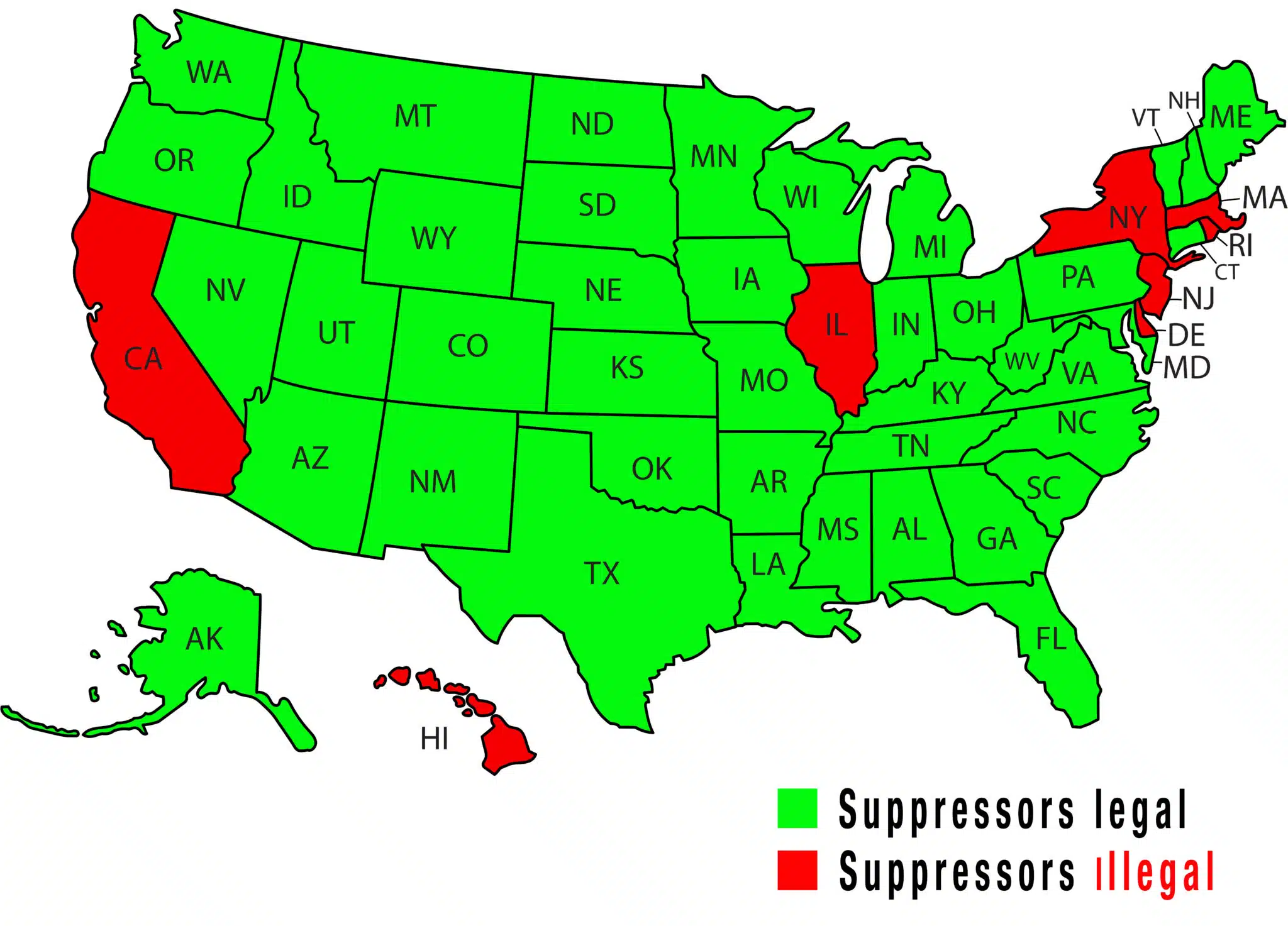
The state map covers all 50 states: 27 clear, 15 with conditions, 9 closed.
| Tool | The question it answers | What you get |
|---|---|---|
| Suppressor Cost Calculator | What will this actually cost me, all in? | The can, the dealer transfer, the trust and the tax stamp — which is now $0 — added into one total you can take to a dealer. |
| Suppressor Comparison Chart | Which can is quieter, lighter or cheaper? | Price, weight, length, mount and measured sound for the current models, side by side in one table. |
| Suppressor Mounting Systems | Direct thread, quick-detach or HUB? | What each mounting system does, what it costs you in weight and repeatability, and which one to buy first. |
| The 27/15/9 State Map | Can I own one where I live? | Every state sorted into clear, conditional or closed, with what changed after the ruling. |
| ATF Form 4 Wait Times | How long is the wait right now? | Current approval times for eForm 4 and paper, with the trend over the last year. |
Which one do you need
You have been quoted a price and you want to know what it really costs. The cost calculator is the one to open. A quoted price is almost never the number that leaves your account: there is the dealer’s transfer fee, there may be a trust, and until recently there was a $200 stamp. That stamp is now $0, which changed the arithmetic more than anything else in the last forty years, and the calculator reflects it.
You have narrowed it to two or three cans and cannot choose. The comparison chart puts them next to each other on price, weight, length, mount and measured sound. Weight is the specification people regret ignoring, because a can that is four ounces heavier changes how a rifle handles far more than the sound difference you were choosing between.
You do not know how it attaches. Read the mounting systems guide before you buy, not after. Direct thread is lighter, cheaper and slower to move between hosts. Quick-detach is faster and heavier. HUB lets you change your mind later. Buying the can first and thinking about the mount afterwards is the most common expensive mistake in this hobby.
You are not sure it is legal where you live. The state map sorts all fifty states into three groups and says what changed after the ruling. It is a reference, not legal advice, and it names the source for each state so you can check it yourself.
You have filed and you are waiting. The wait-time tracker carries current approval times for electronic and paper filings. Electronic filings now come back in days rather than months, which is the single biggest practical change for buyers this year.
What these are built on
Every figure on these pages comes from a named source, and the arithmetic is shown rather than hidden. Sound numbers are measured figures with the test conditions stated, because a decibel reading with no context is worth nothing — the same can measured at the muzzle and at the shooter’s ear gives two different numbers, and both get quoted as though they were the same. Prices are current retail rather than a manufacturer’s suggested figure. Wait times are read from filing data, not from forum anecdote.
Where a number is a judgment rather than a measurement, the page says so in the same place the number appears. Dealer transfer fees vary by shop and by state. A trust costs whatever your attorney charges. Wait times are an average and yours may differ by weeks in either direction. Those qualifications stay on the page instead of being dropped to make a result look cleaner.
All five run in the page you are reading. Nothing is sent anywhere, nothing is stored about you, and no result is held back behind an email form.
How these are kept current
Each tool carries its own updated date. When a figure, a price or a law changes, the page is corrected in place rather than republished at a new address, so a link you save keeps working and keeps being right.
One from elsewhere in the network: Popular Ammo’s cost per round calculator if you are working out what feeding the host rifle costs.
Questions and answers
Do I need an account to use these?
No. Every tool runs in the page. Nothing asks for an email before it gives you an answer.
Is the tax stamp really $0?
Yes, the transfer tax is $0. That is not the same as the paperwork going away — the registration and the wait still apply, and the state map and the wait-time tracker both cover what that means in practice.
How current are the numbers?
The cost calculator and the wait-time tracker are updated as pricing and approval times change. Each page carries its own updated date.
Can I put one of these on my own site?
The comparison chart and the state map can be embedded. There is an embed button under the results on those pages.
Is this legal advice?
No. These are reference tools built from published federal and state sources, with the source named. Check your own state before you buy or travel.
Which tool should I open first?
The state map, every time. If a suppressor is not legal where you live, nothing else on this page matters.
Data updated September 2026