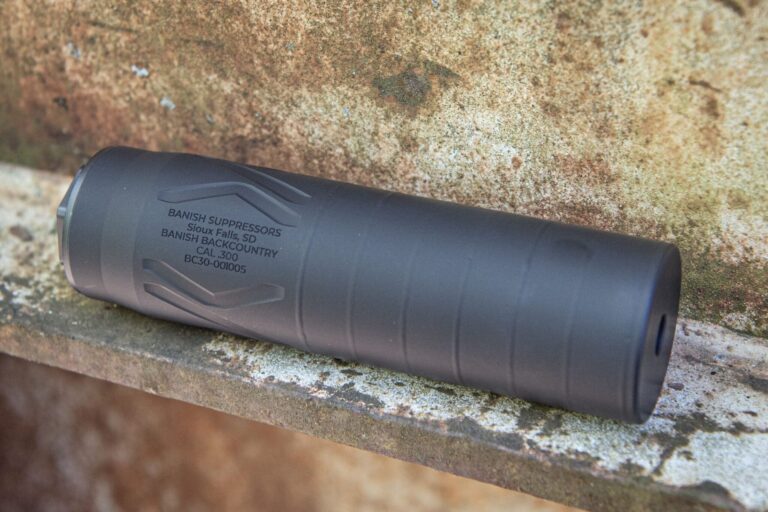
Suppressor Comparison Chart 2026: Prices, Specs & Availability at the $0 Stamp
Quick answer: With the federal tax stamp at $0 since January 1, 2026, the price of a suppressor is just the price of the suppressor — nine of the eleven models in our chart carry a published MSRP, running from $489 to $1,129 as of August 22, 2026 — Otter Creek Labs sells the other two through dealers only and publishes no price. Rimfire suppressors are the affordable entry point at $489–$629, 9mm models run $749–$999, and full-size .30-caliber and 5.56 models top out at $1,129.
Last updated: September 16, 2026 · Originally published August 22, 2026
Suppressor spec sheets are scattered across a dozen manufacturer sites, and no two publish sound numbers the same way. This chart puts eleven of the most popular suppressors — rimfire, 9mm, 5.56, and .30 caliber — in one sortable table with real retail prices, weights, lengths, mounts, and each maker’s published sound figure, all pulled the same day from the same retailer so the comparison is apples-to-apples. A CSV download is at the bottom of the table.
The suppressor comparison chart — eleven models, MSRP verified August 22, 2026
Prices are each manufacturer’s own published MSRP, retrieved August 22, 2026 — not a retailer’s sale price, which moves week to week and differs by dealer. Sound figures are the manufacturer’s or retailer’s published numbers — see the note below the table on why they are not directly comparable. Click a column header to sort.
| Model | MSRP (manufacturer) | Weight (oz) | Caliber rating | Length (in) | Mount | Sound (as published) |
|---|---|---|---|---|---|---|
| Banish RF 22 TI | $629 | 4.1 | .22LR and smaller | 5.4 | Direct thread 1/2×28 | 116.8 dB at muzzle (22LR, 16″) · 23 dB at-ear |
| Dead Air Mask HD | $489 | 6.6 | .17 HMR–5.7×28 | 5.1 | Direct thread 1/2×28 | 24.3, unit not stated by the maker |
| Banish PSTL 9 TI | $999 | 8.6 (with booster) | .380–9mm (+.300 BLK sub) | 7.2 (with mount) | 1/2×28 Micro Booster | 34 dB reduction |
| Rugged Obsidian9 | $842 | 12.7 / 8.7 short | 9mm (.22LR–.357 Mag) | 7.8 / 4.8 short | Direct thread 1/2×28 | n/a |
| SilencerCo Omega 9K | $749 | 7.3 | 9mm / .300 BLK | 4.5 | Direct thread 5/8×24 | n/a |
| Banish Tac Speed K (Inconel) | $1,129 | 14.1 | .223/5.56 | 4.0 | HUB 1.375×24 | 20.9 dB reduction |
| Otter Creek Polonium | No MSRP published | 13.5 | .223/5.56 (+6mm) | 5.8 | 1.375×24 universal | n/a |
| Banish HNT 30 TI | $1,129 | 9.5 / 12.4 long | .17 HMR–.300 Wby | 6.4 / 8.2 modular | HUB 1.375×24 | 34.5 dB reduction (.308) |
| SilencerCo Omega 300 | $699 | 14.8 | 5.56–.300 Win Mag | 7.1 | Direct thread 5/8×24 | 140 dB at .300 Win Mag |
| Otter Creek Polonium 30 | No MSRP published | 13.5 | .30 cal (≤.300 RUM) | 5.8 | 1.375×24 universal | n/a |
| Dead Air Sandman-S | $999 | 17.7 | 7.62 (.308) | 6.8 | KeyMount 5/8×24 | n/a |
Download: Get this chart as a CSV file — sort it, filter it, or track price changes against it. Fields marked n/a were not published by the maker or retailer on the retrieval date; we do not guess numbers.

How much does a suppressor cost in 2026?
Between $489 and $1,129 for the nine models above that publish an MSRP — and that is the whole bill on the federal side, because the National Firearms Act transfer tax dropped to $0 on January 1, 2026. What used to be “suppressor price plus $200 stamp plus a long wait” is now the suppressor price plus an approval that averages 9 days on an individual eForm 4. And after the August 2026 Silencer Shop Foundation v. BATFE ruling, the transfer process itself is in motion: some dealers have started transferring suppressors without a Form 4 in 27 states. Our NFA ruling hub tracks exactly where that stands.
What is the quietest suppressor?
Be suspicious of any chart that ranks suppressors by one dB number — including the sound column above. Manufacturers measure under different protocols, at different positions (muzzle vs. shooter’s ear), with different hosts, barrels, and ammunition, so a “34 dB reduction” from one maker and a “140 dB at .300 Win Mag” from another are not the same measurement. We publish each maker’s figure as stated and label everything else n/a. Where a maker prints a bare number with no unit — Dead Air does this for the Mask 22 — we reproduce the number and say so rather than guessing at the scale. For rigorous independent comparisons under a single controlled protocol, Pew Science’s Silencer Sound Standard is the reference — their per-model Sound Signature Reviews are the closest thing the industry has to a level playing field, and we cite their work rather than reproduce it.
Direct thread vs. HUB vs. proprietary mounts
Three mounting philosophies show up in the chart. Direct thread (the Banish RF 22, Mask 22, Obsidian9, both Omegas) is simple and inexpensive: the suppressor screws straight onto the barrel. HUB (1.375×24 — the Speed K, HNT 30, and both Poloniums) is the industry’s universal rear thread: one suppressor, any brand’s mounting system. Proprietary systems like Dead Air’s KeyMount on the Sandman-S lock you into one maker’s muzzle devices but give fast on-off. For a first suppressor on one host, direct thread is the simple answer; if you plan to move one suppressor across several rifles, HUB compatibility is worth prioritizing.
What you will actually pay, and why availability moves
MSRP is the manufacturer’s published number, not a street price. Dealers discount below it — Silencer Central is running up to 15% off the BANISH line through August 31, 2026 — and Otter Creek Labs publishes no price at all, selling through dealers only. Availability is dealer-specific and changes weekly, so we no longer publish a stock column: check with the dealer you intend to buy from. What has not changed is the underlying pressure. ATF counted more than 6.65 million suppressors on the registry as of August 4, 2026, over 500,000 more than three months earlier. Demand has outrun several makers’ production, so if the model you want is available, the calendar risk of waiting is now bigger than the approval risk.
Which one for your first suppressor?
The classic path still holds at $0 stamp: start rimfire — a Banish RF 22 TI or Mask 22 costs about half of a centerfire model, weighs a quarter as much, and teaches you the ownership process end to end. Our Banish 22 buyer’s guide covers that decision in depth. If your first suppressor needs to serve a hunting rifle, a HUB-mounted .30-caliber like the HNT 30 TI or a direct-thread Omega 300 covers everything from 5.56 up. For the legal side of ownership — trusts, transfers, and what the ruling changes — our sister site Freedom’s Lodge keeps a plain-English firearms & 2A legal glossary.
How this guide was made: research-based — every price, weight, length, and sound figure was taken from each manufacturer’s own product page on August 22, 2026 — MSRP, not a retailer’s sale price — and human-edited before publication. No hands-on testing is claimed, no maker paid for placement, and fields we could not verify are marked n/a rather than estimated.
Sources
Manufacturer product pages, MSRP retrieved August 22, 2026. BANISH is Silencer Central’s own brand, so those pages are the manufacturer source: Banish RF 22 Ti · Banish PSTL 9 Ti · Banish Tac Speed K (Inconel) · Banish HNT 30 Ti · Dead Air Mask HD · Dead Air Sandman-S · Rugged Obsidian9 · SilencerCo Omega 9K · SilencerCo Omega 300 · Otter Creek Labs Polonium series (no published price) · Pew Science Silencer Sound Standard.
What the August ruling changes about buying from this list
Price is no longer the slow part of the purchase. A federal court in Texas enjoined the NFA registration and approval requirements for suppressors on August 5, 2026, and the injunction took effect on August 13. It is party-limited, so it reaches the plaintiffs and their members and customers rather than every buyer in the country.
Read who the NFA ruling covers and who still files a Form 4 before you assume the paperwork is gone. If your dealer is running the standard process, our Form 4 wait-time tracker shows what that queue looks like now, and the tax-stamp explainer covers what changed on January 1.

How we built this suppressor comparison chart
Every price in the table is a same-day retail figure pulled from a dealer listing, not an MSRP carried over from a press release. Weights and lengths come from the manufacturer’s published specification for the exact configuration named in the row, so a titanium version and a stainless version are never blended into one line.
Sound figures are the numbers each manufacturer publishes. They are measured on different hosts, with different ammunition, at different microphone positions, so treat them as a rough ordering rather than a head-to-head result. We have not tested these eleven models side by side on a meter, and we will say so until we have.
MSRP is the hardest number to keep useful. It is what the maker publishes, not what a dealer charges — street prices run below it — and two of the eleven, both Otter Creek Labs models, carry no published price at all because the company sells through dealers only. If you want the host-side of the decision, Guns & Gadgets Daily’s teardown of a 3D-printed 9mm suppressor is a good companion read, and Popular Outdoorsman on subsonic 9mm loads covers the ammunition half.

Suppressor comparison chart FAQ
Do I still pay a $200 tax stamp on a suppressor? No. Congress reduced the NFA transfer and making tax on suppressors to $0 effective January 1, 2026. Any price you see quoted with a $200 stamp attached to it is describing the old system, not what you pay today.
How long does a suppressor take to approve in 2026? ATF listed Form 4 processing at 9 days for individuals and 33 days for trusts, updated as of August 4, 2026, and reported finalizing 1,045,503 Form 4s so far this year. Filing method still moves the number: paper runs longer than eForm.
Can I buy a suppressor without a Form 4 right now? Only if you fall inside the August 2026 injunction, which covers the plaintiff organizations, their members, and the customers of the covered dealers. Everyone else still files. Check the coverage breakdown before you plan around it.
What does a HUB mount get me? A shared rear thread. One suppressor can wear different brands of mounting hardware, which matters when the suppressor has to move between a bolt gun, an AR and a hunting rifle. Direct thread is simpler and costs less if the suppressor lives on one barrel.
Is a rimfire suppressor a good first purchase? For most new buyers, yes. A rimfire model costs about half of a centerfire model, weighs a quarter as much, and it gets used far more often because the ammunition is cheap. It is the fastest way to learn what you want in a second suppressor.