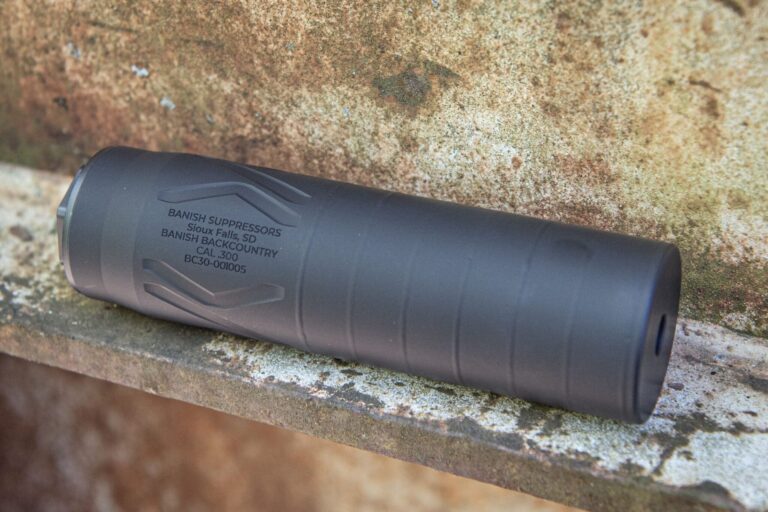
BANISH Backcountry: The 7.8-Ounce Titanium Rifle Can
At 7.8 ounces the BANISH Backcountry is light enough that it stops being something you think about while hiking. This guide covers what the titanium rifle can is, how it specs out and how quiet it runs in the field.
In This Article
Last updated: October 10, 2026 · Originally published April 19, 2026
Update, October 10, 2026: On October 9, ATF stopped requiring a Form 4, federal registration or a tax stamp for suppressors, SBRs, SBSs and AOWs, for everyone nationwide. State law still applies. How buying a suppressor works now.
What Is the BANISH Backcountry? (The 7.8 oz Titanium Rifle Can)
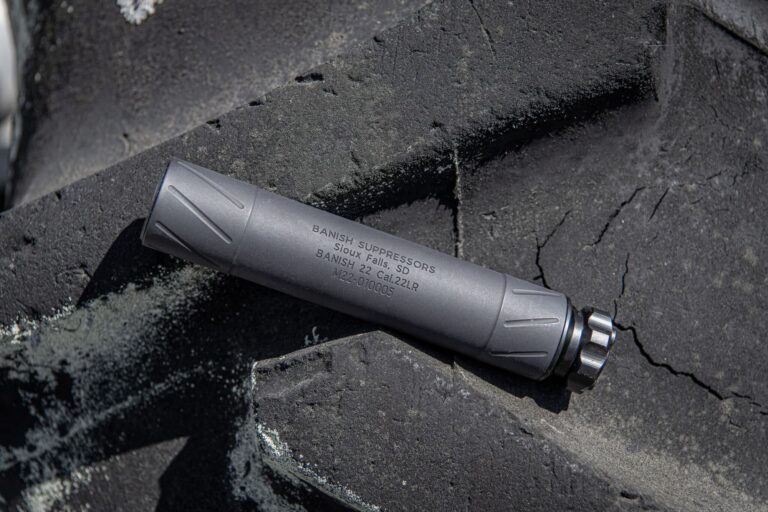
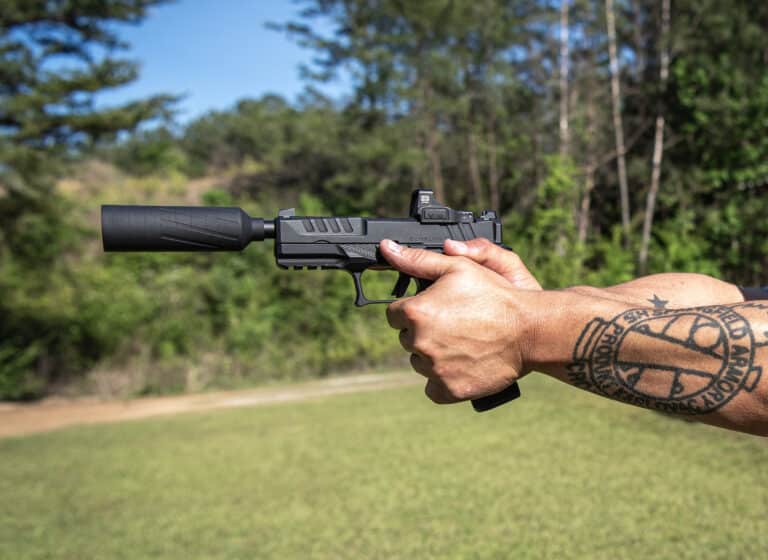
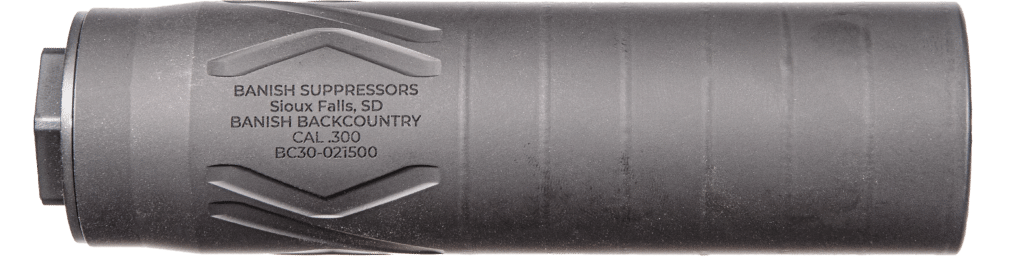
The BANISH Backcountry is a 3D-printed titanium centerfire rifle suppressor from BANISH Suppressors, weighing 7.8 oz and measuring 5.5 inches in overall length. It is rated from.17 caliber up through.300 RUM, which means one can covers most of a Western big-game rifle safe —.223, 6mm, 6.5 Creedmoor, 6.5 PRC.270.280, 7mm.308 Win.300 Win Mag.300 PRC and.300 RUM. It uses a direct-thread mount (5/8×24 standard) and a 1.6 inch outside diameter that keeps the silhouette honest in a scabbard or pack.
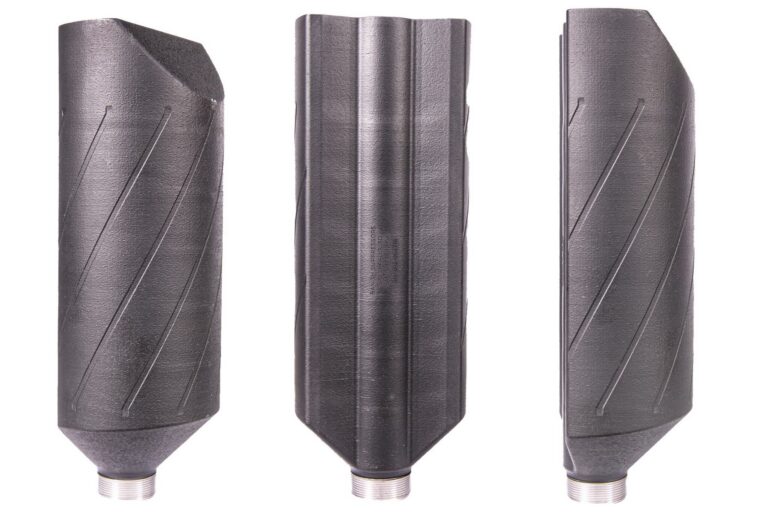
Additive manufacturing is what makes that spec sheet possible. Printing the baffle stack in titanium lets BANISH build internal geometry that would be impractical or impossible to machine from solid stock, which is how you end up with a multi-caliber centerfire can in the same weight class as a dedicated.22 rimfire suppressor.

BANISH Backcountry Specs at a Glance
| Material | 3D-printed titanium |
|---|---|
| Weight | 7.8 oz |
| Overall length | 5.5 inches |
| Outside diameter | 1.6 inches |
| Mount | Direct thread (5/8×24 standard; pitch adapters available for other host threads) |
| Caliber range | .17 cal through.300 RUM — including.223, 6mm, 6.5 Creedmoor, 6.5 PRC.270.280, 7mm.308 Win.300 Win Mag.300 PRC.300 RUM |
| Best-fit hosts | Lightweight bolt rifles for elk, mule deer, sheep, antelope, coues deer, mountain goats; suppressed AR-10 platforms; precision rifles where weight at the muzzle matters |
| Manufacturer | BANISH Suppressors |
How Quiet Is the BANISH Backcountry?
The Backcountry is hearing-safe on standard centerfire chamberings and noticeably softens muzzle blast on big-cased magnums where the difference matters most for the shooter behind the scope and for spotters and packers nearby. For a centerfire can this short and this light, that level of sound reduction is the whole reason a backcountry hunter is willing to keep one mounted from trailhead to the spike camp and back.

- Backcountry rifle hunters — the 7.8 oz weight is closer to a flashlight than to a suppressor; you can leave it bolted to your sheep, elk, mule deer, or coues rifle from the trailhead through the pack-out without rebalancing the whole system.
- Multi-rifle owners — one can covers.223 through.300 RUM, so a single Backcountry rides between a 6.5 Creedmoor mountain rifle, a.308 elk rifle, and a.300 Win Mag everything-rifle.
- Lightweight precision shooters — titanium construction keeps the can off the muzzle of a long-barrel mountain rifle without abandoning sound reduction.
- First-time centerfire suppressor buyers who want one can that covers the whole rifle safe and won’t punish them on the scale or the trail.
Every can in this class is a strong choice — the right one depends on the host and the mission.
- BANISH Backcountry is best for hunters who want the lightest possible titanium centerfire can on a mountain rifle and a single multi-caliber rating from.17 through.300 RUM.
- Thunder Beast Arms Ultra series is best for shooters who want a tightly-engineered titanium-and-stainless can with a rich mount and pitch ecosystem and PEW Science test results across the line.
- Q Trash Panda is best for shooters who want a short, modular can with widely-supported QD mounts and a strong following on AR-10 platforms.
- SilencerCo Scythe-Ti is best for shooters who want an ultralight titanium can with full SilencerCo ASR mount support and the broadest dealer network for service.
How Works
Subscribing to the PopularSuppressors.
Once the federal paperwork clears, Silencer Central ships the suppressor directly to your door.
$0 Tax Stamp in 2026: What Actually Changed
The $200 NFA transfer tax on suppressors was eliminated on January 1, 2026 by the One Big Beautiful Bill Act (OBBBA). The ATF still regulates suppressor transfers: you’ll still file an ATF Form 4, still pass a background check, and still submit fingerprints. The change is that qualifying suppressor transfers no longer carry a $200 federal tax.
Frequently Asked Questions
The 7.8 oz titanium build.17-through-.300 RUM rating, and 5.5 inch length are class-leading for an ultralight centerfire can.
How quiet is the BANISH Backcountry?
The Backcountry is hearing-safe on standard centerfire chamberings and noticeably reduces muzzle blast on big-cased magnums. For a centerfire can this short and light, the sound reduction is the entire reason to mount it on a mountain rifle and leave it there.
What calibers does the BANISH Backcountry work with?
The Backcountry is rated from.17 caliber through.300 RUM — including.223 Rem, 6mm, 6.5 Creedmoor, 6.5 PRC.270 Win.280, 7mm.308 Win.300 Win Mag.300 PRC and.300 RUM. The standard mount is direct thread (5/8×24); pitch adapters are available for other host threads.
How heavy is the BANISH Backcountry?
7.8 ounces. That is closer to the weight of a typical flashlight than to most centerfire suppressors, which is the whole point of the Backcountry — it is built so that hunters can leave a can mounted on a mountain rifle from trailhead to camp without rebalancing the system.
Do I still need a tax stamp for a suppressor in 2026?
No. The $200 NFA transfer tax was eliminated on January 1, 2026 by the One Big Beautiful Bill Act. The ATF Form 4 process, background check, and fingerprint requirement still apply — only the $200 tax was removed.
How long does it take to buy a suppressor in 2026?
Wait times now run in weeks rather than months for most applicants because the paperwork simplified alongside the $0 tax-stamp change. Exact timing varies with the ATF backlog and your specific Form 4 pathway.