Suppressor Ruling Appeal: What DOJ’s October 5 Deadline Means
The Department of Justice has until October 5, 2026, to file a suppressor ruling appeal in Silencer Shop Foundation v. ATF, the Texas case that lifted NFA registration from suppressors for covered buyers when the court’s stay expired on August 12. On September 2, a House subcommittee convened in Washington to ask the government why it is still defending the requirement at all.
In This Article
- The suppressor ruling appeal window closes October 5
- How a Texas courtroom got here
- What Chairman Higgins told the room on September 2
- Who the injunction covers right now
- What a suppressor ruling appeal would and would not undo
- The federal law a suppressor ruling appeal never touches
- Demand climbed straight through the fight
- What to settle before the suppressor ruling appeal deadline
- Suppressor ruling appeal: frequently asked questions
- The date to circle
That deadline changes nothing a covered buyer may do this week. It decides how much of the current arrangement survives the fall.
The suppressor ruling appeal window closes October 5
Where this stands on September 15, 2026. Nobody has filed a notice of appeal. We read the court docket in full on September 15: the newest entry is a motion for clarification from the State of Kansas, filed September 11, asking the court to spell out what its own judgment covers. Even a winning plaintiff wants the scope in writing, which is the clearest sign yet that this is not settled.
Judge James Wesley Hendrix entered final judgment and a permanent injunction on August 5, 2026, in the Northern District of Texas. He stayed his own judgment for seven days so the government could ask the Fifth Circuit for emergency relief. The government did not ask. The stay ran out at the end of August 12, and the injunction took effect.
Declining an emergency stay is not the same as giving up. The United States gets 60 days to file a notice of appeal in a civil case where a federal agency is a party. The National Shooting Sports Foundation puts the outside date at October 5, 2026, for DOJ to appeal or to seek a stay of the final judgment.
As of September 6, 2026, the department has filed neither. Four weeks remain on the suppressor ruling appeal clock.
How a Texas courtroom got here
The case turns on a tax that no longer exists. Congress zeroed the federal making and transfer tax on suppressors, short-barreled rifles and short-barreled shotguns in the One Big Beautiful Bill Act, effective January 1, 2026. We covered what that did to the old $200 line item in our breakdown of the tax stamp after the ruling.
Removing the tax removed the constitutional footing under the paperwork. The court held that the NFA’s registration and approval provisions could no longer be sustained under the Taxing Clause, or under any other enumerated power, for the categories Congress had cut to zero. The consolidated case is Silencer Shop Foundation v. ATF, No. 6:25-CV-056, joined with Jensen v. ATF, out of the San Angelo Division.
The enjoined provisions are specific: 26 U.S.C. §§ 5812(a)–(b), 5822, 5841(a)–(c) and (e), and 5861(b)–(f), along with 27 C.F.R. §§ 479.62(a)–(d) and 479.84(a)–(d). Everything Congress left alone stayed alone.
What Chairman Higgins told the room on September 2
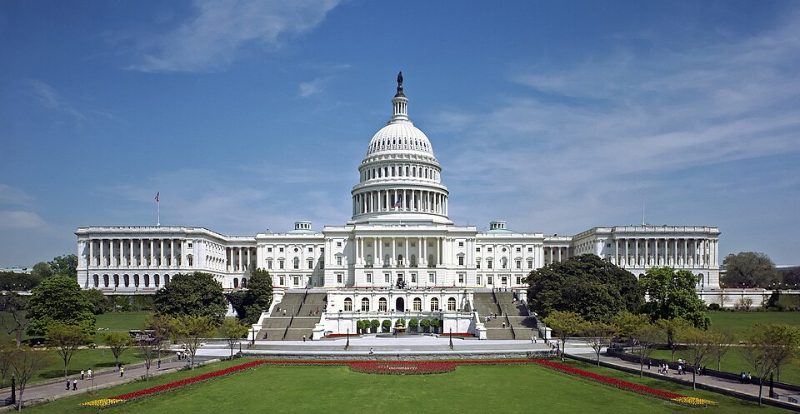
The House Oversight Subcommittee on Federal Law Enforcement met at 2:00 p.m. ET on Wednesday, September 2, in 2154 Rayburn. The roundtable was titled “Suppressing the Second Amendment: Examining the DOJ’s Posture Toward Firearms Suppressors.” Three participants sat at the table: Lawrence G. Keane, general counsel and senior vice president of NSSF; Knox Williams, president and executive director of the American Suppressor Association; and Peter Forcelli, a retired ATF deputy assistant director. The timing was not accidental — it landed with a month left on the suppressor ruling appeal window.
Subcommittee Chairman Clay Higgins of Louisiana opened by framing the question as an enforcement question, not a legislative one. He said the subcommittee had convened “to ask why the Department of Justice is still defending a regulatory scheme that Congress has already dismantled.”
He then spent most of his opening on the device itself. “A suppressor is simply a hearing protection device,” Higgins said, putting an unsuppressed rifle report at roughly 165 decibels and the reduction from a suppressor at 30 to 35 decibels — quieter, and still plainly audible. He noted that ATF issues suppressors to some of its own agents for their health and safety, and that no statistical evidence ties suppressor use to violent crime.
Higgins also put his own hearing on the record: about 45 percent loss in his left ear and 40 percent in his right, accumulated across service as a soldier and a police officer. That detail matters more than it looks. A subcommittee chairman describing permanent injury from unsuppressed gunfire is building a record, and records are what appellate courts and future Congresses read.
No Democratic members attended. Our sister site Freedom’s Lodge tracked the parallel enforcement story this week in its report on four NFA pardons and what they left standing.
Who the injunction covers right now
This is where most of the confusion lives. The relief is real and it is narrow. It runs to the named plaintiffs, to current and future members of the organizational plaintiffs, and — for the commercial plaintiffs — to their current and future customers. It does not run to the general public, and it does not run to a state’s residents merely because that state signed on.
| Your relationship to the case | Covered for suppressors? | Covered for AOWs? |
|---|---|---|
| Customer of a commercial plaintiff (for that transaction) | Yes | Depends on which case the seller sits in |
| Member of GOA, Gun Owners Foundation or FRAC | Yes | Yes |
| Member of TSRA, CCRKBA or FPC Action Foundation | Yes | No |
| Agency or political subdivision of a plaintiff state | Yes | Per case |
| Private resident of a plaintiff state, no other tie | No | No |
| Buying from a dealer whose inventory came from a non-covered source | No | No |
The commercial and organizational plaintiffs in the Silencer Shop Foundation case include B&T USA, the Firearms Regulatory Accountability Coalition, Gun Owners Foundation, Gun Owners of America, Palmetto State Armory, SilencerCo Weapons Research and Silencer Shop Foundation, alongside 15 states. The Jensen plaintiffs are the Texas State Rifle Association, the Citizens Committee for the Right to Keep and Bear Arms, FPC Action Foundation and Hot Shots Custom.
Coverage attaches to the transaction, not to your ZIP code. If you are working through a trust, the ownership questions have not moved; see our walkthrough of how trusts sit under the injunction.
What a suppressor ruling appeal would and would not undo
Filing a notice of appeal, by itself, does nothing to the injunction. An appeal is a request for review. It does not suspend the judgment below. For anything to change on the ground, the department would have to ask the Fifth Circuit for a stay pending appeal, and the Fifth Circuit would have to grant it.
That gives buyers three realistic paths out of the next four weeks:
- DOJ lets October 5 pass. The final judgment becomes unappealable. The injunction holds for covered parties, permanently, and the pressure shifts to Congress and to ATF’s implementation guidance.
- DOJ files a notice of appeal and nothing else. The case goes to the Fifth Circuit and the injunction keeps running while the briefs are written. Expect a year or more.
- DOJ files and seeks a stay. Only this path can pull the relief back, and only if the panel agrees. Purchases already completed under the injunction are a separate and harder question than purchases attempted afterward.
Nobody outside the department knows which it will be. What the September 2 roundtable added was a public record of congressional Republicans pressing the point in the other direction.
The federal law a suppressor ruling appeal never touches
Reading past the headline is the whole job here. Several federal requirements were never challenged, were never enjoined, and are unaffected either way:
- The Gun Control Act stands in full. A suppressor sold under the injunction still runs through a Form 4473 and a background check at the dealer counter.
- Short-barreled rifles and shotguns still need a Form 4. 18 U.S.C. § 922(b)(4) independently bars a licensee from delivering an SBR or SBS to a non-licensee without Attorney General authorization, and the approved Form 4 has been that authorization. The injunction removed the NFA hook; it did not supply a replacement.
- Interstate movement is unsettled. The court did not enjoin 26 U.S.C. § 5861(j) or (k), which reach transporting, delivering or receiving an unregistered NFA firearm in interstate commerce. Law firm Wiley Rein, which represented plaintiffs in the case, has published a compliance breakdown of the open questions.
- The SOT regime survives. Congress did not zero the special occupational tax, so the court did not reach it, and dealer-side mechanics remain in place.
- State law governs independently. A state that conditions lawful possession on NFA registration still conditions it on NFA registration. Our state-by-state read of the ruling is the place to start.
ATF has not published implementation guidance. NSSF has formally asked for it. Until that arrives, the safe reading is the narrow one.
Demand climbed straight through the fight
While the litigation ran, the paperwork got faster and the volume got larger. ATF responded to an NSSF Freedom of Information Act request with numbers that reframe the entire wait-time conversation: the volume-weighted average processing time across its four highest-volume forms fell from 73 days in fiscal 2021 to roughly 18 days. Form 4 alone went from about 150 days to about 18.
The median individual electronic Form 4 now clears in six days.
Volume did not fall to make that happen. It nearly tripled over five years. In May 2026, ATF received 231,502 NFA applications, including 121,117 suppressor Form 4s, and finalized 233,843, including 123,143 suppressor Form 4s. Through July 1, the bureau reported more than 1.62 million NFA forms received in calendar year 2026 and nearly 1.52 million finalized. Americans are filing roughly 20,000 applications a day.
The registry itself now holds more than 6.65 million suppressors, after registrations grew 265 percent between 2020 and 2024. Our running count of registered suppressors in 2026 tracks the same curve from the owner’s side.
Those figures cut both ways in a courtroom. A registry that processes a Form 4 in six days is harder to describe as an unbearable burden. A registry holding 6.65 million entries is harder to describe as regulating something unusual.
What to settle before the suppressor ruling appeal deadline
- Establish your path, in writing. Ask the seller which plaintiff its inventory traces to, or confirm your membership in an organizational plaintiff. Coverage you cannot document is coverage you cannot rely on.
- Read your state statute on its own terms. Federal relief does not rewrite a state possession law that references NFA registration.
- Leave a pending Form 4 alone. Withdrawing an application to chase the injunction trades a known position for an unknown one. Our note on what happens to a pending Form 4 lays out the reasoning.
- Keep every record you generate. The 4473, the receipt, the membership confirmation, the dealer’s sourcing statement. If the posture changes, documentation is the argument.
- Watch the docket rather than the commentary. A notice of appeal is a public filing. It will appear before anyone explains it.
Suppressor ruling appeal: frequently asked questions
Is October 5 a hard suppressor ruling appeal deadline?
It is the outside date NSSF identifies for DOJ to appeal or seek a stay of the final judgment entered August 5, 2026. Federal appellate rules give the United States 60 days to file a notice of appeal when a federal agency is a party. If the department files nothing by then, the judgment becomes final as to these plaintiffs.
Would a suppressor ruling appeal take back a suppressor I already bought?
Filing an appeal does not undo the injunction. It does not retroactively unwind a completed lawful transfer either. Only a stay from the Fifth Circuit, or an eventual reversal, could change the footing going forward. A purchase completed while the injunction was in effect sits on far firmer ground than one attempted after a stay.
Does the ruling mean anyone can buy a suppressor without registration?
No. The injunction is party-specific. It covers named plaintiffs, members of the organizational plaintiffs, and customers of the commercial plaintiffs for those transactions. A private citizen with no tie to the case is still subject to the ordinary NFA process, and every buyer still completes a Form 4473 and a background check.
Do short-barreled rifles get the same treatment as suppressors?
Not in practice. The court enjoined the NFA provisions for SBRs and SBSs, but 18 U.S.C. § 922(b)(4) separately bars a dealer from transferring one to a non-licensee without Attorney General authorization. An approved Form 4 has served as that authorization, and ATF has not offered a substitute. The Form 4 route remains the clean path for short-barreled firearms.
What did the September 2 roundtable decide?
Nothing binding. A roundtable is not a markup and produces no legislation. Its value is the record: a subcommittee chairman, an industry general counsel, a suppressor-association director and a retired ATF deputy assistant director putting the hearing-protection case and the enforcement-posture question into the congressional record while the appeal clock runs.
Where can I confirm ATF’s current processing times?
ATF publishes updated figures on its current processing times page, refreshed monthly. Those numbers reflect voluntary filings, which remain available to anyone who wants a registered suppressor for state-law reasons even while the injunction stands.
The date to circle
Nothing gets decided by argument between now and October 5. It gets decided by whether a lawyer at Main Justice signs a two-page notice of appeal, or lets the first Monday of October go by. Everything above — the decibels, the six-day medians, the 6.65 million entries, the chairman’s ruined hearing — is the record that lawyer is reading while deciding.
Sources and method. Case details are drawn from the final judgment record in Silencer Shop Foundation v. ATF, No. 6:25-CV-056 (N.D. Tex.), as summarized by NSSF (August 17, 2026) and Wiley Rein (August 18, 2026). Roundtable details and Chairman Higgins’s remarks come from the House Committee on Oversight and Government Reform’s own announcement and wrap-up releases for the September 2, 2026 proceeding. Processing and volume figures are ATF data released to NSSF under FOIA and ATF’s published monthly totals. Popular Suppressors does not provide legal advice; consult counsel for your own situation.
Similar Posts