Suppressor Caliber Conversion: What ATF’s New Letter Allows
Updated September 12, 2026
In This Article
- What ATF changed on August 28
- Suppressor caliber conversion, in plain terms
- The .22-to-9mm example ATF put in writing
- What a suppressor caliber conversion still cannot touch
- Old guidance versus new guidance
- Why owners still cannot handle a suppressor caliber conversion themselves
- What this does not change about the August court ruling
- How to request a suppressor caliber conversion
- Suppressor caliber conversion FAQ
- What suppressor caliber conversion means for owners now
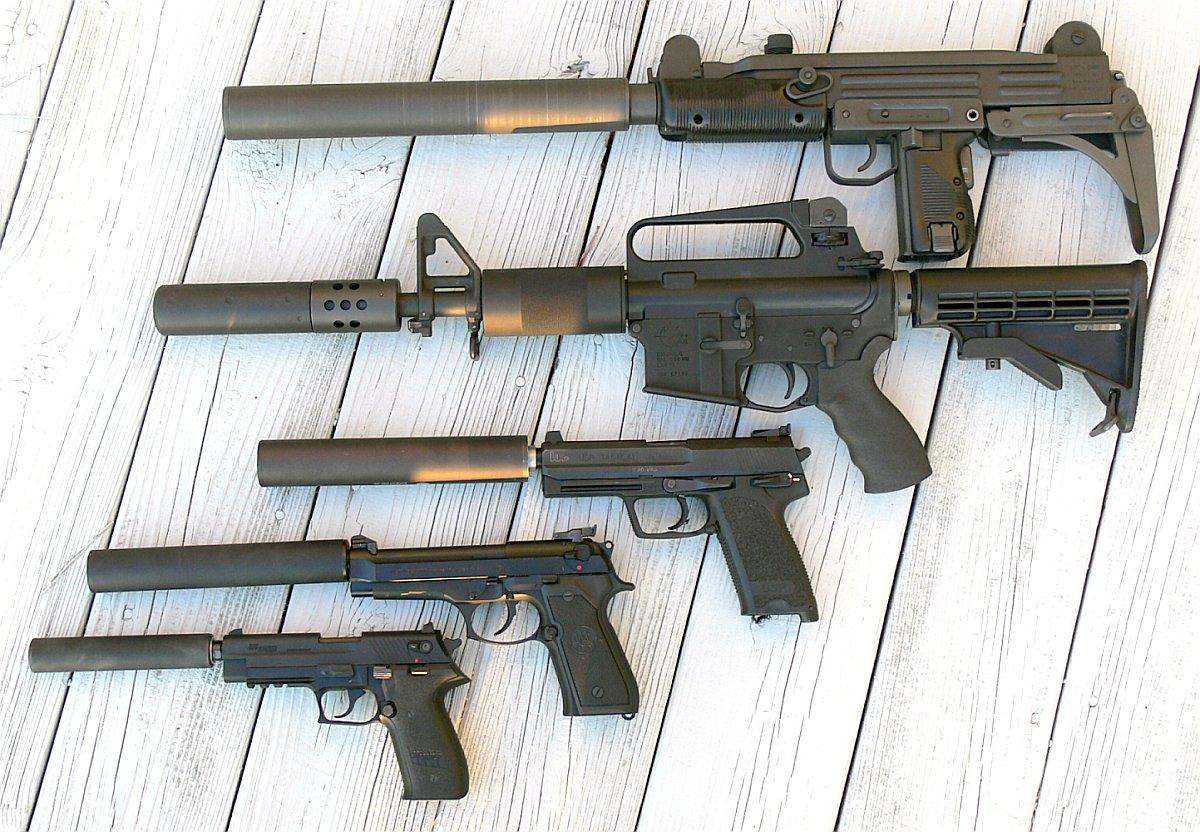
A suppressor caliber conversion is the work of modifying a registered silencer — drilling its baffles, opening its end cap, or replacing worn internals — so the device will handle a different cartridge. The Bureau of Alcohol, Tobacco, Firearms and Explosives now says that work does not create a new National Firearms Act firearm, so long as the serialized housing and its markings survive intact.
ATF put that position in writing in an Open Letter to All Federal Firearms Licensees on Silencers dated August 28, 2026 and posted to the agency’s website on September 8. The letter reverses a reading that stood since 2008, and it removes a federal trap that turned routine gunsmithing into a registration question.
What ATF changed on August 28
Under the old guidance, ATF treated a damaged baffle as its own regulated article. Replacing internals was held to a one-for-one swap. Drilling a baffle or end cap to clear a larger projectile counted as manufacturing new silencer parts, and each part was separately a firearm in the agency’s view.
The new letter drops that reading for complete, registered devices. A qualified manufacturer may now modify the existing components inside a registered silencer without creating newly regulated parts. Those components stay part of the device already listed in the National Firearms Registration and Transfer Record.
The letter carries no separate effective date. It is agency guidance, not a statute or a regulation, and a later administration could revisit it.
Suppressor caliber conversion, in plain terms
Three things have to be true before the new flexibility applies.
- The device is complete and registered. The silencer already sits in the NFRTR under a serial number.
- The serialized frame or receiver survives. On most conventional designs that is the outer tube or principal housing.
- A qualified manufacturer does the work. The exception runs to licensees, not to the person who owns the device.
Clear those three, and the caliber change is a repair to an existing registered article rather than the making of a new one.
The .22-to-9mm example ATF put in writing
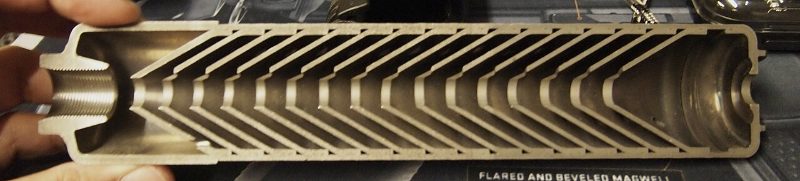
The agency chose a direct illustration. Take a registered .22-caliber silencer. Enlarge the openings through its baffles and end cap so the device will pass a 9mm projectile. Under the 2008 reading, the shop just manufactured a set of new silencer parts. Under the August letter, it did not.
The modified components remain part of the registered complete silencer. That single example settles a question owners have asked for years about rimfire hosts. Rimfire devices collect the heaviest fouling and the most wear of any class, which is why long-serving designs like AAC’s reach the bench more often than the rest.
ATF also addressed a mechanical side effect. Rethreading during a repair can shorten the outer tube slightly, and the letter treats a minimal reduction as permissible. It does not define minimal, so no shop should read that line as license to reprofile a registered silencer.
What a suppressor caliber conversion still cannot touch
The serialized component remains the hard boundary. A manufacturer may not destroy it, grind away required markings, or fit a fresh housing carrying the old serial number. Do any of those, and the work becomes the making of a new NFA firearm, with marking and registration obligations attached.
That line has a practical consequence. When the serialized housing is repairable, the new policy can extend a registered silencer’s service life by years. When the housing is destroyed, the old problem stands and the registration has nowhere to live.
Modular designs raise a harder identification question, because the serialized part is not always the obvious tube. Shops working on those should settle which component is the frame or receiver before a single cutter touches the device.
Old guidance versus new guidance
| Work performed | 2008 reading | August 28, 2026 letter |
|---|---|---|
| Drilling baffles or end cap for a larger projectile | Making new silencer parts, each regulated | Permitted on a registered complete silencer |
| Replacing damaged internal components | Generally one-for-one | Broader replacement permitted by a qualified manufacturer |
| Using unregistered, unmarked replacement parts | Each part marked and registered | Permitted between qualified manufacturers |
| Minor shortening of the tube from rethreading | Unaddressed | Minimal reduction treated as permissible |
| Replacing or destroying the serialized housing | Making a new NFA firearm | Unchanged — still making a new NFA firearm |
| Owner possessing loose spare internals | Regulated, marked, registered | Unchanged — still regulated |
The compliance firm FFLGuard, which advises federal licensees, read the same letter and reached a narrow conclusion: the safe harbor is real, and its edges are tight. Its practice advisory tells licensees to identify the serialized component before starting work and to document the configuration on both sides of the job.
Why owners still cannot handle a suppressor caliber conversion themselves
This letter is not permission to order loose baffles and go to work at the bench. Federal law reaches any component intended only for assembling or fabricating a silencer, and that definition did not move.
The new flexibility exists because a qualified manufacturer controls the unregistered components and installs them into a device already in the registry. Outside that setting, spare internals remain regulated articles that require marking and registration. Handing them to an unlicensed person triggers the transfer rules as well.
Owners who want a different cartridge should send the device to a manufacturer qualified for the work. Owners who registered the device to a trust should confirm the paperwork names the right responsible party before shipping anything.
What this does not change about the August court ruling
The letter governs complete silencers already registered in the NFRTR. It does not widen the injunction in Silencer Shop Foundation v. ATF or the consolidated Jensen v. ATF, and it does not say how the agency will treat a device transferred without NFA registration under that order.
That gap is real. A suppressor lawfully transferred under the injunction but never entered in the registry does not meet the letter’s registered-device condition. Owners in that position should not assume the repair guidance reaches them.
The August 5 decision striking the registration scheme and this repair letter are separate instruments doing separate work. Neither resolves the other, and owners whose Form 4 is still pending sit between them.
Congress has noticed the gap. On August 27, Representative Tracey Mann of Kansas wrote to ATF asking how the agency will implement the ruling, which registration requirements survive, and when finalized guidance will publish. The letter went to ATF Director Robert Cekada. The August 28 silencer letter answers none of those six questions.
How to request a suppressor caliber conversion
- Confirm the device is in the NFRTR. Have the approved Form 4 or Form 1 and the serial number in hand.
- Pick a qualified manufacturer. The shop needs the licensing to possess and install unregistered components.
- Identify the serialized component in writing. Agree with the shop on which part carries the serial before work starts.
- Document the starting configuration. Photograph the device, record the caliber of record, and keep the file.
- Ship on the shop’s instructions. Follow its stated procedure for sending a registered silencer.
- Notify ATF of the caliber change. The letter recommends updating the registry so the NFRTR reflects the device’s configuration.
That last step is a recommendation in the letter rather than a new approval process. Nothing in the guidance requires the owner to wait for a sign-off before shooting the converted device, which puts it in a different class from the approval timelines behind eForm 4 approvals that now clear in days.
Suppressor caliber conversion FAQ
Does a caliber change require a new tax stamp?
No. The letter treats the work as a repair to a registered device rather than the making of a new NFA firearm, so no making tax attaches. Transfer tax is a separate matter, and the $0 transfer tax that took effect January 1, 2026 applies to transfers of suppressors, short-barreled rifles, short-barreled shotguns, and any other weapons.
Can a .22 suppressor be converted to 9mm?
ATF used that exact pairing as its example. A qualified manufacturer may enlarge the baffle and end-cap openings of a registered .22-caliber silencer so it passes a 9mm projectile. Whether a given device should be converted is a separate engineering question, because tube diameter, internal volume, and material thickness all constrain what a design tolerates.
Who counts as a qualified manufacturer?
The exception runs to licensees holding the federal firearms license and Special Occupational Tax status that permit manufacturing NFA firearms. A dealer without manufacturing qualification cannot possess unregistered silencer components for this purpose. Ask any shop to confirm its qualification in writing before shipping a registered device.
What happens if the serialized tube is damaged beyond repair?
The registration has nowhere to go. A manufacturer may not transplant the serial number onto a replacement housing, and building a new housing is the making of a new NFA firearm. The letter extends the service life of a repairable device; it does not resurrect one whose serialized component is destroyed.
Does this apply to suppressors bought without a Form 4?
No. Devices transferred under the court injunction without NFA registration do not satisfy the letter’s registered-silencer condition. ATF has not said how it will treat repairs or caliber changes on those devices, and that silence is itself a reason to get transaction-specific legal advice first.
Can a suppressor caliber conversion be reversed later?
Mechanically, opening a bore cannot be undone by removing material. A manufacturer can install a new set of internals sized for a smaller projectile, and under this letter that installation is permitted on a registered device. The enlarged components themselves stay part of the registered silencer.
What suppressor caliber conversion means for owners now
Suppressors are hearing-safety equipment and constitutionally protected arms, and repairing one you already own should never have carried federal risk. ATF walked back an indefensible reading here, and the agency deserves the credit for doing it. The letter does not repeal anything. It removes one needless barrier between an owner and a device already registered to him, and it arrives while the courts work on the rest.
Owners tracking the wider fight should watch what the agency does with additive-manufactured titanium baffles, where the line between repair and manufacture gets harder to draw with every design cycle.
The serialized tube is still the part that decides whether a registered suppressor has a future. As of August 28, it stopped being the part that decides how long.
This article is general information, not legal advice. Owners and licensees should read the ATF letter in full and obtain qualified counsel for a specific repair or conversion.
Similar Posts