Suppressor Interstate Travel: The Question the Injunction Left Open
Updated September 13, 2026.
In This Article
- Suppressor interstate travel was never the hard part
- What the August ruling changed about suppressor interstate travel
- The statute behind the suppressor interstate travel question
- What SilencerCo told its customers
- Four suppressor interstate travel scenarios
- Why suppressor interstate travel matters most in September
- How to choose between Form 4 and Form 4473
- What would close the suppressor interstate travel question
- Suppressor interstate travel FAQ
- How we checked this
Can you drive a Form 4473 suppressor across a state line? No federal agency has answered that in writing, and until one does, SilencerCo is telling its own customers to keep the suppressor in the state where they bought it. Suppressor interstate travel was a settled, dull question for 90 years. The August injunction unsettled it — not by restricting anything, but by removing the registration step the travel rule was written around.
Suppressor interstate travel is the act of carrying a lawfully owned silencer across a state line. A suppressor registered on a Form 4 travels freely, because ATF’s transport approval form has never applied to silencers. A suppressor transferred on a Form 4473 under the 2026 injunction sits inside an open question that nobody in Washington has closed.
Suppressor interstate travel was never the hard part
Owners who came up through the Form 4 process learned this early. ATF Form 5320.20, the application to transport an NFA firearm across state lines, covers short-barreled rifles, short-barreled shotguns, machine guns and destructive devices. It does not cover silencers. It never has.
So a registered suppressor rode in the truck like a scoped rifle. The only real homework was state law. Eight states and the District of Columbia prohibit civilian suppressor ownership outright, and a handful more restrict hunting use. We mapped that terrain in the 27 same-day states and the 15 whose own statutes still demand a Form 4.
That was the whole checklist. Know your destination state, know your route, drive.
What the August ruling changed about suppressor interstate travel
On August 5, 2026, a federal judge in the Northern District of Texas held that the NFA’s registration and approval requirements exceed Congress’s enumerated powers as applied to items that carry no tax. Congress had already zeroed the making and transfer taxes effective January 1, 2026. The taxing-power justification went with them. NRA-ILA’s summary of the decision covers the reasoning.
The government let a seven-day stay lapse. The injunction took effect August 13.
The relief is narrow by design
The court did not issue a universal injunction. Protection runs to the plaintiffs and, where applicable, their members and their current and future customers. That is why the qualifying purchase is tied to specific manufacturers and specific dealers rather than to every suppressor on every shelf.
The court never reached the Second Amendment
The decision rests on Article I. The judge resolved the case on the limits of federal power and declined to rule on whether the registration scheme independently violates the right to keep and bear arms. That question is still live, and it is the stronger ground. The government has roughly two months from the August 5 judgment to appeal, which puts the deadline in early October.
The statute behind the suppressor interstate travel question
Everything turns on nine words in 26 U.S.C. § 5861. Subsection (j) makes it unlawful “to transport, deliver, or receive any firearm in interstate commerce which has not been registered as required by this chapter.”
Read that clause slowly. The hinge is “as required by this chapter.” If a court has barred the government from requiring registration of your suppressor, then registration was not required, and the item is not one that “has not been registered as required.” That reading is sound. It is also untested, and no owner should have to be the test case.
ATF has not published written guidance naming § 5861(j). Director Robert Cekada has said the agency will not pursue enforcement inconsistent with the court’s order and that getting the guidance right matters more than getting it out fast. Both of those things can be true while lawful owners are still left reading a felony statute on their own. The delay is the agency’s to fix.
What SilencerCo told its customers
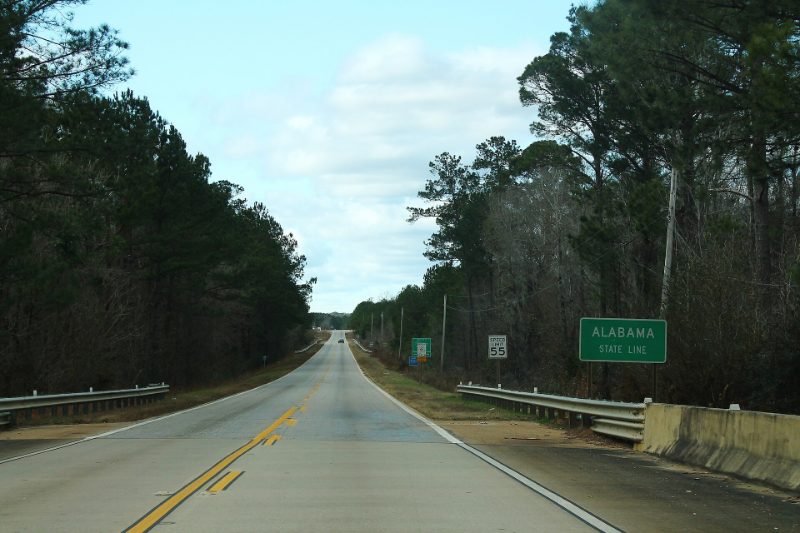
SilencerCo was a plaintiff in the case, and it published its own guidance rather than waiting. On its NFA ruling page, updated September 10, 2026, the company lists 27 states where qualifying customers may buy a new SilencerCo suppressor on a Form 4473: Alabama, Arizona, Arkansas, Florida, Idaho, Indiana, Iowa, Kansas, Kentucky, Louisiana, Maine, Maryland, Minnesota, Missouri, Nebraska, New Hampshire, New Mexico, Oklahoma, South Carolina, South Dakota, Tennessee, Texas, Utah, Vermont, Virginia, West Virginia and Wyoming.
The buyer fills out a Form 4473, passes a NICS check, and takes the suppressor home. No fingerprints, no passport photo, no CLEO notification, no approval wait. Dealers mark “Other Firearm” on the 4473.
Then comes the warning. SilencerCo says there are unresolved questions about interstate transportation of suppressors bought this way, and it “strongly encourages” those customers to keep the suppressor in the state of purchase. The company also flags a second wrinkle: its lifetime warranty stands, but shipping an unregistered suppressor across a state line for service may need a different process.
Dealers are moving in the meantime. AmmoLand reported in August that four FFLs passed ATF compliance inspections after running Form 4473-only suppressor transfers, and that inspectors cited none of the covered transfers as violations. That is not written policy and it is not a promise. It is four field observations pointing the same direction the order points.
Four suppressor interstate travel scenarios
| Scenario | Paperwork behind it | Where it stands |
|---|---|---|
| Registered suppressor, driven to another state that allows them | Approved Form 4, entered in the registry | Settled. Form 5320.20 does not apply to silencers. No federal permission slip. |
| Form 4473 suppressor, stays in the state of purchase | Form 4473 and NICS | Settled for covered transactions under the injunction. |
| Form 4473 suppressor, crosses a state line | Form 4473 and NICS | Open. § 5861(j) has no written ATF reading yet. |
| Form 4473 suppressor, shipped out of state for warranty work | Form 4473 and NICS | Open. SilencerCo says its return process may change. |
Two of the four are clean. The two that are not share a single cause, and it is not the court and it is not the owner.
Why suppressor interstate travel matters most in September
Timing is doing real damage here. September is when dove opens, when early archery seasons roll in across the plains and the mountain west, and when antelope and elk hunters point a truck at a state they do not live in. A suppressed rifle is standard equipment on those trips now, because hearing protection that works while you are glassing is worth the paperwork.
The out-of-state hunt is where suppressor interstate travel breaks
A hunter who bought on a Form 4473 in Texas in August and drew a Wyoming tag for September is exactly the person with no clean answer. Both states permit suppressor ownership. Both permit suppressed hunting. The open item is federal and it is procedural.

How to choose between Form 4 and Form 4473
The decision is simpler than the legal argument around it. Work through it in order.
- Write down where the suppressor will be used. Home range only, or four states and a hunting camp. Be honest about the next three years, not the next three weeks.
- Check your own state first. State law survived the ruling untouched. Start with the state-by-state breakdown and confirm with your dealer.
- If any planned use crosses a state line, take the Form 4. The tax is $0 and wait times are short. You are buying a settled answer, not a tax stamp.
- If a trust will hold the item, take the Form 4. No court has extended the injunction’s coverage to trusts, which we walked through in the trust coverage problem.
- If you already have a Form 4 pending, leave it alone. Do not assume it was approved, canceled or made moot. Our decision tree for pending applications covers the three ways that goes.
- Ask the dealer which path they run. Dealers are not required to participate, and some are waiting for written guidance before they will.
The Form 4 is not a consolation prize. It is the route with a 90-year paper trail and a $0 tax bill since January.
Owners who already took the Form 4473 route have three workable options while the question stays open. Keep the suppressor in the state of purchase, which is what the manufacturer advises. Add a second suppressor on a Form 4 for travel duty, which reads less strange now that the tax is zero and approvals move in days. Or hold the trip inside the state line and wait for written guidance, which may arrive before your next tag does.
Nothing about that list is satisfying. All three beat reading a felony statute alone at a highway rest stop.
What would close the suppressor interstate travel question
Three things, in rough order of likelihood.
Written ATF guidance that names § 5861(j) and says how the agency reads it against the injunction would end the confusion in a single page. A broader ruling or an appellate decision extending relief past the named parties would do it at a different scale. Congress removing suppressors from the NFA entirely would make the question disappear, which is where this should have landed in 1934.
Until one of those arrives, owners are doing what gun owners have always done under vague federal rules: routing around them at their own cost. Our sister site Freedom’s Lodge tracks the same pattern in a different corner of the law, in its rundown on traveling with high-capacity magazines.
Suppressor interstate travel FAQ
Do I need ATF permission to take a registered suppressor to another state?
No. ATF Form 5320.20 governs interstate transport of short-barreled rifles, short-barreled shotguns, machine guns and destructive devices. Silencers are not on that list and never have been. If your suppressor is registered on an approved Form 4 and both states allow ownership, you drive. State law is the only thing to check before you go.
Can I cross a state line with a Form 4473 suppressor?
Nobody can tell you yes in writing today. SilencerCo, a plaintiff in the case, strongly encourages Form 4473 customers to keep the suppressor in the state of purchase until the question is resolved. The statute at issue is 26 U.S.C. § 5861(j), and ATF has not published its reading of how that provision applies to items transferred under the injunction.
Why is § 5861(j) the sticking point?
It bars transporting a firearm in interstate commerce that “has not been registered as required by this chapter.” A Form 4473 suppressor is not registered. The strong argument is that registration was not required, because a court barred the government from requiring it. That reading has not been tested, and a misread here is a felony question rather than a paperwork question.
Does the injunction cover every suppressor buyer?
No. The court declined to issue a universal injunction. Relief runs to the plaintiffs and, where applicable, their members and their current and future customers, tied to qualifying transactions. Owning a product from a plaintiff company does not by itself put you inside the order. Ask the dealer whether the specific transaction qualifies before assuming anything.
Is the Form 4 still worth doing?
For anyone who hunts, competes or travels out of state, yes. The transfer tax has been $0 since January 1, 2026, and approvals are moving quickly. What the Form 4 buys now is not a lower cost, it is an answered question, plus trust ownership and a registry entry that every state recognizes.
Could an appeal undo this?
The federal defendants have roughly two months from the August 5 judgment to seek appellate relief, putting that window in early October 2026. An appeal would not retroactively criminalize a lawful transfer made while the injunction stood, but it could change what is available going forward. Watch the docket rather than social media.
How we checked this
The 27-state list and the transport warning come from SilencerCo’s own NFA ruling page, read on September 12, 2026, and cross-checked against the company’s August 31 press release as reported by AmmoLand. The statutory text is quoted from Cornell’s Legal Information Institute. The scope of Form 5320.20 comes from ATF’s own form notice. We did not call any state agency for this piece, so confirm destination-state hunting rules with that state’s wildlife agency before a trip. This is reporting on an unsettled federal question, not legal advice for your situation.
The suppressor did not change in August. The paperwork behind it did, and the paperwork is what stops at the state line.
Similar Posts