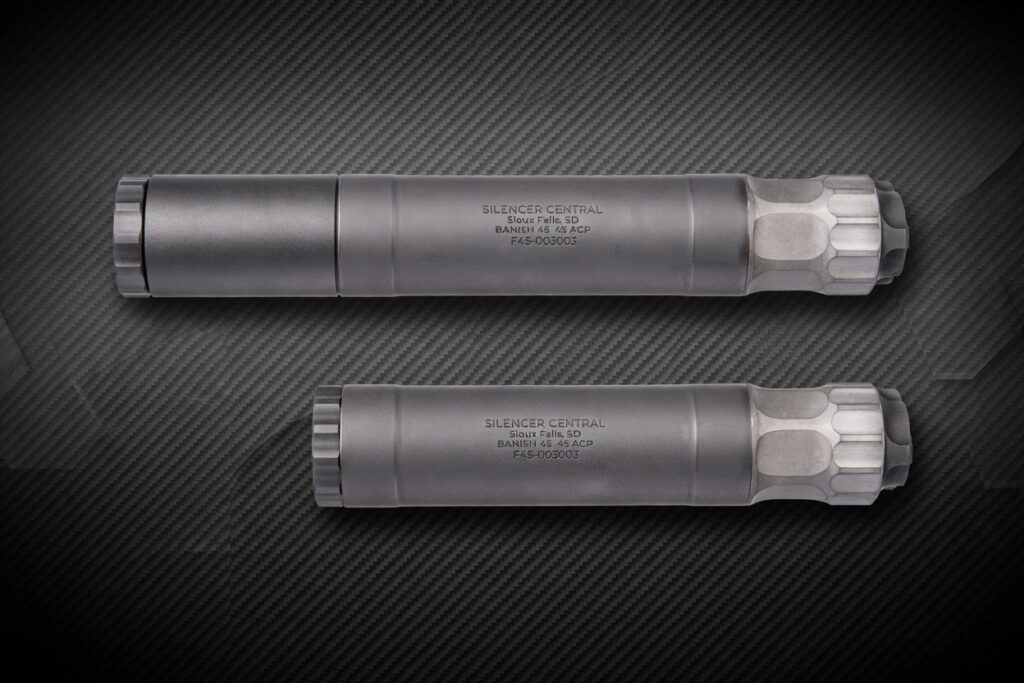
Silencer Central Form 4 in 2026: The Post-Tax-Stamp Process, Five Months In
As of May 2026, the Form 4 e-File approval window is averaging nine days. The $200 NFA tax stamp was eliminated January 1, 2026, and there is no extra transfer up-charge.
In This Article
- Silencer Central Form 4 2026 — the top 5 facts
- What January 1, 2026 actually changed — and what didn’t
- The Silencer Central Form 4 2026 workflow, step by step
- How long a Silencer Central Form 4 takes in 2026 — the posted numbers
- The free NFA gun trust — what it adds to the filing
- Directly to the winner’s front door
- Silencer Central Form 4 2026 — FAQ
- One last thing before Friday
Last updated: October 19, 2026 · Originally published June 5, 2026
Update, October 10, 2026: On October 9, ATF stopped requiring a Form 4, federal registration or a tax stamp for suppressors, SBRs, SBSs and AOWs, for everyone nationwide. State law still applies. How buying a suppressor works now.


Silencer Central Form 4 2026 — the top 5 facts
- The tax: the $200 federal transfer tax on suppressors was eliminated January 1, 2026. The Form 4 itself — fingerprints, photo, background check — remains.
- The filing: Silencer Central submits the eForm 4 (ATF’s electronic Form 4) for the buyer and tracks every stage in a customer portal.
- The timeline: per Silencer Central’s April 27, 2026 data update, approvals average 4 days for individual filings and 18 days for trusts.
- The trust: a free NFA gun trust with unlimited co-trustees is included with every suppressor purchase.
- The delivery: licensed in all 42 suppressor-legal states, Silencer Central ships the approved suppressor to the owner’s door.
- Visit between 6:00 a.m. and 10:00 p.m. Central Time on Friday, June 5, 2026.
- Submit your email address in the entry panel.
- Complete the entry actions — each one adds entries to your name.
- The winner is drawn Saturday, June 6, 2026. Every sponsor ships its own prize, and Silencer Central takes the BANISH 9K from there.
What January 1, 2026 actually changed — and what didn’t
January 1, 2026, delivered one of the biggest wins in modern firearms history: the federal $200 NFA transfer and making tax stamp was permanently eliminated for suppressors, short-barreled rifles (SBRs), short-barreled shotguns (SBSs), and Any Other Weapons (AOWs). Thanks to the One Big Beautiful Bill Act signed into law on July 4, 2025, buyers and makers of these items no longer pay the tax that had been required since 1934. That single change drops the out-the-door cost of a new suppressor, like the BANISH 9K or BUCK 30 by exactly $200. It removes a long-standing financial barrier, and has already triggered record sales as more shooters finally pull the trigger on suppressed setups. For the first time in over 90 years, the only cost of owning a legally transferred suppressor is the price of the suppressor itself.
Everything else about the NFA transfer process stayed exactly the same. Suppressors and the other affected items remain fully regulated Title II firearms, so you still must submit a Form 4 (transfer) or Form 1 (manufacture), pass an ATF background check, provide fingerprints and passport photos, and wait for official approval and registration on the NFA registry. Electronic eForm processing continues to deliver fast approvals (often just days or a couple of weeks), and dealers like Silencer Central still handle the entire paperwork and CLEO notification for you. State laws, local restrictions, and the requirement to keep the item on the federal registry are unchanged. In short, January 1 made suppressed shooting dramatically more affordable, but it didn’t deregulate suppressors or shortcut the responsible ownership rules that have always been part of the NFA.
The Silencer Central Form 4 2026 workflow, step by step
Silencer Central has spent 18 years simplifying ATF paperwork, and its published process runs from purchase to porch without the owner leaving home. Condensed from the company’s own eleven steps, the workflow looks like this:
- The suppressor enters Silencer Central’s system.
- Profile. A link arrives by email; the buyer completes a secure customer profile.
- Fingerprints. Silencer Central mails fingerprint cards — with a free t-shirt in the box — and the buyer ships the cards back.
- Signatures. The paperwork is signed digitally through another emailed link.
- The call. A scheduled phone call reviews everything, then Silencer Central submits the eForm 4 to ATF.
- The 4473. The buyer completes the standard federal firearm-transfer form.
- CLEO notice. Silencer Central sends the required notification to local law enforcement; shipment waits seven days from the CLEO acknowledgement.
- Approval and delivery. ATF approves, the suppressor ships to Silencer Central’s licensed dealer in the buyer’s state, and then to the front door.
The company communicates by email and text throughout, and the customer portal shows progress at every stage. As a gunsmith, the detail I respect most is the call before submission — a complete, correctly filled application is what keeps an approval from stalling, and they check yours before ATF ever sees it.
How long a Silencer Central Form 4 takes in 2026 — the posted numbers
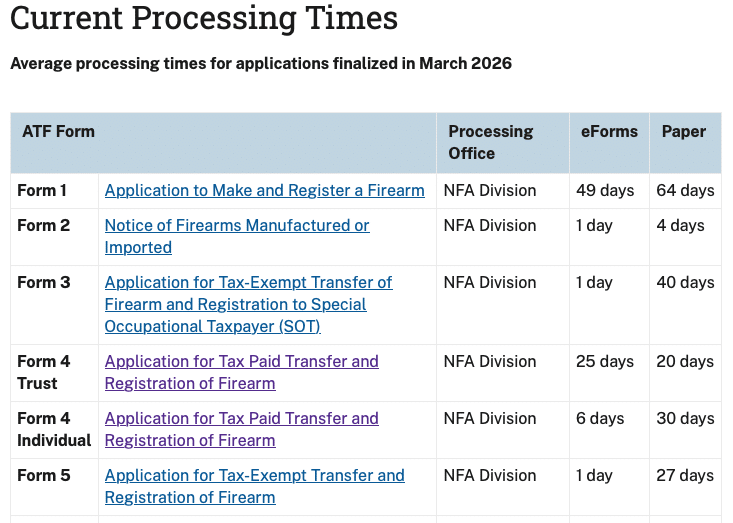
Silencer Central publishes its average ATF wait times from customer purchases over the trailing 30 days, and the current posting — updated April 27, 2026 — reads: individual filings, 4 days; trust filings, 18 days. The company notes that the surge of post-January submissions may stretch those averages for some applicants.
Numbers like those would have read as fantasy for most of the Form 4’s history — our ATF wait times guide tracks how far they’ve come. Two things drove the drop: ATF’s eForms system replaced mailed paper, and high-volume dealers learned to submit applications clean the first time.
Note the reversal hiding in those figures: individual filings now clear faster than trusts. A few years ago the conventional wisdom ran the other way, which is why a 2026 buyer should decide between the two paths on features — not on stale speed advice.
And if an application does sit longer than expected, the status is checkable. Silencer Central’s portal tracks each stage, and ATF’s NFA Branch takes status calls directly at (304) 616-4500 with the applicant’s name and serial number in hand.
The free NFA gun trust — what it adds to the filing
Every Silencer Central purchase includes the option of a free NFA gun trust— a 20-plus-page legal document that holds the suppressor instead of the individual owner. The company reports more than 200,000 gun-trust silencer transfers completed, reviews each trust before filing so ATF doesn’t reject it, and keeps the document on file for future purchases. What the trust buys you is shared use and succession. Unlimited co-trustees may legally possess and shoot the suppressor — a spouse, an adult child, a hunting partner — and the trust carries the suppressor to the next generation without a new transfer. File as an individual and take the faster current timeline, or put the BANISH 9K in a trust and build the family structure around it from day one. 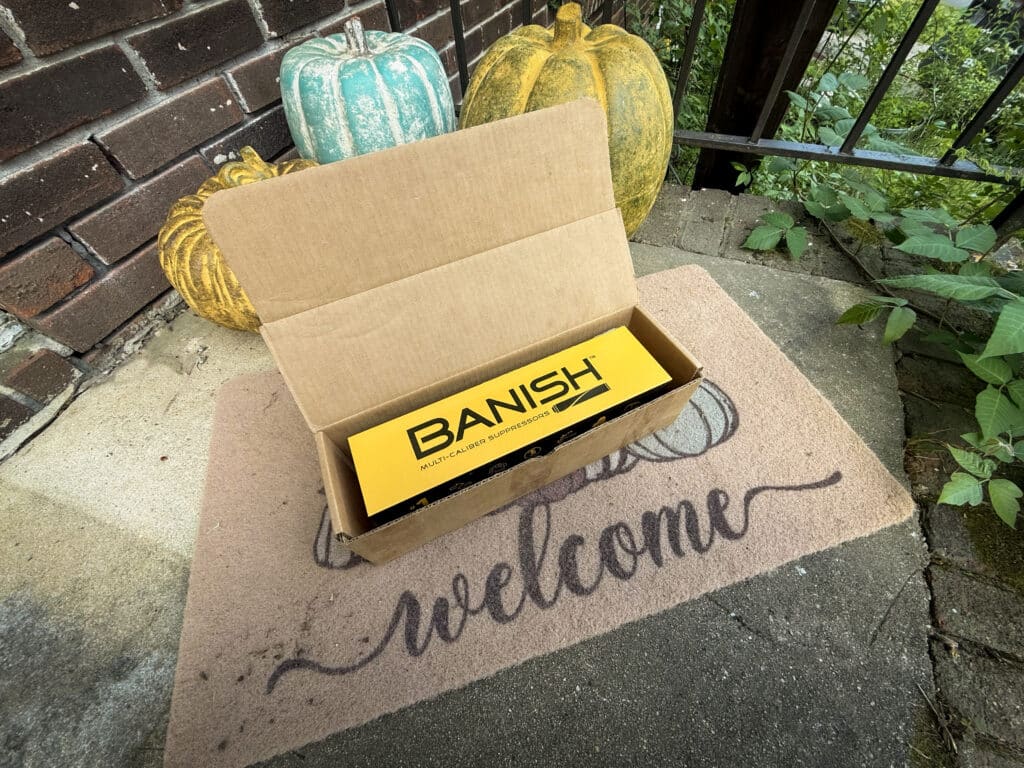
Directly to the winner’s front door
Delivery is the half of the process Silencer Central trademarked — Silence Delivered℠. The company is licensed in all 42 states where suppressors are legal, which lets it move an approved suppressor to its own dealer in the buyer’s state and then straight to the buyer’s address. No counter pickup, no transfer fee at a local shop, no third trip across town.
Suppressors are legal to own in 42 states, and Silencer Central’s state-by-state mapcovers the ownership requirements in each.21 or older, excluding residents of California, Delaware, Florida, Hawaii, Illinois, Massachusetts, New Jersey, New York, Rhode Island, and Washington, D.C.
Silencer Central Form 4 2026 — FAQ
How long does a Silencer Central Form 4 take in 2026?
Per Silencer Central’s posted averages, updated April 27, 2026: about 4 days for individual filings and 18 days for trust filings, measured from correctly completed applications over the prior 30 days. The company cautions that a surge in post-January submissions may extend those times for some buyers.
Is the $200 tax stamp still required in 2026?
No. The $200 federal transfer tax on suppressors was eliminated effective January 1, 2026, and ATF’s updated eForms launched the same day without the fee. The Form 4 filing itself — fingerprints, photo, background check, and registration — is still required for every transfer.
Both paths end at the same front door. Individual filings are currently faster — 4 days versus 18 by Silencer Central’s posted averages — while a trust lets co-trustees legally use the suppressor and keeps it in the family across generations. Silencer Central includes its 20-plus-page NFA gun trust free with the process, so the choice costs nothing either way.
What happens to a suppressor when its owner dies?
A suppressor held in an NFA gun trust stays in the trust, available to the surviving co-trustees — one of the main reasons buyers choose one. An individually registered suppressor passes to a lawful heir through ATF’s estate-transfer process. Our NFA trust guide walks through the inheritance question in detail.
Does the winner pick the suppressor up at a gun store?
No. Silencer Central ships the approved BANISH 9K to its own licensed dealer in the winner’s state and then directly to the winner’s front door. The pistol is the piece that moves through a local shop — GunPrime sends the threaded Echelon to the transfer dealer the winner selects.
One last thing before Friday
Nine decades of $200 stamps ended in January.
Central Time on Friday, June 5, 2026, and close at 10:00 p.m. the same day.


Similar Posts