Thread Pitch Chart: Suppressor Thread Sizes by Caliber
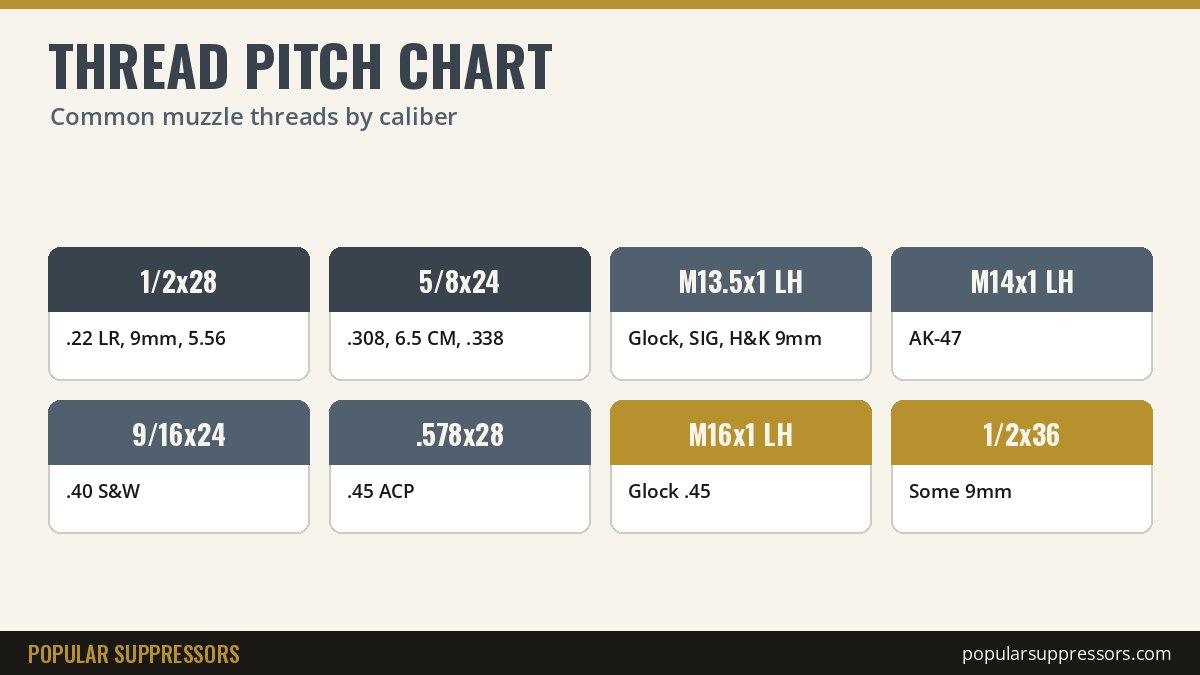
Thread pitch chart: 1/2×28 is standard for .22, 9mm and 5.56; 5/8×24 for .308 and 6.5; Glocks and AKs use metric left-hand threads.
In This Article
Originally published: October 3, 2026
Thread pitch is the specification that decides whether a suppressor, muzzle brake, or flash hider will actually fit a barrel, and it is written as a major diameter and a thread spacing, such as 1/2×28 or M14×1. Those numbers are not universal: a .22 rimfire, a 5.56 rifle, a .30-caliber hunting gun, and a pistol can all use different pitches, and European, military, and manufacturer-specific standards add still more options on top of the common U.S. sizes. Matching the chart is only the first step. The threads also have to be cut concentric to the bore and square to the shoulder, because even a correct pitch will misalign a can if the muzzle threads are crooked, which can cause baffle strikes and damage the suppressor or the firearm.
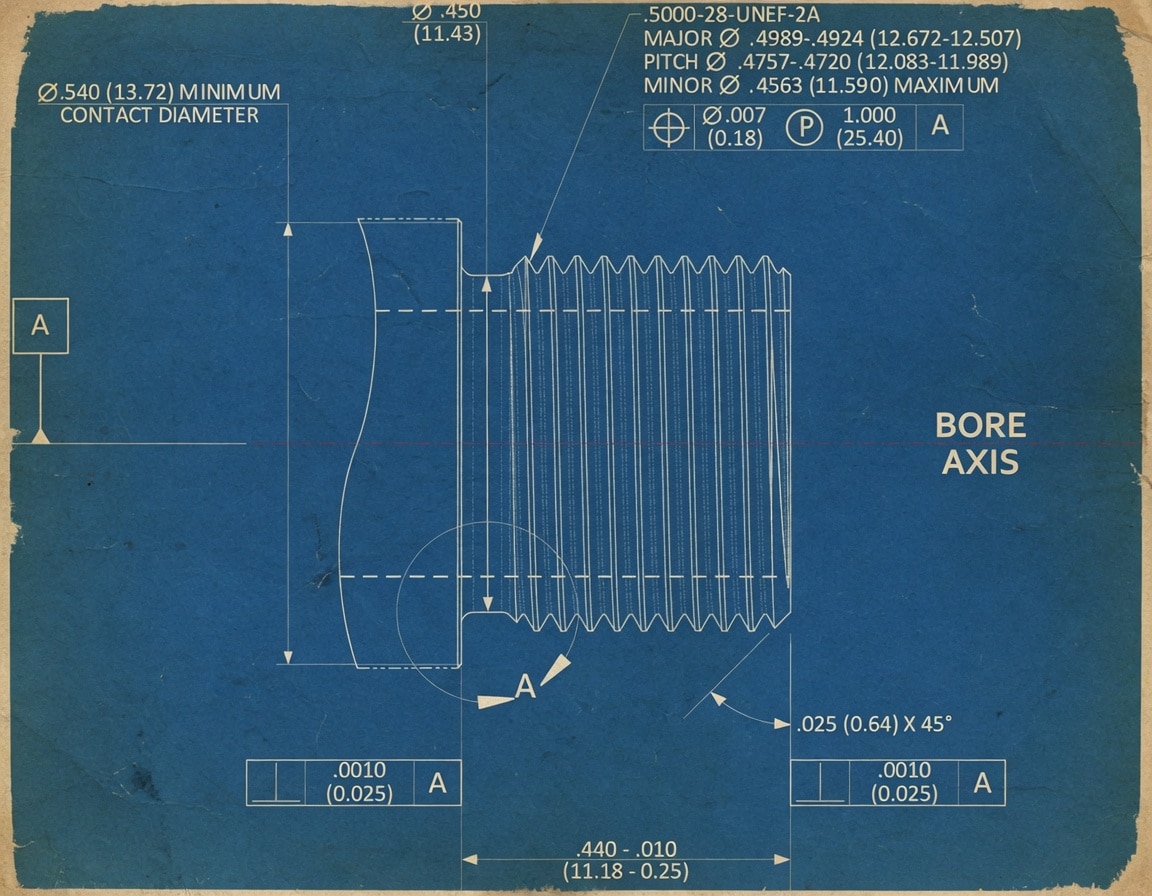
Below are the common thread pitches by caliber and by platform, how to read the numbers, and how to mount a suppressor so the bullet goes through the middle.
Safety note. This chart lists common thread pitches. Your barrel may differ, and makers change specs. Confirm the thread with your barrel’s manufacturer or a thread gauge before you mount anything, check alignment with an unloaded firearm, and never fire a caliber larger than a suppressor is rated for. Barrel threading is gunsmith work.
Thread Pitch at a Glance
- 1/2×28: .22 LR, .17 HMR, 5.56/.223 and most 9mm.
- 5/8×24: the common .308/7.62 thread, also used on 6.5 Creedmoor and .338.
- M13.5×1 LH: Glock, H&K and SIG MPX 9mm barrels.
- M14x1 LH: the AK-47.
- Reading it: 1/2×28 means 1/2-inch diameter, 28 threads per inch. M13.5×1 means 13.5 mm diameter, 1 mm between threads. LH means left-hand.
Thread Pitch Chart by Caliber
| Caliber | Most common | Also seen |
|---|---|---|
| .22 LR, .22 Mag, .17 HMR | 1/2×28 | 1/2×20 (Sako Quad) |
| 9mm | 1/2×28 | M13.5×1 LH, 1/2×36 |
| 5.7×28, .357, .38 | 1/2×28 | |
| .40 S&W | 9/16×24 | M14.5×1 LH |
| .45 ACP | .578×28 | M16x1 LH (Glock) |
| 5.56 / .223 | 1/2×28 | M13x1 LH, M15x1 |
| 6.5 Creedmoor | 5/8×24 | 3/4×24 |
| 7.62 / .308 | 5/8×24 | M14x1 LH, M24x1.5 |
| .338 / 8.6 Blackout | 5/8×24 | 3/4×24, M18x1.5 |
From Silencer Shop’s threaded barrel guide and Armanov’s common muzzle thread reference (updated May 2026). Armanov notes it cannot guarantee every entry is current, so confirm your barrel.


Thread Pitch by Platform
- AR-15 (5.56/.223): 1/2×28, the standard for the platform.
- AR-10 and .308 bolt guns: 5/8×24 is the most common.
- Glock threaded barrels: M13.5×1 LH for 9mm, M14.5×1 LH for .40, and M16x1 LH for .45, per Armanov.
- SIG MPX and H&K 9mm: M13.5×1 LH. The H&K MP5-N is listed at 1/2×30.
- CZ Scorpion EVO: 1/2×28 on the carbine and M18x1 on the 8-inch barrel.
- AK-47 (7.62×39): M14x1 LH.
How to Read a Thread Pitch
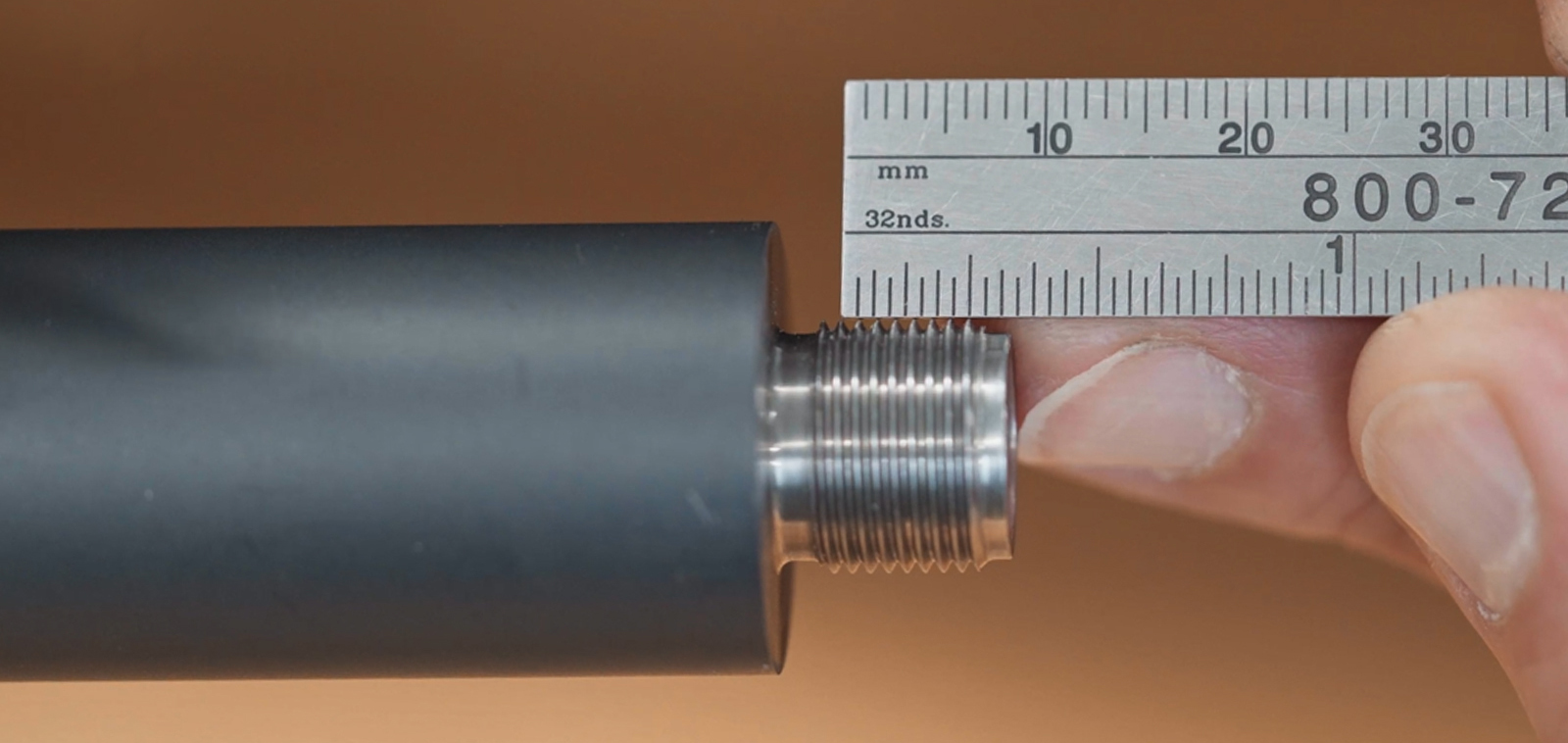
American threads are written as diameter by threads per inch. Silencer Shop explains TPI as the number of threads per inch of threaded length, so a higher number is a finer thread. 1/2×28 is a half-inch thread with 28 threads per inch. Metric threads start with M and list the diameter in millimeters, then the distance between threads, peak to peak. M13.5×1 is 13.5 mm with 1 mm between threads.
LH means left-hand, which tightens counterclockwise. Silencer Shop notes left-hand threads are common in European manufacturing, which is why so many Glock and H&K barrels use them. A right-hand device will not thread onto a left-hand barrel, so never force it.
Why You Should Not Cut Small Threads on a Big Barrel
The temptation is easy to understand: you own a 1/2×28 can and want it on a .30 caliber rifle. Atomic Defense spells out why that is a bad idea. A .30 caliber bore is much larger than a .22 caliber bore, and cutting 1/2-inch threads on a .30 caliber barrel would leave the barrel walls at the muzzle “dangerously thin.” Larger calibers get larger threads for a reason.

How to Mount a Suppressor Straight
The thread is only half the job. The other half is concentricity, which Atomic Defense defines as the bore’s center line lining up with every baffle and the end cap. If it does not, the bullet can strike a baffle. Four habits prevent that:
- Match the thread exactly. Use the chart, then confirm your barrel.
- Lose the crush washer. Atomic Defense warns the tapered crush washer used behind A2 flash hiders “will guarantee your suppressor mount is tilted.” Use flat, precision-ground shims instead.
- Pull the O-ring. Pistol barrels often carry an O-ring to keep the thread protector tight. Atomic Defense says to always remove it before mounting a suppressor.
- Check with an alignment rod. With the firearm unloaded, run a caliber-specific rod down the bore and look for an equal gap all the way around at the end cap.
When the can is off, cover the threads. Our guide to suppressor thread protectors covers the options, and suppressor mounting systems explains direct thread, quick detach and HUB mounts.
Frequently Asked Questions
What is the thread pitch on an AR-15?
1/2×28 is the standard for 5.56/.223 AR-15 barrels.
What is the thread pitch for 9mm?
1/2×28 is the most common. Glock, H&K and SIG MPX 9mm barrels often use M13.5×1 LH, and some use 1/2×36.
What is the thread pitch on a .308?
5/8×24 is the most common. You will also see M14x1 LH and M24x1.5.
Are 1/2×28 and 5/8×24 interchangeable?
No. They are different diameters. You need a device made for your exact thread, or a proper adapter from the suppressor maker.
Know your thread, confirm it on your own barrel, and check alignment every time. That is the whole secret to a can that lasts. If you are picking a .30 caliber can to go with that 5/8×24 barrel, start with our 30 cal suppressor guide, and if you want to see what those rifles do downrange, Guns and Gadgets Daily has a free ballistic calculator.
Sources: Silencer Shop, “What Is a Threaded Barrel?” (February 2025); Armanov, “Common Muzzle Thread Reference” (updated May 2026); Atomic Defense, suppressor thread, concentricity and baffle strike guide (November 2025).


Similar Posts