Ear Protection With a Suppressor: Do You Still Need It?
Ear protection with a suppressor is still a must: suppressed rifles still measured about 140 dB, the line OSHA sets for impulse noise.
In This Article
Originally published: November 19, 2026
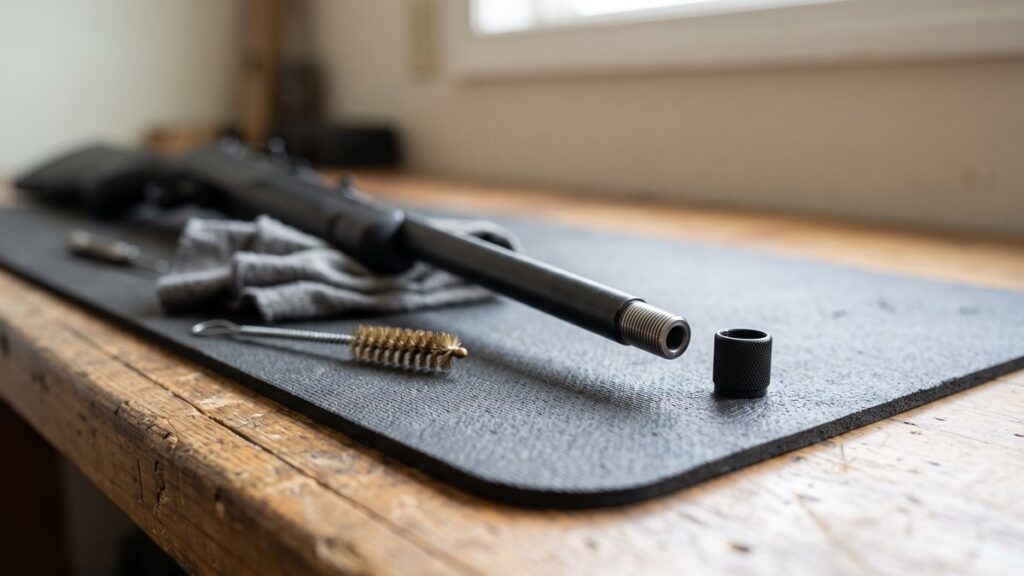
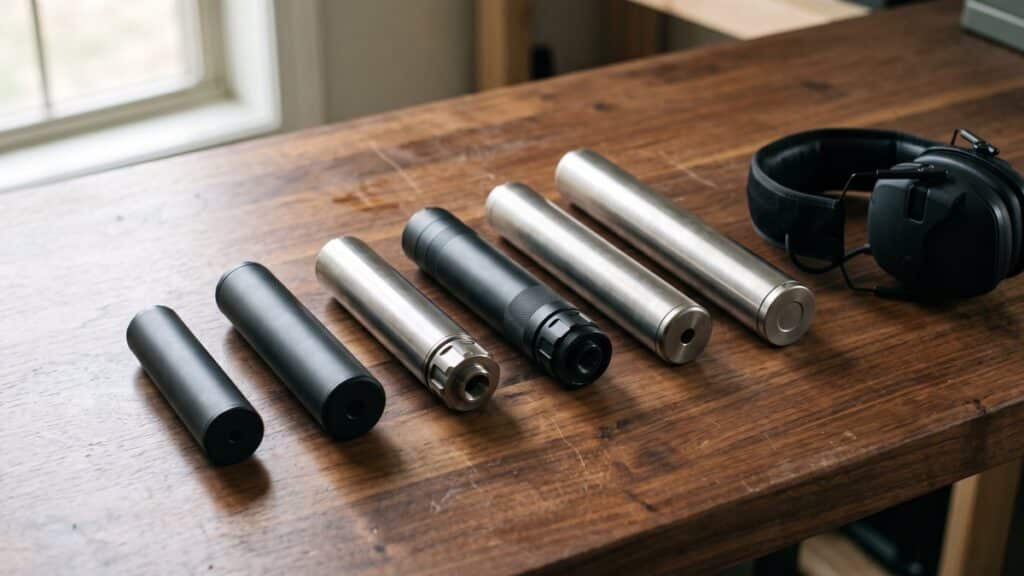
Suppressors have changed the shooting experience for the better, cutting muzzle blast and making extended range sessions or hunting more comfortable than ever before. Yet a common misconception is that once a can is threaded on, ear protection becomes optional. The reality is more nuanced. While a suppressor meaningfully reduces peak noise, it does not eliminate the sharp sonic crack produced by supersonic ammunition such as .308 Winchester or 5.56 NATO, nor does it remove the mechanical noise of the action. More importantly, hearing damage is cumulative. A single suppressed shot may not permanently injure your hearing, but repeated exposure over time, especially during high-volume training with centerfire rifles which can still lead to irreversible noise-induced hearing loss and tinnitus.
Safety note. Wear hearing protection every time you shoot, suppressed or not. Sound levels below come from published tests at stated microphone positions; your gun, ammunition and range will differ. Suppressor ownership and hunting rules vary by state, so check yours. No link on this site earns us a commission.
Here is the part that surprises people at the range. The first suppressed shot sounds so much better than an open muzzle that it feels safe to pull the plugs out. That is the moment hearing damage sneaks in, one “it’s fine, it’s suppressed” shot at a time.
Organizations such as NIOSH identify peak impulse noise at or above 140 dB as a threshold for potential immediate damage, and many suppressed .308 and 5.56 setups still measure in the mid-to-high 130s or hover near that line depending on barrel length, suppressor design, and environment. Even when individual shots fall below the single-event danger threshold, the energy adds up. Research and practical experience both show that cumulative exposure from suppressed supersonic fire remains a significant risk for frequent shooters. This is why most experts continue to recommend combining a quality suppressor with traditional hearing protection rather than relying on the suppressor alone.
Ear Protection With a Suppressor at a Glance
- The line: OSHA says impulse noise should not exceed 140 dB peak.
- Suppressed .308: 137 dB at the shooter’s ear in a NIOSH study, down from 161 dB without one.
- Suppressed 5.56 and .308: the quietest in PEW Science’s data still peaked at 140.5 to 140.8 dB.
- Quietest setups: a suppressed .22 LR rifle peaked at 120.0 dB; a 9mm pistol at 128.5 dB.
- Best match: electronic muffs or plugs, so you still hear range commands.

How Loud Is a Suppressed Gun?
Find your setup. These are the quietest results in two published tests, not averages, so most suppressors on the same gun will read higher.
| Setup | Peak reading | Where it was measured |
|---|---|---|
| .22 LR rifle, suppressed | 120.0 dB | Beside the muzzle, PEW Science’s quietest result |
| 9mm pistol, suppressed | 128.5 dB | Beside the muzzle, PEW Science’s quietest subsonic 9mm pistol result |
| .308 rifle, suppressed | 137 dB | At the shooter’s ear, NIOSH study |
| 5.56 or .308 rifle, suppressed | 140.5 to 140.8 dB | Beside the muzzle, PEW Science’s quietest results |
| .308 rifle, no suppressor | 161 dB | At the shooter’s ear, NIOSH study |
Readings from different labs and microphone spots are not directly comparable, so compare rows only as a rough picture.
Why 140 dB Is the Number to Know
When discussions of firearm noise turn to hearing safety, one number appears repeatedly: 140 dB. Both the National Institute for Occupational Safety and Health (NIOSH) and OSHA treat 140 dB peak sound pressure level as the ceiling for impulse noise. At or above that level, a single unprotected exposure can cause immediate, permanent damage to the delicate hair cells in the inner ear. NIOSH is even more specific: one event at 140 dB is considered to equal 100 percent of a person’s allowable noise exposure for an entire day. That is why the threshold matters so much for shooters, gunfire is an impulse noise of extreme intensity and extremely short duration, and the ear has no chance to recover the way it might from continuous industrial noise.
The reason the limit sits at 140 dB rather than some higher or lower figure is rooted in decades of research on acoustic trauma. High-intensity impulses can mechanically overstretch and tear the sensory structures of the cochlea rather than simply fatiguing them metabolically. Studies of both animal models and human shooters have shown that peak levels in this range are capable of producing irreversible injury from a single shot. Virtually every common centerfire rifle and handgun, when fired unsuppressed, exceeds this number by a wide margin, often reaching 160–175 dB at the shooter’s ear. Even many suppressed configurations with supersonic ammunition still land in the mid-to-high 130s or right around the 140 dB line, which is why the number remains the practical benchmark for deciding whether additional hearing protection is warranted.

Why a Suppressor Does Not Make a Gun Quiet
A suppressor is a tube of baffles that slows and cools the gas coming out of the barrel, which knocks down the bang at the muzzle. It cannot do anything about two other noises. A supersonic bullet makes its own crack as it breaks the sound barrier all the way downrange, and the action of a semi-auto slaps and clanks near your face every time it cycles.
That is why the NIOSH researchers found the ear reading dropped from 161 dB to 137 dB on the .308 instead of to something you could whisper over. Subsonic ammo takes the bullet crack out of the picture, and our subsonic ammo guide explains how.
Best Ear Protection for Shooting With a Suppressor
Hearing protection for shooting comes in three kinds, and with a suppressor on, the best one is usually the one you will leave in.
- Foam earplugs: cheap, light, and they work if they are rolled tight and pushed in deep. Keep a jar of them in every range bag.
- Passive earmuffs: easy on and off, and good over plugs on a loud day. They can bump a rifle stock when you get down on the gun.
- Electronic earmuffs or earbuds: they pass quiet sounds like range commands and conversation, and shut down when the shot goes off. With a suppressor, this is the pair that keeps you talking to your buddy without pulling them off.
Hearing protectors list a Noise Reduction Rating (NRR) on the package; higher means more protection. If you want product picks, Guns and Gadgets Daily ranks the best shooting ear protection by type.
Do You Need Ear Protection Hunting With a Suppressor?
Yes, and this is the hard one, because hunters hate missing the sound of a deer walking in. Electronic earbuds are the answer for most people: they let you hear the leaves crunch and close up when you shoot. If you will not wear anything in the stand, a suppressor at least cuts the damage of that one shot, and that is a lot better than nothing. Just do not mistake “better” for “safe.”
The JK Armament RPX 9K suppressor wins at 53%. The OA 2311 pistol and the BFR revolver tie for second at 18% each.
Frequently Asked Questions
Do you need ear protection with a suppressor?
Yes. A NIOSH study measured a suppressed .308 at 137 dB at the shooter’s ear, and PEW Science’s quietest suppressed 5.56 and .308 rifles still peaked above 140 dB, the impulse limit in OSHA’s noise rule.
Is a suppressed .22 hearing safe?
It is the quietest setup in the data, with PEW Science’s quietest result at 120.0 dB beside the muzzle, but readings vary by gun and ammo. Wear protection anyway; it costs nothing.
How many decibels does a suppressor reduce?
In the NIOSH .308 test, the suppressor cut the reading at the shooter’s ear from 161 dB to 137 dB and at the muzzle from 176 dB to 150 dB. Results change with the suppressor, gun and ammunition.
Are electronic earmuffs good with a suppressor?
Yes. They let you hear range commands and normal talk, then shut down when the shot goes off, which makes them easy to keep on all day.
Why is my suppressed rifle still loud?
A supersonic bullet cracks all the way downrange and a semi-auto action is loud at your ear, and a suppressor cannot quiet either one. Subsonic ammo removes the bullet crack.
A suppressor is the best thing you can screw onto a barrel for your ears. Earplugs are the best thing you can put in them. Use both, and you will still hear your grandkids.
Sources: OSHA, “29 CFR 1910.95, Occupational Noise Exposure”; Murphy et al., NIOSH, “The reduction of gunshot noise and auditory risk through the use of firearm suppressors”; PEW Science, “SSS.7 PEW Science Rankings”.
Similar Posts