Best Titanium Suppressors: Top Picks & Buying Guide (2026)
The best titanium suppressors compared on weight saved against durability, because titanium buys you ounces and costs you rated life.
In This Article
Originally published: September 22, 2026

“Titanium suppressor” gets thrown around as a blanket marketing term, but the material choice actually involves a real engineering tradeoff that’s worth understanding before you buy. This guide breaks down why manufacturers use titanium, which current models are actually all-titanium versus hybrid builds, and the caliber-specific buying factors that matter most when weight, heat tolerance, and cost are all in play.
Why Titanium in Suppressor Construction?
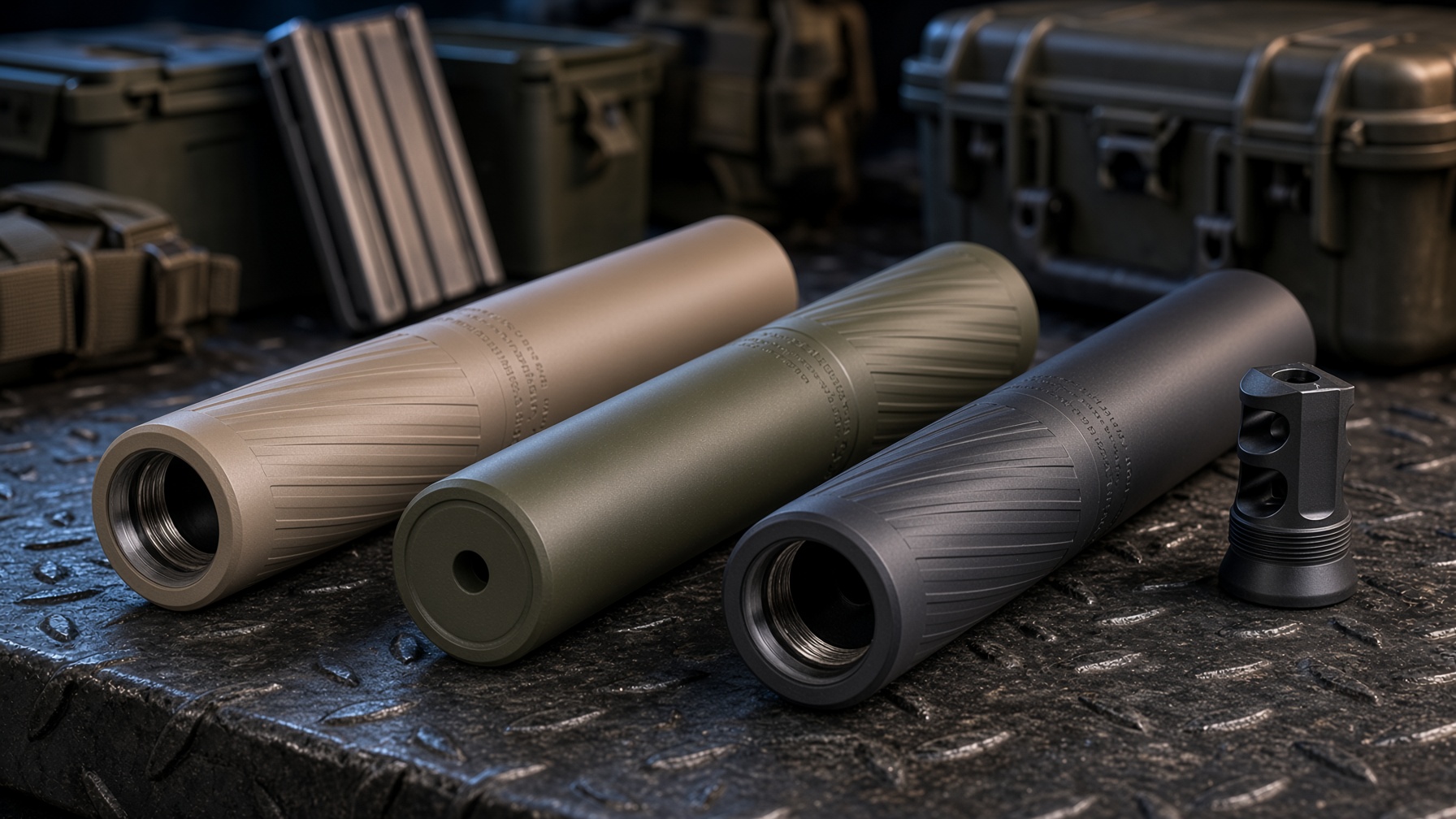
Titanium’s density is roughly 4.5 g/cm³, about half that of stainless steel (~8.0 g/cm³) or Inconel (~8.4 g/cm³) — which is the entire reason it shows up in suppressor construction. A titanium can is often close to half the weight of a similarly sized stainless one. It isn’t the strongest metal used in suppressors (Inconel and Cobalt 6/Stellite alloys are stronger) and it isn’t the lightest (aluminum is lighter, but too weak and heat-sensitive for baffles) — its real selling point is the balance of strength and weight. Grade 5 titanium (Ti-6Al-4V, 6% aluminum/4% vanadium) is the standard suppressor-grade alloy, roughly twice the strength of commercially pure Grade 9 titanium, though harder and more expensive to machine.
Titanium also forms a self-healing passive oxide layer on its surface, giving it excellent resistance to rust and general atmospheric or moisture corrosion — a genuine advantage for a hunting can that spends a week in the field. Stainless steel resists corrosion well too, but can show surface rust if not dried and cleaned properly; Inconel resists high-temperature oxidation and chemical corrosion even better than titanium under extreme, sustained heat cycling.
Heat tolerance is the central tradeoff, and it’s the single most important thing to understand before buying a titanium can. Titanium’s erosion resistance starts to break down around 750–800°F, while stainless steel holds up to roughly 1,000°F and Inconel to 1,200–1,300°F continuously. Metals lose strength well before they melt, and abrasive high-velocity, high-temperature gas flow erodes baffles once a material’s threshold is exceeded. In practice: titanium is excellent for bolt-action hunting rifles, semi-autos fired in normal range strings, pistols, and rimfire — platforms that don’t sustain long strings of rapid fire. It’s not the first choice for sustained full-auto or high-volume training use, where baffle erosion happens faster than in steel or Inconel cans. That’s exactly why several manufacturers — SilencerCo’s Omega line is the clearest example — build hybrid cans that use titanium for the tube and body (where most of the weight lives) and harder, heat-tolerant Cobalt 6, Inconel, or 17-4 stainless for the blast baffle and rear baffles that take the brunt of the gas and heat.

Top Titanium Suppressors for 2026
| Brand | Model | Weight | Material | Notable Feature |
|---|---|---|---|---|
| SilencerCo | Omega 36M | 9.8–12.5 oz | Hybrid: Cobalt 6, Inconel, titanium, 17-4 SS | Modular multi-caliber body rated 5.7x28mm up to .338 Lapua Magnum, full-auto rated |
| BANISH (Rugged) | HNT 30 Ti | 9.5–12.4 oz | 100% titanium | User-adjustable length, swaps between 6.4″ and 8.17″ configurations |
| Dead Air | Nomad Ti XC | 7.4–9.7 oz | Grade 5 (6Al-4V) titanium | Rated up to .300 RUM, 4,400 ft-lb energy rating, not full-auto rated |
| HUXWRX | FLOW 556 Ti | 11.4 oz | Grade 5 titanium, DMLS 3D-printed | Single-piece structure with integrated internal flow channels, no barrel-length restriction |
| HUXWRX | FLOW 22 Ti | 3.9–5.0 oz | Grade 5 titanium, 3D-printed | Full-auto rated across .22 LR, .22 Mag, .17 HMR, 5.7×28 |
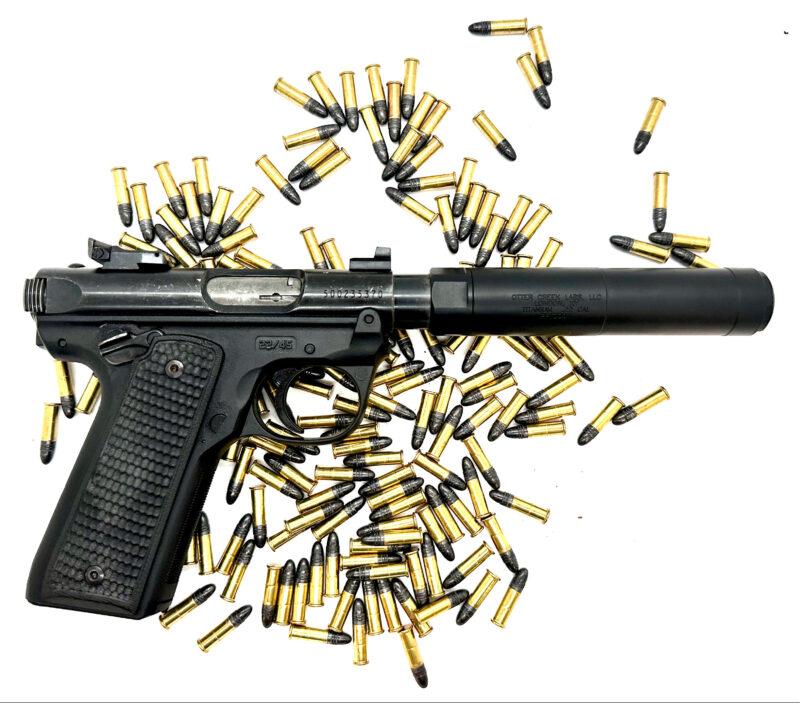
| Otter Creek Labs | Titanium 22 | 4.0 oz | 100% titanium | PEW Science-tested, 2nd-highest suppression performance recorded on its host platform |
| HUXWRX | FLOW 9K Ti | 4.8–8.9 oz | Grade 5 titanium, DMLS 3D-printed | Covers 9mm, .22 LR, .17 HMR, 5.7×28, and 300 BLK on one platform |
| Thunder Beast Arms | Ultra 9 | 10.0–11.8 oz | Titanium (fully welded, tubeless) | PEW Science: highest Suppression Rating in this set, imperceptible first-round pop |
Pricing and specs current as of publish date — always confirm the latest configuration directly with the manufacturer or an authorized dealer before buying. A note on sourcing: Otter Creek Labs’ well-known Polonium line is stainless steel, not titanium — OCL’s actual titanium products are the smaller Titanium 22 rimfire line featured above, so don’t confuse the two when comparing brands.
Notable Picks
SilencerCo Omega 36M — Best Hybrid Multi-Caliber Pick
The Omega 36M isn’t a pure titanium can — it combines titanium with Cobalt 6, Inconel, and 17-4 stainless steel, using titanium where weight savings matter most while reserving harder alloys for the high-erosion blast baffle. That hybrid approach is exactly why it’s full-auto rated and covers everything from 5.7x28mm pistol calibers up to .338 Lapua Magnum in one modular body. PEW Science’s .308 test measured a Suppression Rating of 38.3, confirming solid real-world performance to go with the flexibility. See our SilencerCo suppressors guide for the brand’s full lineup.
Dead Air Nomad Ti XC — Best Ultra-Light Hunting Pick
At as little as 7.4 ounces for the bare body, the Nomad Ti XC is built from Grade 5 titanium specifically for hunters who don’t want to feel a suppressor on a rifle carried all day. It’s rated up to .300 RUM with a 4,400 ft-lb energy ceiling, and PEW Science’s .308 test of the predecessor Nomad-Ti measured a Suppression Rating of 41.5, noting it outperformed Dead Air’s earlier steel Nomad-30 with lower back pressure. It’s not full-auto rated, which is the expected tradeoff for an all-titanium hunting-focused build.
HUXWRX FLOW 556 Ti — Best Rifle/SBR Pick
3D-printed as a single-piece titanium structure with integrated internal flow channels, the FLOW 556 Ti covers .22 LR through 5.56 NATO with no barrel-length restrictions. PEW Science’s MK18 SBR test measured a Composite Suppression Rating of 41.3, though it noted the Flow-Through design trades some low-frequency “boominess” for very high objective suppression numbers — a real tradeoff worth knowing about before you buy.
Otter Creek Labs Titanium 22 — Best Rimfire Titanium Pick
At 4 ounces and fully disassemblable for cleaning — important for rimfire cans, which foul heavily on lead and dirty priming compounds — the Titanium 22 posted a PEW Science Suppression Rating of 82.8 on a Beretta 21A host, the second-highest sound field suppression performance PEW Science had recorded on that platform at the time. HUXWRX’s FLOW 22 Ti is the lighter alternative at 3.9 ounces if outright weight matters more than that specific independent verification.
Buying Considerations
- Does titanium wear out faster under sustained fire? Yes, functionally — titanium’s erosion resistance holds up to roughly 750–800°F versus ~1,000°F for stainless and 1,200–1,300°F+ for Inconel. Fine for hunting or normal range use with cooldown between strings; steel, Inconel, or hybrid Ti/Cobalt-6 designs last longer under sustained rapid fire.
- Is the price premium worth it? Titanium suppressors typically run 40–100% more than a comparable stainless model, buying roughly half the weight. That’s meaningful for backcountry hunters and anyone carrying a suppressed rifle all day; it matters less for a range gun or duty weapon fired in longer strings.
- Full-auto rating depends on the specific model, not the material: Some all-titanium suppressors (HUXWRX FLOW 22 Ti, parts of the FLOW 556 Ti’s caliber range) are full-auto rated, while others (Dead Air Nomad Ti XC) explicitly are not. Check the individual model rather than assuming based on “titanium” alone.
- Material doesn’t determine acoustic performance: Baffle geometry and internal volume drive suppression numbers far more than the metal used. PEW Science Suppression Ratings across this list range from 38.3 to 82.8+ purely based on design, not material — don’t assume titanium automatically means quieter.
- Night-vision/IR consideration: Titanium suppressors can spark or flash more at the muzzle than Inconel cans in some conditions, which matters for night-vision use since image intensifiers exaggerate the effect. A secondary consideration, not a dealbreaker for most buyers.
Frequently Asked Questions About Titanium Suppressors
Does titanium wear out faster than steel under sustained fire?
Yes, functionally. Titanium’s erosion resistance holds up to roughly 750–800°F before baffle erosion accelerates, versus ~1,000°F for stainless steel and 1,200–1,300°F+ for Inconel. For normal hunting or range use with cooldown between magazines, this is a non-issue. For sustained rapid strings — training classes, suppressed full-auto, or high-volume PRS use — steel, Inconel, or hybrid Ti/Cobalt-6 designs like the SilencerCo Omega line last longer.
Is titanium worth the price premium?
Titanium suppressors typically run 40–100% more than a comparable stainless model. The premium buys roughly half the weight — meaningful for backcountry hunters, hikers, or anyone running a suppressor on a lightweight bolt gun all day. For a home-defense pistol can, a range gun, or a duty weapon fired in longer strings, the weight savings matter less and the extra durability of steel, Inconel, or hybrid construction may be the better value.
Can you run full-auto through a titanium suppressor?
Depends entirely on the model, not the material category. Several all-titanium suppressors are full-auto rated by the manufacturer, but many titanium-only designs are not, precisely because of the heat and erosion tradeoff described above. Always check the individual model’s full-auto rating rather than assuming based on “titanium” alone — manufacturers that want full-auto durability at high round counts often reach for a hybrid Ti/Cobalt-6/Inconel design instead of pure titanium.
Titanium versus stainless steel for a hunting rifle — which should I buy?
For hunting specifically — moderate round counts per outing, long carries, weather exposure — titanium’s weight savings and corrosion resistance make it the more popular choice among dedicated hunting cans. Stainless is the better pick if you also want to shoot suppressed at the range frequently in longer strings, want a lower price point, or don’t mind the extra few ounces on the muzzle.
Related guides: Before you buy, read our primers on how to buy a suppressor and suppressor mounting systems. For deeper dives into the brands covered above, see our SilencerCo suppressors guide, HUXWRX suppressors guide, Dead Air suppressors guide, Otter Creek Labs suppressors guide, and Thunder Beast Arms guide. Running a titanium can on a .308 hunting rifle? See our best .308 suppressors guide for more top picks by caliber. And if you’re building a rifle specifically for the field, our best hunting suppressor guide and .300 Win Mag suppressors guide cover weight and durability tradeoffs in more depth.


Similar Posts