Best 6.5 Creedmoor Suppressors: Top Picks & Buying Guide (2026)
The best 6.5 Creedmoor suppressors compared on weight, length and sound, and on whether each is rated for sustained precision-rifle use.
In This Article
Last updated: October 16, 2026 · Originally published September 28, 2026

If you’re searching “best 6.5 Creedmoor suppressors,” you already know the cartridge is one of the most popular precision and hunting rounds on the market — and you’ve probably noticed almost no suppressor is actually marketed as “for 6.5 Creedmoor” specifically. That’s because 6.5 Creedmoor is a .264-caliber cartridge that falls comfortably inside the bore diameter of nearly every .30-caliber-and-under rifle can. The real question isn’t “which suppressors work on 6.5 Creedmoor” — it’s which of the dozens of compatible options make sense for how you shoot it, whether that’s off a bipod at a PRS match, from a tree stand, or through a semi-auto AR-10-pattern rifle. Below we break down real, current models from the manufacturers that dominate this space, with verified specs and honest tradeoffs.
Choosing a 6.5 Creedmoor Suppressor
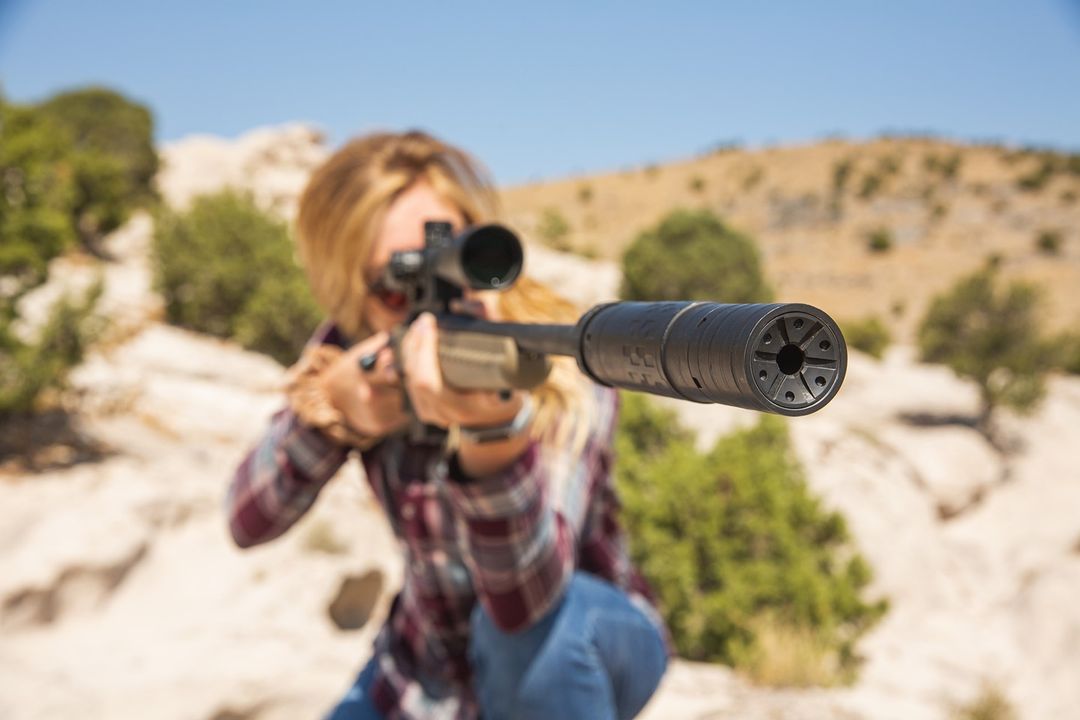
6.5 Creedmoor suppressor shopping splits into two use cases. The first is the bolt-action precision shooter — PRS competitors, long-range hunters, and bench shooters — who cares most about accuracy and minimal point-of-impact shift. The second is the semi-auto shooter running a 6.5 Creedmoor AR-10-pattern rifle, who needs a can that manages back-pressure and gas blowback well enough to keep the action clean. Most suppressors on this list handle both, but the “notable feature” column in the comparison table below tells you which use case a model leans toward.
Bore diameter is the first filter. 6.5 Creedmoor’s actual bullet diameter is .264 inches, small enough to run through dedicated 6.5mm-bore cans, but most shooters run it through a .30-caliber-rated suppressor instead — the extra bore diameter costs almost nothing in sound performance on a cartridge this mild, and the same can also covers .308 Winchester, 300 Blackout, or 300 Win Mag rifles you might own, spreading the cost of a single NFA tax stamp across multiple guns. That’s the logic behind our how-to-buy guide‘s emphasis on buying “up” in caliber rating.
Point-of-impact shift matters more for 6.5 Creedmoor precision rifles than almost any other application, because PRS and long-range hunting both depend on a repeatable zero. Adding mass to the end of a barrel changes its harmonics — the way the barrel whips as the bullet travels down the bore — which shifts where the muzzle points at the moment of bullet exit relative to an unsuppressed zero. That shift is usually small and consistent with a quick-detach mount, but it’s not zero, so confirm your zero suppressed and unsuppressed separately. Mount quality deserves as much attention as raw sound-reduction numbers — see our suppressor mounting systems guide.
Weight cuts in opposite directions depending on how you use the rifle. A PRS shooter running a 15-plus-pound chassis rifle off a bipod barely notices an extra 8 ounces at the muzzle — it often helps tame recoil and scope tracking. A backcountry hunter carrying a rifle for miles feels every ounce, which is why titanium cans that shave 4-6 ounces off a stainless equivalent command a real price premium. Finally, check thread compatibility: many factory 6.5 Creedmoor barrels ship threaded 5/8×24, the standard .30-caliber pattern, while some lighter-contour rifles use 1/2×28, and not every can ships with adapters for both.

Top 6.5 Creedmoor Suppressors for 2026
| Brand | Model | Weight | Material | Notable Feature |
|---|---|---|---|---|
| Thunder Beast Arms | Ultra 7 (6.5) | 9.7 oz | Titanium | PRS-community favorite; CB or direct-thread mount, 1/2×28 or 5/8×24 |
| SilencerCo | Scythe-Ti | 7.13 oz | Titanium | Direct thread; among the lightest full-size .30-cal cans on the market |
| SilencerCo | Omega 36M | 13.7-16.5 oz | Titanium tube, Cobalt 6/Inconel core | Modular length, ships with Charlie ASR quick-detach mount |
| Dead Air | Nomad-30 | 14.5 oz | 17-4 PH stainless steel | Fully-welded; ships 5/8×24, compatible with Xeno and KeyMo mounts |
| HUXWRX | FLOW 762 Ti | 11.8 oz | 3D-printed Grade 5 titanium | Flow-through design cuts back-pressure and gas blowback for AR-10 builds |
| Griffin Armament | Optimus | 1 lb 2.5 oz | 17-4 stainless | User-reconfigurable from .22 LR up to .300 Win Mag |
| Otter Creek Labs | Polonium-30 | 13.5 oz | 17-4 stainless, Cerakote | 1.375×24 HUB mount with included 5/8×24 direct-thread adapter |
| Rugged Suppressors | Radiant762 (short config) | 9.4 oz | Grade 5 titanium tube, Cobalt 6 core | Dual Taper Locking QD mount; standard and short configurations |
| Q LLC | Trash Panda | 11.8 oz | 100% titanium | Rotary-welded tubeless build; ships with two Cherry Bomb muzzle brakes |
Notable Picks
Thunder Beast Ultra 7 — Best for Precision Rifle Shooters
Thunder Beast Arms Corporation doesn’t advertise as heavily as the bigger consumer brands, but it’s earned an outsized reputation inside the Precision Rifle Series and long-range hunting communities, where its cans show up on match rifles disproportionately often relative to the company’s size. The Ultra 7, at 9.7 ounces and 7 inches in titanium with a high-temp Cerakote finish, is built around this use — available with a compact-brake (CB) mount or as a direct-thread can, in both 1/2×28 and 5/8×24 thread configurations to match whatever barrel it’s going on. Pair one with a lightweight, budget-friendly bolt gun like the KFI Monza reviewed by our sister site, Popular Outdoorsman’s 6.5 Creedmoor KFI Monza review, for a capable long-range setup without custom-chassis-rifle pricing.
SilencerCo Scythe-Ti — Best for Backcountry Hunters
SilencerCo built its reputation on rugged .30-caliber hosts like the Harvester and Omega series, but the Scythe-Ti targets a different problem: the ounces that add up on a long hunt. At 7.13 ounces in a direct-thread titanium build, it’s among the lightest full-size .30-cal suppressors currently sold, and the option SilencerCo recommends for hunters carrying a rifle over rough terrain rather than shooting off a bench. SilencerCo’s own buyer’s guide, Best 6.5 Creedmoor Suppressors for 2026, notes that 6.5 Creedmoor’s .2644-inch bullet diameter exceeds some dedicated small-bore cans, reinforcing why a .30-caliber-rated can like the Scythe-Ti or the modular Omega 36M is the safer choice. For more, see our SilencerCo suppressors guide.
HUXWRX FLOW 762 Ti — Best for Semi-Auto 6.5 Creedmoor Builds
Most 6.5 Creedmoor rifles are bolt guns, but the cartridge has a growing following in AR-10-pattern semi-autos, and that’s where HUXWRX’s Flow-Through technology earns its keep. The FLOW 762 Ti weighs 11.8 ounces, runs 6.7 inches, and is fully 3D-printed from Grade 5 titanium — but the real selling point is internal geometry engineered to reduce the back-pressure and gas blowback that plague suppressed semi-autos, keeping the action cleaner and the shooter’s face free of gas. Independent testing from PEW Science’s sound signature review of the FLOW 762 Ti gives buyers measured data rather than marketing claims. For more on HUXWRX’s approach, read our HUXWRX suppressors guide.

Dead Air Nomad-30 — Best Value, Multi-Caliber Workhorse
If you want one suppressor that covers a 6.5 Creedmoor bolt gun and other .30-caliber-and-under rifles without titanium-can money, the Nomad-30 is the pragmatic pick. It’s a fully-welded 17-4 PH stainless build at 14.5 ounces and 6.5 inches, ships with a 5/8×24 fixed mount, and is compatible with Dead Air’s Xeno and KeyMo quick-detach systems — so it can grow into whatever mounting ecosystem you standardize on. It’s heavier than the titanium options here, but stainless buys real durability margin. Our Dead Air suppressors guide covers the rest of the Nomad, Sandman, and Odessa lineups.
Buying Considerations
- Bore diameter margin: A .30-caliber-rated suppressor comfortably handles 6.5 Creedmoor’s .264-inch bullet, and it keeps the can usable on other rifles you own, so there’s rarely a reason to chase a caliber-matched 6.5mm-bore can.
- Point-of-impact shift and re-zeroing: A suppressor changes barrel harmonics enough to shift group location, so precision shooters should confirm a fresh zero suppressed rather than assuming the unsuppressed zero holds.
- Weight versus mission: Titanium cans in the 7-10 ounce range are worth the premium for backcountry hunters carrying a rifle for miles, while bench and PRS shooters can save money with heavier stainless builds.
- Thread pitch compatibility: Confirm whether your barrel is threaded 5/8×24 (the common .30-caliber standard) or 1/2×28 before buying — some manufacturers, like Thunder Beast, offer both on the same model.
- Subsonic ammo scarcity: Unlike 300 Blackout, subsonic 6.5 Creedmoor loads are a niche product, so most suppressed use will be with supersonic ammunition — see our subsonic ammo guide for what’s realistic across calibers.
- Mount system and return-to-zero: A QD mount that returns to the same point of impact every time matters more for a precision rifle than raw sound-reduction numbers — read our suppressor mounting systems guide.
Frequently Asked Questions About 6.5 Creedmoor Suppressors
Do I need a 6.5mm-specific suppressor for 6.5 Creedmoor, or will a .30-caliber can work?
A .30-caliber-rated suppressor works fine on 6.5 Creedmoor and is what most shooters actually use, since 6.5 Creedmoor’s .264-inch bullet is smaller than the .30-caliber bore diameter the can is built around. The main advantage of a dedicated small-bore can is a slightly lighter package; the main advantage of going .30-caliber is that the same suppressor also covers .308 Winchester, 300 Blackout, and similar cartridges, spreading the cost of a single NFA tax stamp across more rifles.
Will adding a suppressor change my 6.5 Creedmoor rifle’s zero?
Yes, almost always to some degree. Mounting a suppressor adds mass and length to the muzzle, which changes barrel harmonics and typically shifts point of impact — usually a small amount, but enough to matter at long range. Confirm your zero with the suppressor mounted before you rely on it for hunting or competition, and if you’re running a quick-detach mount, verify point of impact returns consistently each time you remove and reattach the can.
Is subsonic 6.5 Creedmoor ammo widely available?
No, not in the way subsonic 300 Blackout is. A handful of specialty manufacturers produce subsonic 6.5 Creedmoor loads, but it remains a niche product rather than a shelf staple at most retailers. Most suppressed 6.5 Creedmoor shooting is done with standard supersonic ammunition, meaning the suppressor reduces muzzle blast substantially but won’t eliminate the sonic crack of the bullet itself.
How much weight does a 6.5 Creedmoor suppressor typically add to a rifle?
Most .30-caliber-rated suppressors suitable for 6.5 Creedmoor weigh between roughly 7 and 18 ounces depending on material and length, with titanium models at the light end and stainless or Inconel-core designs at the heavier end. Hunters carrying a rifle long distances typically prioritize titanium cans under 12 ounces, while bench and precision shooters often accept heavier stainless builds for the durability and lower cost.
Related guides: Brush up on the basics in our how to buy a suppressor guide before you commit to a specific model. For top picks by brand, see our Rugged Suppressors guide and Thunder Beast Arms guide — both build cans rated for 6.5mm magnums — or our best titanium suppressors guide for the lightest options. Running a .308 in the same safe? Check our best .308 suppressors guide. Still shopping for the rifle itself? Popular Outdoorsman’s KFI Monza 6.5 Creedmoor review is worth a read first. Considering a magnum rifle too? Our .300 Win Mag suppressors guide and best hunting suppressor guide cover the field-weight side of that decision.


Similar Posts