Ranch TX 1-Day Tactical Medical Course — What You Learn
In This Article
Last updated: September 30, 2026 · Originally published May 29, 2026
Quick answer: The Ranch TX tactical medical course(the 1-Day Tactical Medical & Trauma Response Course, $1,050 MSRP) is the eight-hour Texas Hill Country training that teaches the armed citizen, hunting-camp organizer, and homesteader what to do in the first ninety seconds of a major bleed or trauma. Tourniquet application, wound packing, chest seal placement, casualty movement, and making triage decisions of who to treat first and when to move first.
The Ranch TX as a training facility
Ranch TX is a premier Tier-1 tactical training facility sprawled across 300 acres just 50 miles south of San Antonio in Dilley, Texas. Designed for military, law enforcement, first responders, government agencies, and responsible civilians. They deliver immersive, real-world scenario-based training that builds genuine survivability under pressure. Their lineup of open-enrollment courses covers everything from close-quarters battle (CQB) and advanced firearms handling to tactical driving and mobility, survival skills, and critical medical response programs. What sets Ranch TX apart are its world-class capabilities: one of the largest commercial live-fire shoothouses in the country, a massive 175,000-square-foot urban training site, multiple high-speed vehicle tracks, outdoor ranges, and purpose-built environments that replicate high-threat situations. Led by veteran instructors from Special Operations and law enforcement backgrounds, and certified as an NAEMT training facility, Ranch TX combines cutting-edge facilities with practical, stress-inoculated instruction to help students develop the skills, confidence, and mindset needed for real-world readiness.
The first ninety seconds after a major bleed are the ones that truly determine the outcome. Place a tourniquet correctly and in the right spot above the wound within that narrow window, and the casualty stands an excellent chance of walking away. Hesitate, fumble, or take four long minutes to act, and the results are often tragic. While the skill itself is straightforward, it is not instinctive. It must be properly taught, repeatedly practiced, and regularly refreshed, or it will decay when it matters most. That is exactly why the Ranch TX 1-Day Tactical Medical Course is such valuable training: it delivers clear, realistic instruction that builds the muscle memory and decisive confidence every responsible armed citizen needs when seconds truly count.
For anyone who carries concealed for self-defense, this course is pure gold. When you step up to protect yourself or your loved ones with a firearm, you’re also signing up for the possibility of treating gunshot wounds, severe bleeding, or other trauma right there on the spot. Often before EMS can arrive meaning YOU are the first responder. The 1-Day Tactical Medical Course bridges that critical gap, turning responsible armed citizens into true life-savers who can stop the fight and then keep people alive until help shows up. In a world where every second counts, it’s the kind of practical, no-nonsense training that elevates your preparedness from “I have a gun” to “I’m ready for whatever comes next.”
The Ranch TX 1-Day Tactical Medical Course was built specifically for the shooter who needs to know what to do in the ninety seconds between the moment a wound happens and the moment a paramedic arrives. The Ranch TX, the Texas Hill Country facility where some of the most respected tactical training in the country happens, runs the course as a standalone day-long curriculum — no prior medical training assumed, no military service required, and no expectation that the student is already on the EMS continuum.
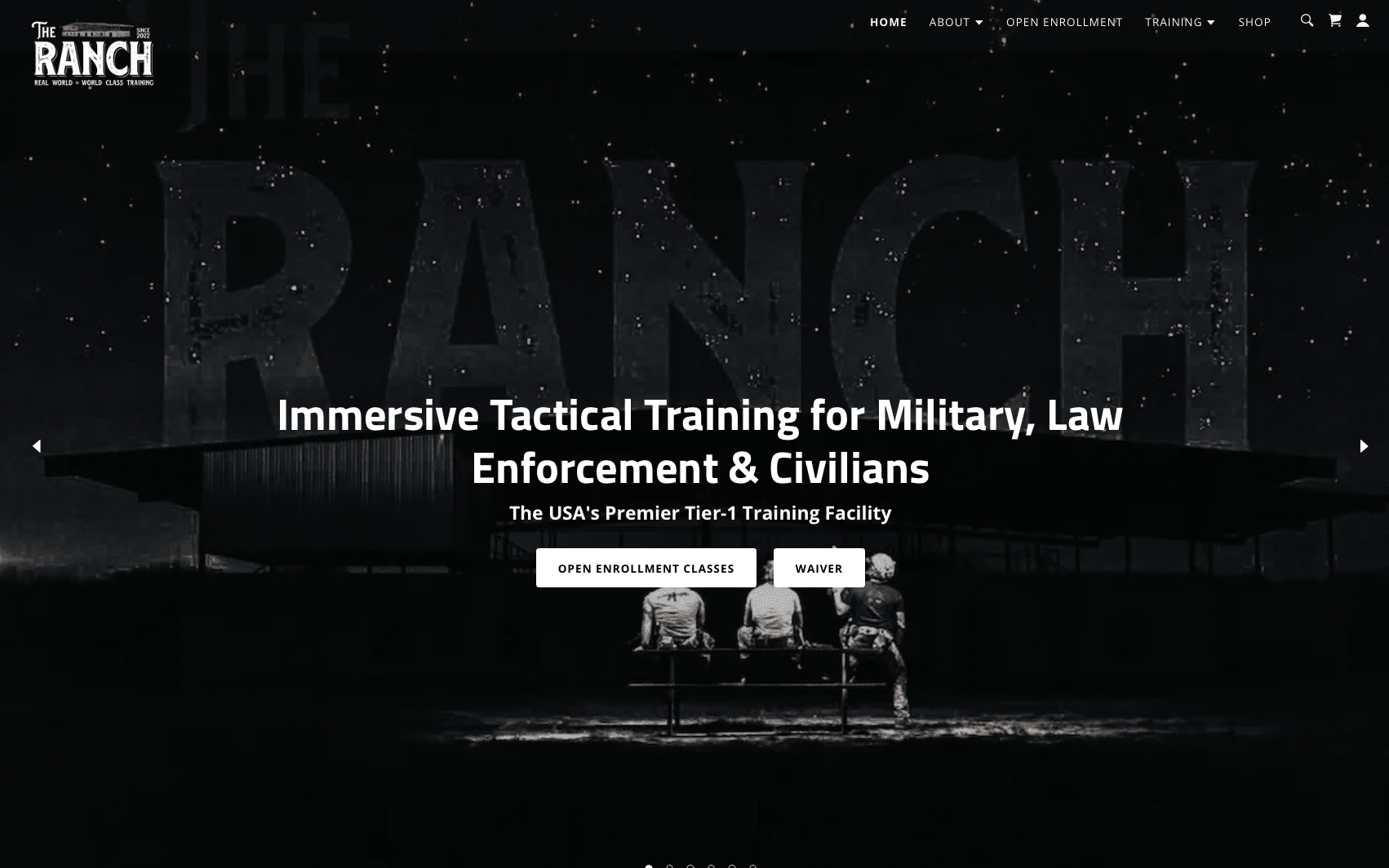

The Ranch TX 1-Day Tactical Medical Course
This intensive, hands-on program is built around Tactical Emergency Casualty Care (TECC) principles and focuses on the exact skills needed when seconds matter in a violent encounter. Participants learn immediate massive hemorrhage control with tourniquets, wound packing, and hemostatic agents; airway management; chest trauma treatment; the full MARCH protocol; casualty evacuation under threat; and making rapid medical decisions in dynamic, high-stress environments. It’s a fast-paced, no-fluff class that blends classroom basics with realistic scenario drills so students walk away with muscle memory they can actually use.
The eight-hour curriculum
The course day starts at 8:00 a.m. and ends at 5:00 p.m. with a lunch break and two short breaks built in. Instruction alternates between classroom lecture and outdoor scenario practice on the Ranch TX training pavilion. The curriculum covers, in order:
1. The MARCH algorithm. Massive hemorrhage, Airway, Respiration, Circulation, Head injury / Hypothermia. The decision-priority order that drives every trauma intervention. The course teaches the algorithm verbally, then drills it in scenario practice until it becomes the default mental sequence.
2. Tourniquet application. CAT tourniquet, SOFTT-W, and TMT tourniquet platforms. The student applies each platform to themselves (one-handed) and to a partner (two-handed) until the placement, the windlass torque, and the time-stamp documentation are all reflexive. The course standard is sub-thirty-second placement with full arterial occlusion.
3. Wound packing. Gauze packing technique for deep extremity, junctional, and torso wounds where a tourniquet does not apply. The student packs simulated wounds on training mannequins until the packing pressure, the gauze management, and the follow-up direct-pressure hold are all consistent.
4. Chest seal placement. Penetrating chest-wound treatment with vented and non-vented chest seals. The student places seals on training mannequins under varying conditions of skin moisture and clothing presence, with attention to the diagnostic signs of tension pneumothorax that may follow.
5. Casualty movement. The two-person carry, the drag, the single-person fireman’s carry, and the decision tree of when to move the casualty before treating versus treat-in-place. The course covers movement across the kinds of terrain the rural shooter actually encounters: a hunting stand, a range bay, a stretch of woods, a creek bottom.
6. Triage and scene management. The decision-priority order when a single responder has multiple casualties. The MIST report format for handoff to arriving EMS. The communication script for the 911 call that produces the fastest response.
7. Scenario integration. The afternoon block runs full-scenario problems: a simulated casualty, a simulated incident, and the student running through the MARCH algorithm and applying the skills under time pressure. Each student runs three to five full scenarios with instructor feedback.

What the student leaves with
Every student leaves the Ranch TX tactical medical course with the following:
- A complete IFAK (Individual First Aid Kit) configured with a CAT tourniquet, chest seals, combat gauze, pressure bandage, and the supporting kit. The IFAK value is included in the $1,050 tuition.
- A laminated MARCH algorithm reference card sized for a pocket or a range bag.
- A certificate of completion documenting the course content and the eight-hour duration. (The certificate is not a state EMS license; it documents course completion for the student’s own records and for employers who require trauma-training documentation.)
- The reflexive skill of running the MARCH algorithm under stress. This is the deliverable that matters.
Who the Ranch TX tactical medical course is for
The armed citizen who carries daily and accepts that the most likely use case for trauma skills is treating themselves or a bystander after an incident, not engaging in combat. The course’s ninety-second bleed-stop emphasis matches the actual statistical profile of armed-citizen trauma exposure.
The hunting-camp organizer running a multi-person camp twenty minutes from the nearest cell signal. The two-person carry, the long-bleed-time-management skills, and the casualty-movement decision tree are the skills hunting-camp leaders actually need.
The homesteader on a rural acreage where the nearest EMS response is fifteen to forty-five minutes out. The course teaches the skill set that bridges that response gap.
The range safety officer at a private range or club shoot. RSOs are typically first on scene for any range incident; the course is the cleanest single-day prep for that responsibility.
The CCW instructor teaching downstream students. The course materials and the instructor-track follow-on Ranch TX offers are designed for CCW instructors who want to add a trauma module to their CCW curriculum.
Frequently asked questions
Is prior medical training required to take the Ranch TX tactical medical course?
No. The course is designed for the student with no prior medical training. It assumes only that the student is willing to learn the MARCH algorithm and practice the hands-on skills under instructor guidance.
Does the course include an IFAK?
Yes. Every student leaves with a complete IFAK configured with a CAT tourniquet, chest seals, combat gauze, pressure bandage, and supporting kit. The IFAK value is included in the $1,050 tuition.
What does the certificate certify?
The certificate documents course content and the eight-hour duration. It is not a state EMS license. It is the documented training record the student can present to employers who require trauma-training documentation, or use as the prerequisite for further trauma-medicine coursework.
How does the Ranch TX tactical medical course compare to a Stop the Bleed class?
Stop the Bleed is the 90-minute introductory bleed-control class developed by the American College of Surgeons; it covers tourniquet application and direct pressure at an awareness level. The Ranch TX tactical medical course covers tourniquet placement at a reflexive-skill level plus wound packing, chest seal placement, casualty movement, and integrated scenario practice. The Ranch TX course is roughly seven hours longer and depth-of-skill several levels deeper.
Yes. The winner’s seat is redeemable for any open course date on the published Ranch TX schedule, subject to availability.
Does the course include lodging or travel?
No. Lodging and travel to the Ranch TX facility in the Texas Hill Country are the student’s responsibility. The Ranch TX maintains a list of recommended local lodging on its website.
Is there a follow-on course after the 1-Day?
Yes. The Ranch TX offers a multi-day advanced trauma curriculum for students who want to extend their skill set beyond the 1-Day foundation, plus instructor-track coursework for CCW instructors who want to add trauma modules to their own curricula.
What should I bring to the course?
The Ranch TX provides the IFAK, the training mannequins, and the supporting equipment. The student brings comfortable outdoor clothing, sun and weather protection appropriate to the Texas Hill Country, water, lunch (or arranged catering through the facility), and a willingness to get hands dirty in scenario practice.
Editorial disclosure and methodology
Course description in this article reflects the Ranch TX’s published curriculum and the editor’s direct experience attending Ranch TX trauma training. The MARCH algorithm is the established Tactical Combat Casualty Care decision-priority framework; the Ranch TX teaches the algorithm as published by the Joint Trauma System.
James Nicholas is the editor of Popular Suppressors and a gunsmith and author for Brand Avalanche Media. Follow James on X and Instagram at @therealxdman or read his personal site at tacticool.com.
Eight hours. One IFAK. The reflexive skill of running MARCH under stress.
Friday, May 29, 2026 · 6 a.m. – 10 p.m. CT ·
Share with someone who’d enter:
Share on X

Similar Posts